高校基金会投资

Search documents
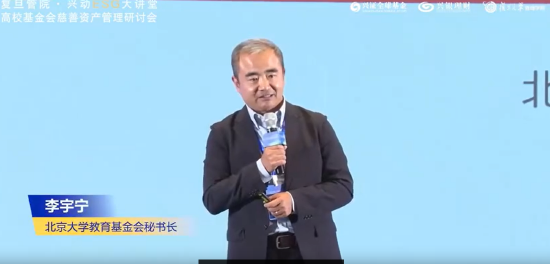
北京大学教育基金会李宇宁:高校基金会投资工作如何破局?
Xin Lang Ji Jin· 2025-09-22 07:09
Core Insights - The event "Investment for Good" focused on the management of charitable assets in university foundations, highlighting the importance of ESG (Environmental, Social, and Governance) principles in investment strategies [1][4][6] Group 1: Characteristics of University Foundations - University foundations are considered special institutional investors due to their long-term capital, which is often referred to as "patient capital" [4][5] - The assets of university foundations are public assets, primarily derived from donations, and are intended for public welfare, necessitating a lower risk tolerance [5][6] - There are liquidity requirements for university foundations, including a minimum annual expenditure of 8% of net assets, which creates a balance between current and future funding needs [5][6] Group 2: Current State and Future Goals - There are approximately 800 university foundations in China with a total asset scale of 90 billion RMB, compared to 900 billion USD for U.S. university foundations [6] - The goal is to increase the asset scale of Chinese university foundations to over one trillion RMB in the future [6] Group 3: Case Study of Peking University Foundation - The Peking University Foundation has an annual income of approximately 1.28 billion RMB, with 740 million RMB from donations and 340 million RMB from investments, indicating a reliance on investment income [7] - Over the past four years, the foundation has spent around 3.3 billion RMB, achieving an annualized growth rate of about 6% [7][8] - The foundation's investment strategy has evolved through three phases, from opportunistic investments to a structured asset allocation approach initiated in 2015 [8][9] Group 4: Investment Strategy and Governance - The foundation's investment committee is responsible for decision-making, with clear authorization and accountability structures in place [9][10] - The investment strategy emphasizes risk management, with a focus on balancing risk, return, and liquidity, which is crucial for long-term sustainability [10][12] - The foundation has established a dedicated investment department and has adopted a fund-of-funds approach for equity investments [8][9] Group 5: Challenges and Recommendations - The foundation faces challenges related to dual management lines, balancing professional judgment with administrative authority [11][12] - It is essential to set up a fault tolerance mechanism to avoid reverting to low-risk, low-return investment strategies [12][14] - The current accounting system in China allows for greater flexibility in investment decisions compared to the U.S., which can benefit university foundations [14]