高血压地区差异

Search documents
每3个中国成人就有1个高血压!这些地区尤其要警惕
Yang Shi Xin Wen· 2025-10-08 02:01
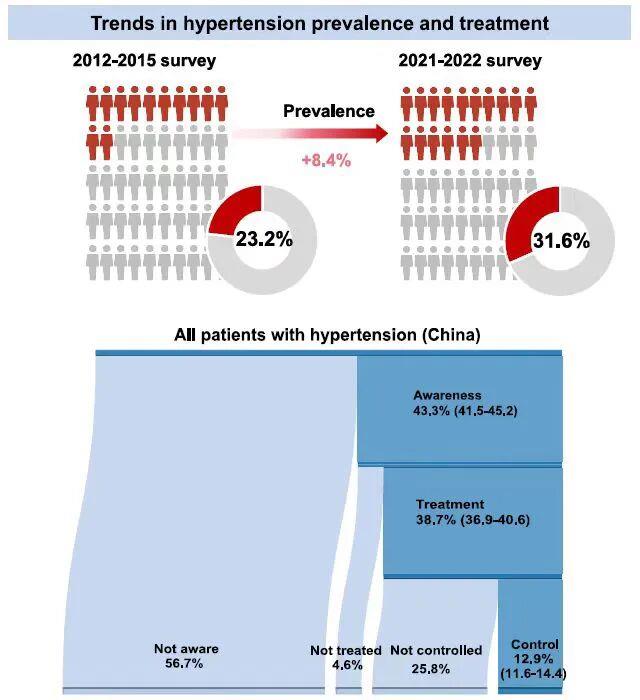
Core Insights - The prevalence of hypertension among Chinese adults has been steadily increasing, with a rate of 31.6% reported for 2021-2022, an increase of 8.4% compared to 2012-2015 [1] - There are significant regional disparities in hypertension prevalence, with higher rates observed in the western and northern regions compared to the eastern and southern areas [4][5] - Economic factors play a crucial role in hypertension management, with poorer regions showing significantly higher risks of undiagnosed, untreated, and uncontrolled hypertension compared to wealthier areas [10] Regional Disparities - The western region has the highest hypertension prevalence at 32.9% in 2019, while the eastern and central regions have lower rates [5] - Northern regions exhibit higher prevalence than southern regions, attributed to dietary habits favoring salt intake [5] - Urban areas show better awareness, treatment, and control rates for hypertension compared to rural areas, with urban control rates at approximately 31% versus 26% in rural areas as of 2015 [8] Contributing Factors - Dietary culture significantly influences hypertension rates, with high salt consumption prevalent in northern and western diets [12] - The dual burden of hypertension and obesity is shifting from urban to rural areas, particularly among young males [12] - Access to medical services is a critical factor, with urban residents having better access to monitoring and treatment compared to those in rural and low-income areas [12] Environmental and Nutritional Influences - Environmental factors, such as selenium levels, impact hypertension risk, with low selenium areas showing a reduced risk when dietary selenium is adequate [14] - The interaction between environmental trace elements and blood pressure control adds complexity to regional disparities [14] Recommendations for Hypertension Management - In high-prevalence areas, reducing salt intake is essential, with strategies including promoting low-sodium salt and reducing pickled food consumption [16] - Increasing blood pressure screening coverage in rural and low-income areas is crucial, with recommendations for individuals over 35 to measure blood pressure annually [16] - For young populations, early attention to blood pressure changes and maintaining a healthy lifestyle are vital to prevent early onset hypertension [16]