黑障区

Search documents
视频丨神舟二十号航天员乘组怎么回家?这份“返程指南”先睹为快
Yang Shi Xin Wen Ke Hu Duan· 2025-11-14 07:26
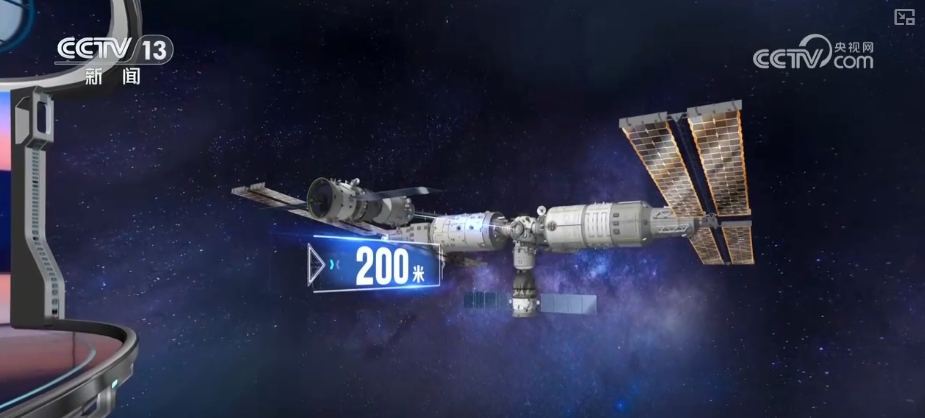
Core Points - The Shenzhou 20 astronaut crew is expected to return to the Dongfeng landing site this afternoon, with an animated demonstration provided to illustrate their journey home [1] Group 1: Key Actions During Return - The Shenzhou 21 spacecraft performed docking maneuvers at 19 meters and 200 meters, completing a 180-degree turn before entering the final phase of its return [3] - The first critical action involved a 90-degree rotation of the spacecraft, followed by the separation of the orbital module and the return module, completed within approximately two minutes [3] - The "blackout zone" occurs when the return module separates from the propulsion module at about 145 kilometers altitude, leading to a loss of radio communication due to atmospheric re-entry [4] Group 2: Descent and Landing Procedures - The third critical action involves deploying parachutes at an altitude of 10 kilometers, utilizing a three-stage parachute system to reduce descent speed to 7-8 meters per second [5] - The final landing action includes firing four retro-thrust engines when the return module is about 1 meter above the ground, allowing for a landing speed of approximately 2 meters per second [7]
250秒解锁→透过增强现实技术了解神舟十九号回家全过程
Yang Shi Wang· 2025-04-30 02:36
Core Viewpoint - The Shenzhou 19 mission is set to return to Earth on April 30, showcasing advancements in space travel technology, particularly through the use of augmented reality to illustrate the return process. Group 1: Return Process Overview - The Shenzhou 19 spacecraft will utilize a "fast return plan," reducing the number of orbits around Earth from 11 to 5, taking approximately 7.5 hours for the return journey, which alleviates discomfort for astronauts during their time in the capsule [1] - The return journey involves a series of critical maneuvers, including two attitude adjustments and the separation of the return capsule from the orbital module at an altitude of approximately 390 kilometers [2][4] Group 2: Key Maneuvers - The first set of maneuvers includes two attitude adjustments and the separation of the return capsule, which is completed in about 120 seconds [7] - After the separation, the spacecraft enters a braking phase, where the main engine ignites alongside the attitude control engines to maintain stability during deceleration, lasting between 150 to 180 seconds [7] - At around 145 kilometers above the ground, the propulsion module is destroyed upon re-entry, while the return capsule continues its descent [11] Group 3: Atmospheric Re-entry - As the return capsule descends to about 120 kilometers, it must adjust its angle to ensure the heat shield faces forward [13] - Upon entering the atmosphere at approximately 100 kilometers, the capsule travels at about 7 kilometers per second, creating a plasma shell that disrupts radio communication, known as the "blackout zone" [15] - After exiting the blackout zone, the capsule's speed decreases to around 200 meters per second, still requiring further deceleration [17] Group 4: Landing Sequence - At 10 kilometers altitude, the capsule initiates the parachute deployment sequence, which consists of three stages: the pilot chute, deceleration chute, and the main parachute, which has an area of 1200 square meters, reducing the descent speed to 7 to 8 meters per second [19] - At approximately 6 kilometers, the heat shield is discarded [21] - Finally, about 1 meter above the ground, four landing retro-thrust engines ignite to further slow the capsule, allowing for a safe landing at a speed of around 2 meters per second [23]