3D内容生成

Search documents
Hitem3D 2.0升级:纹理从“贴”到“长”,革新高精度3D打印模型生产生态
Huan Qiu Wang· 2026-01-05 10:04
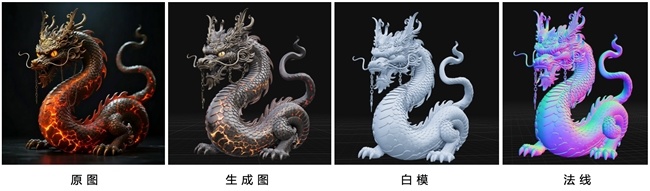
【环球网科技综合报道】在3D内容生成的演进历程中,行业的每一次跨越式发展,皆源于对数据密度 与真实世界建模逻辑的深度重构。从早期低多边形建模的探索,到高精度网格与扫描重建的进阶,再到 如今生成式方法的成熟应用,一个核心命题始终萦绕:数字模型究竟是停留在"模拟外观"的表层,还是 迈向"重建结构"的本质? 长期以来,行业普遍采用"几何先行、纹理后贴"的拆分式流程——先构建模型形体,再通过贴图赋予表 面细节。这种模式虽在效率上具备一定优势,却在结构合理性、不可见区域补全、打印稳定性等关键环 节暗藏瓶颈。当模型进入实际打印、制造或高保真输出阶段,这种割裂性往往导致额外的修复成本与不 可控风险,成为制约行业发展的痛点。 如今,随着算力提升与学习数据规模的爆发式增长,Hitem3D 2.0重磅发布。其全新一体化1536³Pro分辨 率PBR纹理生成技术,实现了从"贴图附着"到"结构生长"的根本性转变,让系统首次具备在结构层面把 控纹理生成合理性的核心能力。纹理不再是独立于几何的表层装饰,而是与几何形态、空间尺度、材质 属性深度融合的有机组成部分,在带来极致真实视觉质感的同时,为后续3D打印与规模化制造奠定了 稳定可控的模 ...

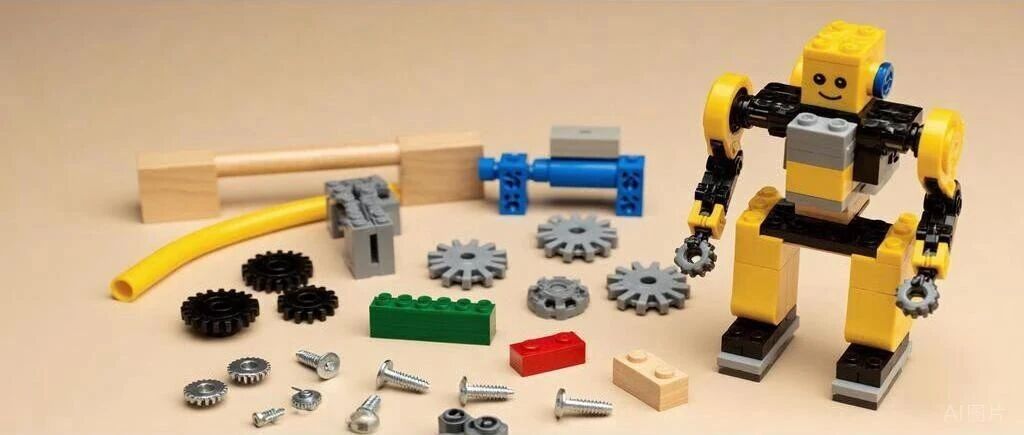
SIGGRAPH Asia 2025 | OmniPart框架,让3D内容创作像拼搭积木一样简单
机器之心· 2025-10-20 04:50
Core Viewpoint - The article introduces OmniPart, a novel framework for part-aware 3D generation that addresses the challenge of creating, editing, and combining 3D object components, enhancing the quality and efficiency of 3D content creation [2][23]. Summary by Sections Introduction - Researchers from Hong Kong University, VAST, Harbin Institute of Technology, and Zhejiang University have developed OmniPart, which has been accepted for presentation at SIGGRAPH Asia 2025 [2]. Methodology - OmniPart employs a two-stage "planning-generation" strategy, decoupling complex generation tasks into controllable structure planning and spatially-conditioned part synthesis [8][10]. First Stage: Structure Planning - The first stage involves planning the 3D object's component layout using a self-regressive Transformer model that predicts bounding boxes based on 2D images. Users can control the decomposition granularity through flexible 2D part masks [10][11]. Second Stage: Part Generation - The second stage generates high-quality 3D parts based on the spatial blueprint created in the first stage. It utilizes a pre-trained 3D generator (TRELLIS) for efficient fine-tuning, ensuring high consistency among parts [12][13]. Experimental Results - OmniPart demonstrates superior generation quality compared to existing methods like Part123 and PartGen, excelling in geometric detail, semantic accuracy, and structural consistency [14][16]. - The efficiency of OmniPart is significantly improved, completing the end-to-end generation process in approximately 0.75 minutes, compared to 15 minutes for Part123 and 5 minutes for PartGen [16]. Applications - OmniPart supports various downstream applications, including mask-controlled generation, multi-granularity generation, material editing, and geometry processing, enhancing the editing and customization capabilities of 3D content [18][20][21]. Conclusion - The OmniPart framework sets a new benchmark in quality and efficiency for part-level 3D content generation, paving the way for advancements in game development, animation, and virtual reality [23].