3D打印

Search documents
消费级3D打印专家
2026-03-30 05:15
Summary of Conference Call on Bambu Lab (拓竹科技) Company Overview - **Company**: Bambu Lab (拓竹科技) - **Established**: 2020, founded by a team from DJI - **Market Position**: Leading player in the consumer-grade 3D printing market Financial Performance - **2025 Revenue**: Approximately 9.37 billion RMB, with device sales around 1.85 million units - **2024 Revenue**: Approximately 5.7 billion RMB, with device sales around 1.2 million units - **2026 Revenue Target**: 16-17 billion RMB, with 13 billion from 3D printing devices and 1.08 billion from 3D scanners [1][2][4] Industry Dynamics - **Market Growth**: Expected compound annual growth rate (CAGR) of 25-30% from 2026 to 2028 [3] - **Competitive Landscape**: Industry characterized by "one strong, many strong" dynamics, with increased competition due to DJI's investment in competitors [1][7] - **Price Competition**: Anticipated price wars in 2026, with expected price reductions of around 10% [1][19] Product Development - **Product Lines**: - X1 series launched in 2022 - P series and A series launched in 2023 and 2024 - S series planned for 2025 - **3D Scanner**: Jointly developed with Skand Technology, expected to launch in May 2026, with a target of 300,000 units sold at a price of 3,599 RMB [1][8][10] Supply Chain and Partnerships - **Key Suppliers**: - Motors from Koli'er - Linear guides from Xianying Technology - Laser components from Jieput and Jinchengzi [1][13] - **3D Scanner Partnership**: Exclusive three-year supply agreement with Skand Technology, focusing on customized hardware [8][12] Market Strategy - **Consumer Target**: Primarily targeting consumers aged 20-45, with plans to expand awareness and usage of 3D printing technology [4][6] - **Retail Expansion**: Plans to open 25 offline experience stores in major cities by Q4 2026 [5][6] Revenue Composition - **Material Revenue**: Expected to increase from 20% in 2024 to 30% in 2025, with significant growth from overseas production capabilities [1][19] - **Profit Margins**: Anticipated net profit margin to decrease from 30% in 2025 to over 20% in 2026 due to price competition [21] Future Outlook - **IPO Plans**: Potential IPO in 2027 or 2028, with preparations not yet underway [15] - **Market Penetration**: Increased competition expected to enhance market penetration of 3D printing technology in everyday life [7][20] Additional Insights - **Consumer Education**: Emphasis on educating consumers about the practical applications of 3D printing through flagship stores [4][6] - **Technological Advancements**: Continuous investment in R&D to maintain competitive edge and product innovation [7][18] This summary encapsulates the key points discussed in the conference call regarding Bambu Lab's current status, market dynamics, product strategies, and future outlook.
高端装备半月谈-重点方向推荐
2026-03-30 05:15
Summary of Key Points from Conference Call Records Company: Vico Technology Core Business and Financial Performance - Vico Technology's gross margin has rebounded to over 29%, with the proportion of high-margin precision molds increasing to 40%[1][2] - The company’s stock price has exceeded market expectations, with a 19% increase over the past five days, and institutional investor interest has significantly increased since February 2026[2] - Despite a decline in overall gross margin from 36% to 29% between 2020 and 2024 due to pressures in the home appliance sector, the company has achieved a continuous recovery in gross margin over three consecutive quarters starting in 2025[2] - Vico Technology's financial health is robust, with a strong cash flow reserve and a diversified business strategy that mitigates reliance on any single industry[2] Growth Areas and Strategic Developments - The MPO (Multi-fiber Push On) optical communication business is emerging as a new growth driver, with significant increases in component shipments in Q1 2026 and entry into the more technically demanding connector field[1][4] - The company is expected to achieve a revenue breakthrough in the MPO connector business by the second half of 2026, potentially becoming one of the few domestic suppliers for MPO connectors[5] - Vico Technology is also focusing on 3D printing technology, with the cost of titanium alloy frames dropping to approximately 270 RMB, making it competitive with CNC processing costs[1][10] Market Trends and Competitive Landscape - The global military trade landscape is shifting, with a decline in Russia's market share creating opportunities for Chinese companies in the Middle East and Southeast Asia[1][16] - The commercial aerospace sector is entering a growth phase in 2026, with significant orders for large satellite constellations expected to materialize[1][14] - The demand for conventional weapons and drones is increasing, particularly in the Middle East and Southeast Asia, driven by modern warfare needs[1][17] Industry Insights 3D Printing in Consumer Electronics - 3D printing technology is rapidly penetrating the consumer electronics sector, particularly in the production of titanium alloy components, with Apple integrating this technology into its products[7][8] - The cost of 3D printed titanium alloy frames has decreased by over 25% compared to 2023, indicating a significant economic viability for large-scale applications[10][11] - The market for 3D printing equipment and structural components is projected to reach approximately 70 billion RMB by 2027, with a total output value of around 150 billion RMB expected for structural components[11][12] Military and Aerospace Sector - The military sector's performance is sensitive to market risk preferences and liquidity, with demand driven by domestic procurement, military exports, and dual-use applications[13][14] - The commercial aerospace industry is expected to see significant growth, with new orders and technological breakthroughs anticipated in 2026[14][15] - Investment opportunities in the military sector are focused on drones, conventional munitions, and satellite communication services, particularly in light of geopolitical tensions[17][19] Investment Opportunities - Companies with strong technological foundations and the ability to integrate across the 3D printing value chain, such as Huazhu High-Tech and Dazhu Laser, are highlighted as having investment potential[12] - The military sector presents opportunities in drone technology, conventional munitions, and satellite information services, with specific companies recommended for further research[19]
B+轮融资落地,院士团队推进3D打印芯片液冷板制造
DT新材料· 2026-03-27 16:03
Core Viewpoint - The article highlights the significance of liquid cooling plates in the era of high-performance computing, emphasizing the innovative role of Suzhou Beifeng Intelligent Technology Co., Ltd. in revolutionizing the manufacturing of these critical components through advanced metal 3D printing technology [2][3][5]. Group 1: Industry Context - The demand for liquid cooling solutions is driven by the rapid increase in power consumption of GPUs, with Nvidia's upcoming models expected to reach thermal design power (TDP) levels of up to 2.3kW by 2026, making traditional air cooling inadequate [3][5]. - The liquid cooling server market in China is projected to grow at a compound annual growth rate (CAGR) of approximately 48% from 2025 to 2029, potentially exceeding $16.2 billion by 2029 [5]. Group 2: Company Overview - Beifeng Intelligent, founded by renowned scientist Wu Xinhua, focuses on the entire metal 3D printing supply chain, including the development of metal powders, 3D printing equipment, and advanced printing services [6][9][10]. - The company has established a comprehensive ecosystem that covers all aspects of metal 3D printing, which is rare among domestic competitors [10][11]. Group 3: Technological Advantages - Beifeng Intelligent's unique "powder-equipment-service" integration allows for precise material adjustments based on the specific thermal conductivity and strength requirements of liquid cooling plates, a competitive edge not commonly found in service-oriented 3D printing firms [12][14]. - The company has developed large-scale 3D printing equipment capable of producing components with a printing efficiency that exceeds traditional methods by over ten times, allowing for customized processes tailored to the specific needs of liquid cooling plate production [14][16]. Group 4: Production Capacity - The new facility of Beifeng Intelligent is designed to support high-volume production, with plans to enhance automation and stability in the printing process, aiming to establish a comprehensive production platform for both small and large-scale metal 3D printing [18]. - The recent B+ round of financing will primarily be used to strengthen the company's capabilities across the entire metal 3D printing supply chain, focusing on enhancing production capacity and technological advancements [18]. Group 5: Market Positioning - Liquid cooling plates represent the highest value components in cooling systems, with their value accounting for 30% to 41% of the total cooling system cost, highlighting the importance of effective manufacturing in capturing market share [19][21]. - Beifeng Intelligent's approach to manufacturing liquid cooling plates through integrated 3D printing eliminates traditional welding processes, which are often sources of thermal resistance and leakage risks, thus enhancing product reliability [21][24]. Group 6: Future Outlook - The timing for 3D printing to enter the liquid cooling plate manufacturing sector is optimal, as the demand for these components is expected to grow significantly due to regulatory pressures and the evolving needs of high-performance computing [25]. - As the industry shifts from standardized components to customized high-performance parts, suppliers with comprehensive capabilities in high-precision metal 3D printing will occupy a more valuable position in the market [25].


长尾的复兴
乱翻书· 2026-03-26 16:01
Core Viewpoint - The article discusses the evolution of 3D printing and its potential to shift from niche applications to mainstream adoption, driven by advancements in AI and changes in consumer behavior [4][9]. Group 1: 3D Printing and Market Dynamics - Initially, 3D printing was viewed as a niche technology with limited market potential, primarily serving small, specialized needs rather than mass production [3][4]. - The comparison between news and niche products illustrates that mainstream appeal is crucial for scalability; 3D printing's focus on custom, small-scale production limits its market size [3][6]. - The emergence of personal manufacturing through 3D printing allows individuals to create products for themselves, indicating a shift towards personalized production [4][7]. Group 2: The Role of AI and Community - The integration of AI with 3D printing is transforming the landscape, enabling rapid development of niche products and reducing manufacturing costs to near zero [9]. - Platforms like Xiaohongshu demonstrate how community-driven content can aggregate diverse consumer needs, reflecting a shift towards user-generated content (UGC) and personalized experiences [8]. - The convergence of AI, 3D printing, and long-tail communities is creating a new era of abundance, where individual creators can thrive and challenge traditional market structures [9][10].

3D打印行业研究:重视 DED技术在商业航天成长潜力
SINOLINK SECURITIES· 2026-03-26 15:02
Investment Rating - The report suggests a positive outlook for the commercial aerospace 3D printing sector, particularly for companies actively engaging in the Directed Energy Deposition (DED) technology route [6]. Core Insights - DED is one of the mainstream technologies for metal 3D printing, characterized by its ability to melt materials using focused thermal energy and deposit them layer by layer [2][13]. - International companies like Optomec and Insstek have pioneered the commercialization of DED technology, while domestic firms are catching up with significant advancements in various applications [3][48]. - DED technology offers unique advantages in commercial aerospace applications, such as no size limitations, multi-material composite printing capabilities, and the ability to repair and remanufacture components [4][61]. Summary by Sections What is DED? - DED is categorized as one of the main technology routes for metal 3D printing, alongside Powder Bed Fusion (PBF) [13][14]. - The DED process involves using a focused laser beam to melt materials, allowing for the creation of near-net-shape components [17][19]. International and Domestic Developments - Companies like Optomec and Insstek have successfully commercialized DED technology, with applications in industrial fields such as aerospace [3][42]. - Domestic companies, including Zhongke Yucheng and Jiuyujianmu, are making significant strides in DED technology, particularly in aerospace and automotive sectors [48][55]. Potential of DED in Commercial Aerospace - DED technology is viewed as having a unique technological advantage in the commercial aerospace sector, particularly for certain components that require complex geometries and multi-material structures [4][61]. - The technology allows for significant reductions in production time and costs, as demonstrated by NASA's advancements in DED applications [5][76]. Investment Recommendations - The report recommends focusing on domestic companies that are actively developing DED technology, as the commercial aerospace industry is expected to experience rapid growth and increased adoption of 3D printing technologies [6][95].
拓竹和泡泡玛特和解,免费打印大牌IP的日子正在倒计时
36氪· 2026-03-26 13:46
Core Viewpoint - The 3D printing industry is transitioning from hardware competition to content competition, with intellectual property (IP) becoming a critical factor for success in the market [4][11]. Group 1: Industry Challenges - After years of rapid growth, the 3D printing sector is now facing significant IP infringement issues, highlighted by the recent settlement between Bambu Lab and Pop Mart over unauthorized models [5][6]. - The consumer-grade 3D printing industry has reached a consensus that strong hardware specifications are merely entry points, while a robust community ecosystem is essential for long-term success [6][11]. - Bambu Lab's MakerWorld platform has become the largest 3D model community globally, boasting over 10 million monthly active users and more than 1 million 3D models [6][19]. Group 2: Legal and IP Risks - Hardware manufacturers operating 3D model communities face high legal responsibilities for user-uploaded infringing content, especially from major copyright holders like Disney [9][10]. - The current trend shows that many models uploaded are for personal use and have not yet entered the market, but as community users grow, legal scrutiny is expected to increase [10][21]. - The most downloaded models on MakerWorld are often related to popular IPs, which poses a significant risk of infringement and potential legal action from IP owners [20][21]. Group 3: Community and Business Model - The 3D printing community has historically been fragmented, with users relying on third-party sites for models, but this is changing as companies recognize the commercial value of model forums [13][19]. - MakerWorld has implemented a gamified incentive system to encourage user engagement, rewarding model uploads and downloads with points redeemable for materials [14][19]. - The platform's focus on providing optimized print files for specific machines creates a strong user barrier, enhancing customer loyalty and engagement [17][19]. Group 4: Future Outlook - The 3D printing market is projected to exceed billions in scale, prompting IP holders to take action against infringement, which could reshape the landscape for startups in the industry [22][23]. - The evolution of 3D model communities is expected, with a shift towards exclusive content production by hardware manufacturers, moving away from the open-source model of the past [23].

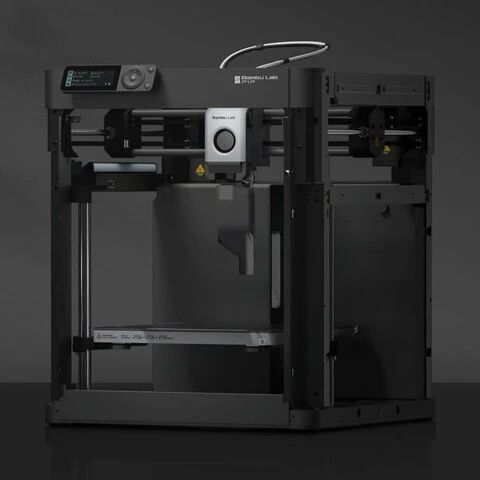
招商证券:消费级3D打印迈向全民创作时代 关注产业链相关机会
智通财经网· 2026-03-26 04:03
Core Insights - The consumer-grade 3D printing industry is transitioning towards a more accessible creative era for individuals and small businesses, driven by advancements in technology and product offerings [1] Group 1: Market Overview - The global 3D printer market is projected to grow from $2.1 billion in 2024 to $8.8 billion by 2029, with a CAGR of 34% during this period [2] - The shipment and ownership of consumer-grade 3D printers are expected to grow at CAGRs of 27% and 21%, respectively, from 2024 to 2029 [2] - In 2024, the top four companies in the consumer-grade 3D printer market will hold a combined market share of 71%, with Chinese brands accounting for over 95% of global shipments [2] Group 2: Company Performance - Tuozhu is positioned to achieve over $10 billion in revenue by 2025, leveraging its focus on Fused Deposition Modeling (FDM) technology and superior product performance [3] - Tuozhu's printers can achieve speeds of up to 1000 mm/s and precision of 0.01 mm, while maintaining high yield rates and stability [3] - The company has established a complete software and hardware ecosystem, enhancing brand influence and customer repurchase rates [3] Group 3: Industry Structure - The upstream of the consumer-grade 3D printing industry includes essential raw materials and core hardware, such as PLA, ABS, PETG, lasers, motherboards, and DLP light engines [4] - The midstream consists of manufacturers of 3D printers and scanners, while the downstream applications primarily focus on consumer goods, education, and cultural products, accounting for 43%, 34%, and 10% of the market, respectively [4] - Relevant companies in the industry include Sikan Technology (3D scanners), Jinchengzi (laser galvanometers), and Anker Innovation (3D printers) [4]

南风股份(300004):核电领域HVAC重要供应商3D打印业务可期
Shenwan Hongyuan Securities· 2026-03-25 15:37
Investment Rating - The report assigns an "Accumulate" rating for the company, marking its first coverage [6][8]. Core Insights - The company is a key supplier in the nuclear power HVAC sector, with over 80% market share in China, and is expected to benefit from the accelerated pace of nuclear power construction during the 14th Five-Year Plan [6][8]. - The company is also venturing into the 3D printing business, which is anticipated to become a significant growth driver in the future [6][8]. - Financial forecasts indicate a recovery in profitability, with projected net profits of 0.42 billion, 1.14 billion, and 1.95 billion yuan for 2025, 2026, and 2027 respectively [7][8]. Financial Data and Profit Forecast - Total revenue is projected to grow from 6.20 billion yuan in 2024 to 12.53 billion yuan in 2027, with a compound annual growth rate (CAGR) of approximately 43.9% [2]. - The net profit attributable to shareholders is expected to increase significantly, from 0.42 billion yuan in 2025 to 1.95 billion yuan in 2027, reflecting a strong recovery trajectory [2][7]. - The earnings per share (EPS) is forecasted to rise from 0.09 yuan in 2025 to 0.41 yuan in 2027 [2][7]. Business Overview - The company specializes in ventilation and air handling systems, primarily serving the nuclear power, subway, and tunnel industries, with a strong competitive position in these markets [18][19]. - The 3D printing segment is being developed through its subsidiary, which aims to provide comprehensive 3D printing services and has already established initial partnerships in various industries [19][20]. Market Position and Competitive Advantage - The company holds a unique position as the first in the industry to obtain design and manufacturing licenses for nuclear-grade fans and valves, establishing a significant barrier to entry for competitors [6][8]. - The HVAC systems for nuclear power plants are critical for ensuring safety and operational efficiency, which enhances the company's value proposition in this sector [59][60]. Growth Drivers - The acceleration of nuclear power construction and infrastructure projects during the 14th Five-Year Plan is expected to drive demand for the company's products [10][11]. - The 3D printing technology, particularly its dual light source approach, is anticipated to find applications in high-tech industries, further diversifying the company's revenue streams [10][11].

消费级3D打印行业报告:消费级3D打印迈向全民创作时代,关注产业链相关机会
CMS· 2026-03-25 08:34
Investment Rating - The report maintains a "Recommended" rating for the consumer-grade 3D printing industry, indicating a positive outlook for the sector [2]. Core Insights - The consumer-grade 3D printing industry is transitioning towards a "universal creation era," with significant growth potential driven by technological advancements and increased accessibility [6][10]. - The global market size for consumer-grade 3D printers is projected to grow from USD 2.1 billion in 2024 to USD 8.8 billion by 2029, reflecting a CAGR of 34% [26]. - The industry is characterized by a concentration of market share among domestic manufacturers, with the top four companies holding 71% of the market in 2024 [31]. Summary by Sections Industry Overview - Consumer-grade 3D printers are designed for individual users and small businesses, primarily for creating prototypes and custom items [11]. - The main technology used in consumer-grade 3D printing is Fused Deposition Modeling (FDM), which is favored for its cost-effectiveness and ease of use [15][17]. Market Growth - The demand for consumer-grade 3D printing is rapidly increasing, driven by advancements in artificial intelligence and printing performance [23]. - The market is expected to see a significant rise in shipment volumes, with a CAGR of 27% from 2024 to 2029 [26]. Competitive Landscape - Domestic manufacturers dominate the market, with companies like拓竹科技 (Tao Zhu Technology) emerging as key players, achieving substantial revenue growth [31][36]. - The report highlights the competitive advantages of拓竹科技, including superior product performance and a complete software-hardware ecosystem [41][44]. Industry Chain Analysis - The consumer-grade 3D printing industry chain consists of upstream material suppliers, midstream printer manufacturers, and downstream application sectors [51]. - Key upstream materials include PLA, ABS, and PETG, while midstream players include major printer manufacturers and 3D scanner companies [52][54]. - The primary application areas for consumer-grade 3D printing are consumer goods, education, and cultural creativity, with respective market shares of 43%, 34%, and 10% [55][57].
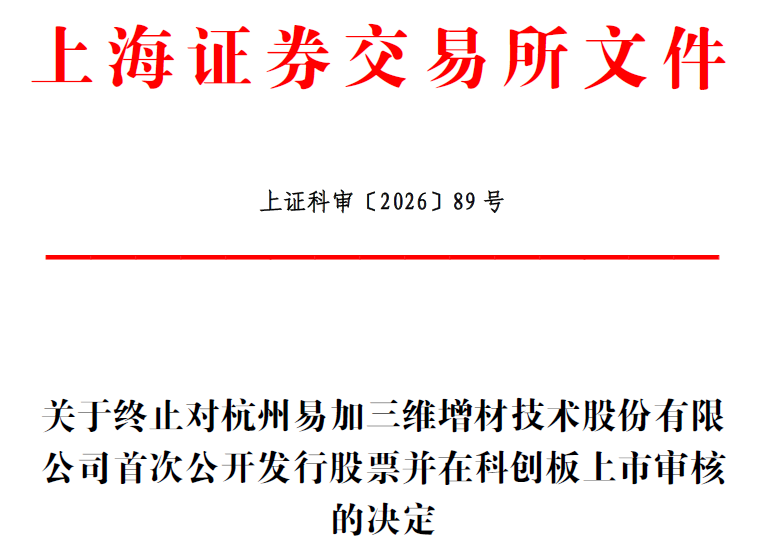
易加增材终止上交所IPO 原拟募资12亿元中信证券保荐
Zhong Guo Jing Ji Wang· 2026-03-25 03:10
Core Viewpoint - Yijia Additive Manufacturing has withdrawn its application for an initial public offering (IPO) on the Sci-Tech Innovation Board, leading to the termination of the review process by the Shanghai Stock Exchange [2][3]. Company Overview - Yijia Additive Manufacturing focuses on the research, production, and sales of industrial-grade additive manufacturing (3D printing) equipment and is classified as a high-tech enterprise [3]. - The controlling shareholder is Hangzhou Yongsheng Holding Group Co., Ltd., which holds 30.64% of the company's shares [3]. - The actual controllers, Li Cheng and Li Jianhao, collectively control 54.53% of the voting rights in the company [3]. IPO Details - The company initially planned to issue up to 29.22 million shares, representing at least 25% of the total share capital post-issue, without involving public sales by shareholders [3]. - The intended fundraising amount was approximately 1.204 billion yuan (120,450.88 million yuan) for various projects, including expansion and R&D [3][4]. Project Funding Breakdown - The total investment for the planned projects is approximately 1.337 billion yuan (133.765 million yuan), with the following allocations: - Beijing Yijia Three-Dimensional Metal 3D Printing Expansion Project: 558.1064 million yuan, with 464.4274 million yuan from the fundraising [4]. - Hangzhou Additive Manufacturing Equipment Industrialization Project: 481.0044 million yuan, with 441.5403 million yuan from the fundraising [4]. - Hangzhou R&D Center Construction Project: 186.6444 million yuan, fully funded by the fundraising [4]. - Technical Service Network Construction Project: 111.8967 million yuan, fully funded by the fundraising [4].