AI原创发现

Search documents
GPT-5破解世纪难题,竟是上网抄来的,哈萨比斯:太尴尬了
3 6 Ke· 2025-10-21 02:26
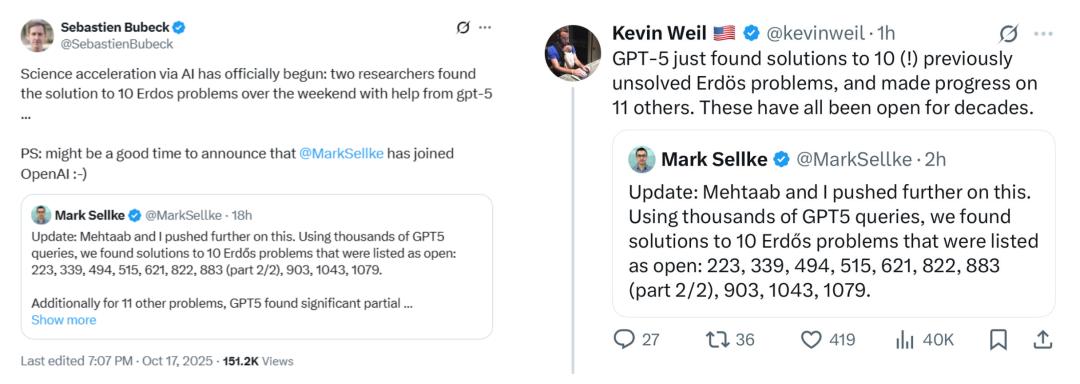
Core Viewpoint - The incident surrounding GPT-5 has been characterized as a farce, where initial claims of the AI solving ten Erdos problems were misleading, as it merely retrieved existing solutions from literature rather than independently solving them [1][3][10]. Group 1: Miscommunication and Misunderstanding - OpenAI scientists initially celebrated GPT-5 for allegedly solving ten long-standing Erdos problems, leading to widespread promotion within the company [1][3]. - The truth revealed that these problems had already been solved in academia, and GPT-5's role was limited to retrieving answers from existing literature [3][10]. - The misunderstanding stemmed from a lack of updated information on the website managing the Erdos problems, which led to the false impression that these problems were unsolved [8][9]. Group 2: Reactions from the Community - Prominent figures in the AI and mathematics community, including Demis Hassabis and Yann LeCun, publicly criticized the situation, highlighting the embarrassment for OpenAI [3][5]. - The developers involved clarified that GPT-5 did not independently solve the problems but efficiently found existing solutions through extensive queries [6][11]. - The incident sparked discussions about the need for caution regarding claims of AI making new scientific or mathematical discoveries, emphasizing the importance of peer review [15][17]. Group 3: Future Implications for AI in Research - Some experts suggest that the future role of AI in mathematics may not be about tackling the hardest problems but rather assisting with routine tasks in research [19][20]. - Despite the controversy, there is recognition that AI can still be a valuable tool in literature retrieval and supporting scientific research [18][20].