
AI科学发现

Search documents
王江平详解如何破除AI科学发现“堰塞湖”
Zhong Guo Xin Wen Wang· 2025-12-16 08:21
Core Insights - The rapid growth of AI prediction results is not matched by human verification and industrialization capabilities, creating a "bottleneck" in scientific discovery application [3][4] - The disparity between the exponential increase in AI predictions and the linear growth of human validation leads to a significant backlog of unverified results [3] Group 1: Reasons for the Bottleneck - The limitations of predictive models, including insufficient logical reasoning, depth of knowledge, and the presence of black box issues and hallucination risks [3] - The absence of standards and evaluation systems makes it difficult to determine the accuracy and composability of numerous prediction results [3] - Insufficient experimental validation capabilities due to poor environmental adaptability, low cross-platform interoperability, and a lack of a closed-loop system for autonomous experiments [3] Group 2: Proposed Solutions - Strengthening the construction of datasets, high-value knowledge centers, and evaluation standards for AI prediction results to reduce redundancy and establish authoritative assessment systems [4] - Accelerating the development of AI autonomous laboratories by promoting open-source and modular approaches, and exploring hybrid augmented intelligence that involves human participation [5] - Enhancing pilot testing platforms to leverage China's application scenarios and foster engineering innovation, while promoting collaboration between academia and industry [5]

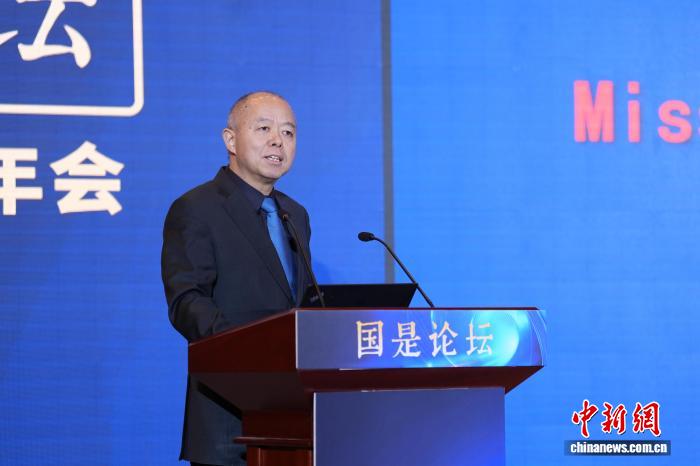
工信部原副部长王江平:AI科学发现存在“堰塞湖”困境
Di Yi Cai Jing· 2025-12-16 06:14
Core Viewpoint - The former Vice Minister of the Ministry of Industry and Information Technology, Wang Jiangping, highlighted a "dam" dilemma in AI scientific discovery, where the exponential growth of AI predictions contrasts sharply with the linear growth of human verification and industrialization capabilities [1] Group 1: AI Prediction and Verification - AI predictions are experiencing exponential growth, while human verification capabilities are growing linearly, leading to a significant gap between the two [1] - The time required for humans to verify AI predictions can take 10 years or longer, creating a bottleneck in the application of scientific discoveries [1] Group 2: Resource Allocation - The mismatch between AI's rapid prediction capabilities and the slow verification process is likened to a "dam," obstructing the pathway for scientific discoveries to be transformed into practical applications [1] - This situation results in a backlog of numerous prediction outcomes that cannot be timely validated or industrialized, consuming substantial research and computational resources [1]