AI驱动推荐算法

Search documents
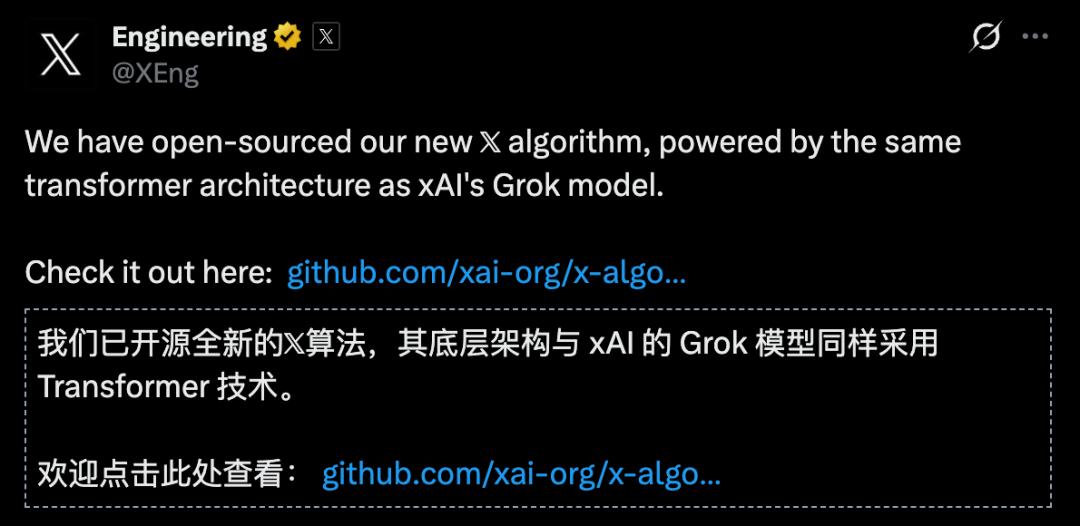
马斯克兑现承诺,开源X推荐算法,100% AI驱动,0人工规则
3 6 Ke· 2026-01-20 12:09
Core Insights - The new recommendation algorithm for the X platform, driven by AI, has been officially open-sourced, marking a significant shift from manual rules to an AI-driven system [1][36] - The algorithm utilizes a dual-engine approach, consisting of Thunder for follower content and Phoenix for global discovery [36] Algorithm Changes - The algorithm is now entirely AI-driven, removing all manually designed features and most human rules [2][36] - The previous manual tuning and recommendation rules have been eliminated, allowing the Grok-based Transformer model to learn from user interaction history [3][36] Information Flow Sources - The "For You" feed is constructed from two main sources: Thunder, which focuses on content from followed accounts, and Phoenix, which discovers content that users may like but do not follow [7][36] - Thunder ensures real-time access to new content from followed accounts, while Phoenix uses machine learning to find relevant posts from a global pool [7][36] Scoring Mechanism - The algorithm predicts user behavior based on 15 different actions, with the final score calculated using a weighted sum of these predictions [9][11] - Negative feedback, such as blocking or muting authors, significantly reduces a post's visibility [12][14] Key Algorithm Mechanisms - Users are penalized for posting multiple times in quick succession, as the algorithm aims to promote content diversity [15][16] - Each post is scored independently, ensuring that high-performing posts do not negatively impact the visibility of others [17][18] - User engagement metrics, such as time spent on a post, are crucial for determining content exposure [19][20] - Posts that have already been seen by a user will not be recommended again, ensuring fresh content with each refresh [23][24] Content Filtering - The algorithm employs a two-stage filtering process to remove duplicates, irrelevant content, and posts that users cannot access [27][28] Design Principles - The algorithm is built on five core design principles, including zero manual feature engineering and candidate isolation to ensure independent scoring of posts [30][31][32][33][34] Implications for Content Creators - To maximize exposure, creators should focus on engaging content that encourages user interaction and avoid practices like spamming or posting external links [35] - The open-sourcing of the algorithm represents a milestone in social media transparency, aligning with the company's commitment to openness since the acquisition of Twitter [36][37]