AI 3D 生成

Search documents
OpenAI 黑客松冠军、英伟达 CES 幕后,都在用同一个 3D 工具
Founder Park· 2026-03-09 10:41
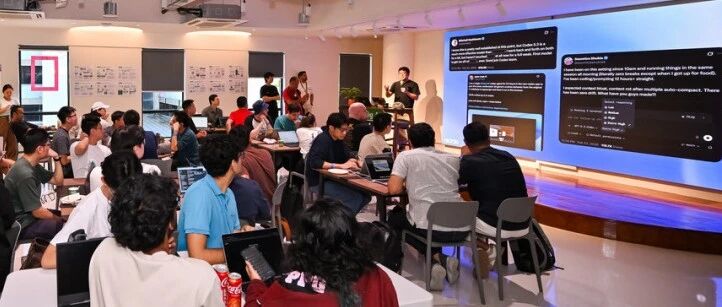
Core Insights - Varick Lim won the first OpenAI Codex Hackathon with a project called StoryWorld, which allows users to create 3D scenes using just an iPhone [2][5] - The technology stack behind StoryWorld includes Hyper3D Rodin, which is crucial for generating 3D assets with complete geometric structure and material information [7][9] - Hyper3D is positioned as a versatile tool that can be integrated into existing production workflows, addressing the need for high-quality, editable 3D models [20][22] Group 1: StoryWorld and Its Impact - StoryWorld enables anyone to become a director, transforming a smartphone into a portable studio [5] - The project stood out among over 100 developers and 50 entries, showcasing the potential of AI in creative fields [5][9] - Hyper3D Rodin is essential for generating 3D assets that can be accurately placed and manipulated in real space, which is a significant advancement over existing 2D representations [9][10] Group 2: Hyper3D's Unique Features - Hyper3D allows for the generation of 3D models that meet production standards, including clean topology and PBR materials, making them suitable for animation and rendering [22][24] - The introduction of Rodin Gen-2 Edit enables users to make localized edits to 3D models using natural language, significantly speeding up the modification process [24][26] - Hyper3D can also import existing 3D assets for editing, making it a flexible tool that integrates into various production pipelines [26] Group 3: Industry Demand and Future Prospects - The demand for 3D content is increasing across multiple sectors, including gaming, e-commerce, and digital twins, but the supply of high-quality 3D assets has not kept pace [34][35] - Traditional modeling processes are time-consuming, often taking days to weeks, while AI tools like Hyper3D can potentially reduce this to minutes, provided the output is usable [35] - The successful application of Hyper3D in both hackathons and high-profile projects like NVIDIA's CES presentation indicates its growing acceptance and validation in the industry [29][30][35]