Accents

Search documents
What is a Coloured South African? | Shimmy Isaacs | TEDxGeorge
TEDx Talks· 2026-03-19 16:06
forin. blow my but listen now. Hey, what are you colored.A term recently that made headlines on a global stage when local South African musician Tyler was asked, "What are you?" And she responded, "Colored." There was an emotional outrage by the African-Americans. HOW DARE YOU. BECAUSE AS we know that term in the United States holds a derogatory insult towards Africanameans.While there was an outrage in the United States by black people, some of us down here felt proud. We felt seen. We suddenly felt heard. ...

The Hidden Power of Accents: Identity, Bias & Belonging | Steven Feraru | TEDxArendal
TEDx Talks· 2025-12-15 17:57
Cultural Identity & Communication - Accents and dialects significantly influence perceptions of intelligence, socioeconomic status, and personality [1][4][6] - Language shapes cultural understanding, with even small words carrying distinct cultural meanings [1] - Judgments based on accents have historical roots, exemplified by the ancient Greek term "barbaros" [4][5] - Social media is a major driver of accent evolution, leading to convergence across geographical boundaries [9] Linguistic Analysis - Languages possess inherent sound qualities, with some perceived as "sexy" (e g, Spanish) due to open vowels and low vocal placement [1][2] - Perceptions of harshness in languages (e g, German) are often influenced by stereotypes and limited exposure [2][3] Personal & Social Impact - Individuals may alter their accents to fit in or project a certain image [1] - Accents tell a story about a person's background, experiences, and influences [10] - Embracing one's accent can be a powerful statement of identity [11][12]

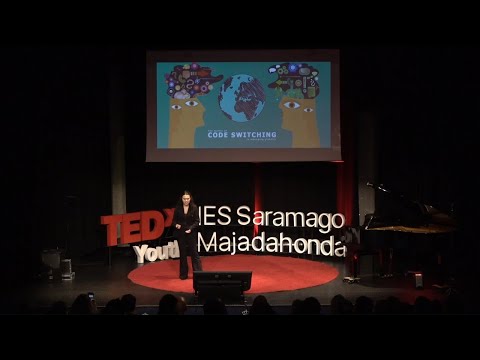
Too Foreign to Belong, too Fluent to Be Understood | Delia Sanz | TEDxIES Saramago Majadahonda Youth
TEDx Talks· 2025-11-10 17:04
Identity & Belonging - Accents carry assumptions about credibility, class, intelligence, and kindness, but can also be questioned and judged [2] - Belonging is complex and not as simple as one word, place, or passport [4] - Individuals with multicultural backgrounds often experience a sense of not fully belonging in any one place [6][13] - Identity is not a fixed thing but a tension and space in between different places and versions of oneself [14] - Home can be seen as the space between all the places one can't go back to [15] Language & Communication - People often make assumptions about others based on their accents and where they perceive them to be from [1] - Fluency in a language doesn't guarantee acceptance or a sense of belonging [9] - Code-switching, both linguistic and emotional, involves adapting one's voice and language to fit in, potentially leading to a loss of authenticity [12][13] - The world needs more honest voices, including those that are fractured, foreign, or fluent [25] - Belonging is a decision to show up with one's true voice, accent, and tone, even when the world demands silence [24]
“Say This, Not Diss”: The Story About Our Accents | Jennifer Xu | TEDxShanghai American School Puxi
TEDx Talks· 2025-10-21 15:34
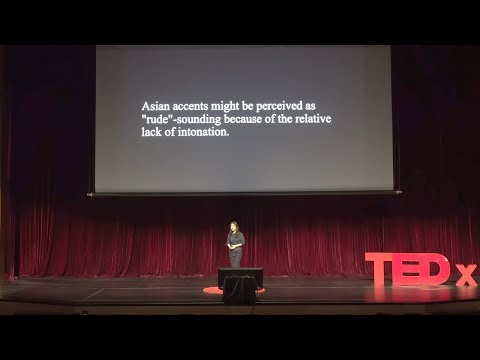
Language & Identity - Accents are remnants of one's mother tongue, serving as powerful indicators of identity and culture [10][19] - Accents carry snippets of culture and help non-native speakers find community [19] - Villainizing accents increases societal divides and erases a sense of community [20][21] Accent Bias & Discrimination - Accents are used to justify that certain groups do not belong, causing biases in education and professional opportunities [11] - Accent biases are not uniform; some accents (e.g, French, Italian) are viewed more positively than others (e.g, Asian) [12] - Foreign accents like Chinese or Scottish are rated less credible [12][13] - Regional accents can lead to discrimination, with standard accents associated with higher social status [15] Accent Modification & Acceptance - Many people modify their accents to fit in, seeking advantages in professional and social settings [16] - Native English speakers constitute only approximately 7% of the world's population, indicating that most English is spoken with accents [18] - Normalizing accents promotes diversity and fosters connection [21] - Clarity in speech should be encouraged over emulating a specific way of speaking [25]
How accents make language more beautiful | Muftiat Adeyi | TEDxUniversityofMississippi
TEDx Talks· 2025-10-18 17:00
Cultural Impact and Linguistic Diversity - The speaker recounts an experience of prejudice based on their Yoruba language, highlighting the threat perceived by some towards unfamiliar languages [1][2] - The speech emphasizes the value of linguistic diversity, arguing against the pressure to conform to a single standard accent [3][7] - Accents are portrayed as integral to cultural identity and should be celebrated rather than seen as a deficit [7][15] - Linguistic diversity is linked to cultural appreciation and deeper understanding, extending to aspects like cuisine [8][13] - The speaker uses the example of a classroom exercise to demonstrate how unfamiliar sounds can challenge linguistic biases and promote connection [9][10][11] - The speech references the fusion of languages and cultures, citing examples like Mexican-Korean cuisine and the Southern dish gumbo, to illustrate cultural creativity [12][13] - The rise of international entertainment like Korean dramas, Nollywood, and Bollywood demonstrates the power of language in cultural appreciation [14] Societal Implications and Research - Research indicates that accent-based linguistic profiling can lead to job discrimination against qualified individuals [8] - Studies suggest that bilingualism enhances cognitive abilities such as problem-solving and multitasking [8][9] - The speech critiques the societal tendency to perceive certain accents as "proper" while others are deemed "fake," often linking accent to intelligence [9] - The speaker advocates for treating unfamiliar accents with curiosity and respect, comparing them to dishes at a friend's dinner table [16][17]
How accents shape us | Bino Vũ | TEDxHANU
TEDx Talks· 2025-08-04 15:20
Accents and Perception - Accents significantly influence how individuals are perceived and judged, impacting assumptions about their education, competence, and background [9] - Communication effectiveness is more crucial than sounding native; accent is merely a tool for conveying messages [8][12] - There is no truly neutral or standard accent; these are constructs that can be used to create hierarchies [9] - Accent reflects an individual's life story, originating from their native language and dialect [9] Bias and Discrimination - Job applicants with foreign accents are 16% less likely to receive callbacks, highlighting potential bias in hiring processes [12] - Individuals may face judgment and discrimination based on their accents, affecting their interactions and opportunities [9][11] Embracing Linguistic Diversity - Individuals should be proud of their accents and not be afraid to showcase them, as the message conveyed is more important than the accent itself [15][18] - Learning new accents can be beneficial for various reasons, such as career advancement or entertainment, without diminishing the value of one's original accent [16][18] - The goal should be clarity and connection in communication, rather than conforming to a native-like accent [12]