Agricultural green development

Search documents
农产品“含绿量”成绩单出炉,从中能读出哪些信息?
Ren Min Wang· 2026-02-20 05:48
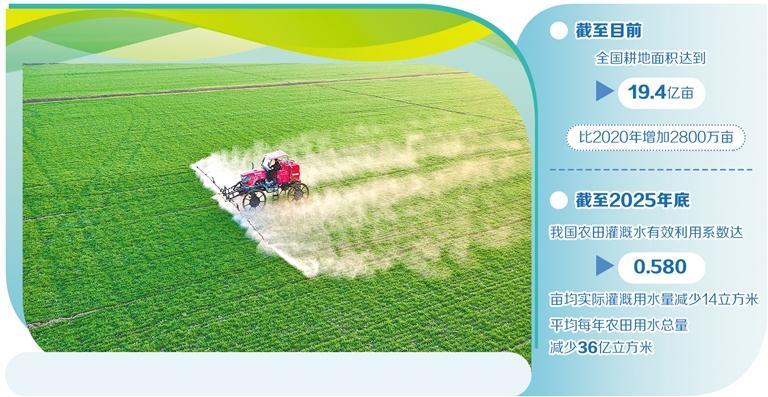
Group 1: Agricultural Development and Green Transformation - The total number of green, organic, and geographical indication agricultural products in China has reached 86,000, with the application of chemical fertilizers decreasing by 5% to 49.88 million tons compared to 2020, indicating that green development is a core driver of agricultural modernization [1] - The proportion of high-quality agricultural products, such as specialty rice, specific wheat, and high-oil high-protein soybeans, is increasing, with the quality of vegetables showing a compliance rate of over 99%, ensuring safer and healthier food for consumers [1] - The comprehensive utilization rate of agricultural waste, particularly straw, has reached a high level, with various effective utilization models being explored, contributing to environmental protection and rural energy supply [3] Group 2: Water Conservation and Irrigation Efficiency - The effective utilization coefficient of irrigation water in farmland has reached 0.580, with an average annual reduction of 3.6 billion cubic meters in total agricultural water use, demonstrating a shift towards water-saving practices [2] - In Dezhou, the irrigation water volume for 2025 is projected to decrease by 35 million cubic meters compared to the average level during the 13th Five-Year Plan, while maintaining high grain yields [2] - The time required for water transportation in Jiangsu has been halved, reflecting advancements in water-saving technology and increased awareness among farmers [2] Group 3: Fertilizer and Pesticide Utilization - By 2025, the utilization rates of fertilizers and pesticides for major crops like wheat, corn, and rice are expected to reach 43.3% and 44.1%, respectively, marking an increase of 3.1 and 3.5 percentage points since 2020, aligning with international standards [3] - The steady progress in the recovery of agricultural films and the promotion of biodegradable films are reducing soil contamination and supporting sustainable agricultural practices [3]

为农业现代化注入“绿色动能”
Xin Lang Cai Jing· 2026-02-12 22:40
Group 1: Core Insights - The article emphasizes the importance of accelerating the green transformation of agriculture to achieve high-quality development, highlighting the positive progress made in agricultural green development in China [2][3] - Agricultural resource conservation is identified as a key enabler for industrial upgrading, enhancing competitiveness, and reducing production costs while promoting the quality and safety of agricultural products [3][4] - The demand for high-quality agricultural products is driving changes in production methods, leading to a reduction in the use of harmful substances and promoting sustainable practices [6][7] Group 2: Resource Conservation and Environmental Protection - Resource conservation measures such as soil and water preservation, and biodiversity protection are crucial for sustainable agricultural development, with China's cultivated land area increasing to 1.94 billion acres, up by 28 million acres since 2020 [2][3] - Innovative ecological farming practices in regions like Hubei and Shaanxi are revitalizing previously idle land and creating job opportunities, demonstrating the potential for ecological benefits to drive economic growth [4][5] Group 3: Quality and Safety of Agricultural Products - The Ministry of Agriculture and Rural Affairs has conducted multiple national quality safety monitoring efforts, achieving a 98% compliance rate for various agricultural products, indicating a steady improvement in product quality [6][7] - The total number of green, organic, and geographical indication agricultural products in China has exceeded 88,000, reflecting a shift towards higher quality and more nutritious food options [6][7] Group 4: Green Technology and Practices - The article discusses the necessity of green technology innovation and the promotion of sustainable agricultural practices to meet production and environmental goals, with a focus on water-saving irrigation and organic farming techniques [8][9] - By 2025, the effective utilization coefficient of irrigation water in farmland is expected to reach 0.580, with a significant reduction in annual irrigation water usage [8][9] Group 5: Challenges and Future Directions - Despite progress, challenges remain in understanding agricultural resource potential and environmental impacts, as well as addressing the long-standing issue of quality not translating to price [9] - The Ministry of Agriculture and Rural Affairs plans to enhance the agricultural system and promote a comprehensive green transformation by 2026, focusing on resource conservation and sustainable practices [9]