organic

Search documents
United Natural Foods, Inc. (NYSE: UNFI) Financial Performance Analysis
Financial Modeling Prep· 2026-03-10 16:03
Core Viewpoint - United Natural Foods, Inc. (UNFI) is facing challenges in meeting earnings expectations, but has shown a turnaround in profitability despite a decrease in sales outlook [2][3][5] Financial Performance - UNFI reported an earnings per share (EPS) of $0.31, which was below the estimated $0.51 [2][5] - The company's revenue for the second quarter was approximately $7.95 billion, falling short of the expected $8.11 billion, reflecting a 2.6% decrease in net sales [2][3] - Despite the revenue shortfall, UNFI achieved a net income of $20 million in the second quarter, indicating a return to profitability [2][5] Valuation Metrics - The price-to-sales ratio for UNFI is 0.075, suggesting the stock is undervalued relative to its sales [4] - The enterprise value to sales ratio is 0.17, providing insight into the company's valuation compared to its revenue [4] - UNFI's debt-to-equity ratio stands at 2.09, indicating that the company has more than twice as much debt as equity [4] - The current ratio is 1.33, suggesting a reasonable level of liquidity to cover short-term liabilities [4] - The enterprise value to operating cash flow ratio is 10.24, reflecting the company's cash flow efficiency relative to its enterprise value [4]


农产品“含绿量”成绩单出炉,从中能读出哪些信息?
Ren Min Wang· 2026-02-20 05:48
Group 1: Agricultural Development and Green Transformation - The total number of green, organic, and geographical indication agricultural products in China has reached 86,000, with the application of chemical fertilizers decreasing by 5% to 49.88 million tons compared to 2020, indicating that green development is a core driver of agricultural modernization [1] - The proportion of high-quality agricultural products, such as specialty rice, specific wheat, and high-oil high-protein soybeans, is increasing, with the quality of vegetables showing a compliance rate of over 99%, ensuring safer and healthier food for consumers [1] - The comprehensive utilization rate of agricultural waste, particularly straw, has reached a high level, with various effective utilization models being explored, contributing to environmental protection and rural energy supply [3] Group 2: Water Conservation and Irrigation Efficiency - The effective utilization coefficient of irrigation water in farmland has reached 0.580, with an average annual reduction of 3.6 billion cubic meters in total agricultural water use, demonstrating a shift towards water-saving practices [2] - In Dezhou, the irrigation water volume for 2025 is projected to decrease by 35 million cubic meters compared to the average level during the 13th Five-Year Plan, while maintaining high grain yields [2] - The time required for water transportation in Jiangsu has been halved, reflecting advancements in water-saving technology and increased awareness among farmers [2] Group 3: Fertilizer and Pesticide Utilization - By 2025, the utilization rates of fertilizers and pesticides for major crops like wheat, corn, and rice are expected to reach 43.3% and 44.1%, respectively, marking an increase of 3.1 and 3.5 percentage points since 2020, aligning with international standards [3] - The steady progress in the recovery of agricultural films and the promotion of biodegradable films are reducing soil contamination and supporting sustainable agricultural practices [3]

Altria's Q4 Earnings Lag Estimates, Cigarette Volumes Drop
ZACKS· 2026-01-29 17:20
Core Insights - Altria Group Inc. reported fourth-quarter 2025 results with top-line revenue exceeding estimates but declining year over year, while bottom-line earnings missed expectations and remained flat compared to the previous year [1] Financial Performance - Adjusted earnings per share (EPS) for the fourth quarter were $1.30, flat year over year, and below the Zacks Consensus Estimate of $1.31, influenced by a lower adjusted tax rate and reduced share count, offset by lower adjusted operating companies' income (OCI) [2] - Net revenues totaled $5,846 million, a decline of 2.1% year over year, primarily due to decreased revenues in the smokeable products segment, although it surpassed the consensus estimate of $5,002 million [3] Segment Analysis - **Smokeable Products**: Net revenues fell 2.7% year over year to $5,119 million, driven by reduced shipment volume and increased promotional investments, partially offset by higher pricing. Revenues net of excise taxes decreased 1.1% [4] - Domestic cigarette shipment volumes dropped 7.9%, attributed to industry decline and trade inventory movements, while cigar shipment volumes increased by 4.2% [5] - Adjusted OCI in this segment decreased 2.4% to $2,643 million, impacted by reduced shipment volume and higher costs, with adjusted OCI margins falling 0.8 percentage points to 60.4% [6] - **Oral Tobacco Products**: Net revenues increased 2% to $706 million, driven by higher pricing, although shipment volumes declined by 6.3% due to retail share losses and trade inventory movements [7][8] - Adjusted OCI in this segment decreased 4.6%, influenced by elevated SG&A costs and a decline in shipment volumes, with adjusted OCI margins decreasing 5 percentage points to 64.5% [9] Capital Management - Altria ended the quarter with cash and cash equivalents of $4,474 million and long-term debt of $24,140 million, alongside a total stockholders' deficit of $3,502 million [10] - In Q4 2025, the company repurchased 4.8 million shares for $288 million, and for the full year, it repurchased 17.1 million shares totaling $1 billion, with $1 billion remaining under the share repurchase program [11] Future Outlook - For 2026, Altria expects adjusted EPS in the range of $5.56 to $5.72, indicating year-over-year growth of 2.5% to 5.5% from a base of $5.42 in 2025, with growth anticipated to be weighted towards the second half of the year [12] - The company projects an adjusted effective tax rate of 22.5% to 23.5%, capital expenditures of $300-$375 million, and depreciation and amortization expenses of approximately $225 million [13]


How Is B&G Foods Reshaping Its Brand Portfolio for Growth?
ZACKS· 2026-01-16 14:16
Core Insights - B&G Foods, Inc. (BGS) is acquiring Del Monte Foods' broth and stock business for approximately $110 million, which includes the College Inn and Kitchen Basics brands, aimed at enhancing its presence in core grocery categories and supporting long-term cash flow growth [1][8] Acquisition Details - The acquisition follows a competitive bidding process as part of Del Monte's Chapter 11 restructuring and requires Bankruptcy Court approval, with an expected closing in the first quarter of 2026 [2] - B&G Foods anticipates the acquisition to be immediately accretive to profitability, projecting annual sales of $110 million to $120 million and adjusted EBITDA of $18 million to $22 million, contributing approximately 8-12 cents per share [3][8] Valuation Metrics - The purchase price reflects a valuation multiple of around 5.5 times EBITDA, which could decrease to approximately 4.8 times when accounting for anticipated tax benefits, with a net present value of these benefits estimated at $15 million [4] Strategic Focus - B&G Foods is concentrating on strengthening its business through portfolio simplification, operational efficiencies, and disciplined capital allocation, aiming to improve margins, enhance cash flow stability, and reduce balance sheet risk [5] Stock Performance - B&G Foods shares have decreased by 1.1% over the past month, outperforming the industry decline of 2.9%, but underperforming the broader Consumer Staples sector and the S&P 500, which gained 2.2% and 2.3%, respectively [6]
Can McCormick's Innovation & Distribution Wins Offset Cost Pressures?
ZACKS· 2026-01-14 16:55
Core Insights - McCormick & Company, Inc. (MKC) achieved a solid quarterly performance, marking its fifth consecutive quarter of volume-driven growth, supported by a differentiated product portfolio and ongoing investments in brands and innovation [1][8] - Despite rising costs impacting gross margins, disciplined execution of efficiency initiatives has led to continued operating profit growth [1][8] Consumer Segment Performance - In the third quarter, organic sales in the Consumer segment increased by 3%, driven by volume growth across core categories and supported by brand marketing and innovation investments [2][8] - The company is focusing on further investments in the consumer segment to sustain volume growth, including enhanced brand marketing and revenue management initiatives [2] Collaboration and Innovation - McCormick is partnering with both established and emerging brands to create flavors for health-oriented products, which aligns with favorable trends in health and wellness [3] - Management anticipates that new innovations and expanded distribution will help mitigate competitive pressures, particularly in the Mexican flavor segment [4] Future Outlook - Management is optimistic about healthy consumption trends and expects volume growth to persist into the fourth quarter, driven by broader distribution and sustained marketing efforts [5] - The Zacks Consensus Estimate indicates a year-over-year earnings growth of 2.4% for fiscal 2025 and 6.5% for fiscal 2026 [10] Valuation Metrics - MKC's shares have declined by 4.7% over the past six months, compared to a 3.8% decline in the industry [6] - The company currently trades at a forward price-to-earnings ratio of 20.86, which is higher than the industry average of 16.49 [9]

Is Colgate's Cost Discipline Enough in a Softer Demand Cycle?
ZACKS· 2026-01-13 18:05
Core Insights - Colgate-Palmolive Company's productivity initiatives are crucial in mitigating the impact of rising raw material and packaging costs in Q3 2025 [1][8] - The Strategic Growth and Productivity Program is enhancing margin performance and operational efficiency amid cost inflation and fluctuating category trends [2][8] - The integration of AI and predictive analytics is aimed at automating processes, improving cash flow, and increasing supply chain agility [1][3][8] Financial Performance - Colgate is experiencing increased leverage across its profit and loss statement by optimizing its supply chain, which is yielding efficiency gains despite softer overall volumes [3][4] - The company is focused on disciplined cost control and productivity gains to protect margins, although the sustainability of this approach in the face of demand softness remains a concern [4] - The Zacks Consensus Estimate indicates a year-over-year earnings decline of 1.7% for the current fiscal year and 5.2% for the next fiscal year [9] Valuation Metrics - Colgate's shares have decreased by 7.8% over the past six months, compared to a 10.5% decline in the industry [5] - The company currently trades at a forward price-to-earnings ratio of 21.24, which is higher than the industry average of 17.88 [7]


Can Tyson Foods' Chicken Segment Drive Consistent Profit Growth?
ZACKS· 2026-01-13 15:55
Core Insights - Tyson Foods' chicken segment has become its most reliable profit driver in fiscal 2025, raising questions about the sustainability of this momentum over time [1] Financial Performance - In Q4 of fiscal 2025, the chicken segment achieved adjusted operating income of $457 million, an increase from $356 million year-over-year, with adjusted margins rising to 10.4% from 8.4% [2] - For the full fiscal year, adjusted operating income in the chicken segment reached $1.48 billion, with margin expansion to 8.8% from 6.2% in fiscal 2024 [2] Operational Drivers - The improvement in the chicken segment was primarily due to better execution rather than pricing, with higher volumes, improved operating efficiency, and lower feed costs being the main contributors [3] - Fiscal 2025 marked the fourth consecutive quarter of year-over-year volume growth in the chicken business, indicating steady demand and improved supply-chain operations [3] - Growth in value-added products has enhanced the sales mix, reducing exposure to short-term volatility in commodity chicken pricing [3] Future Outlook - For fiscal 2026, Tyson Foods anticipates the chicken segment to continue being a significant profitability contributor, with projected adjusted operating income between $1.25 billion and $1.5 billion [4] - The company is focusing on controllable areas to maintain steady performance [4] Market Sensitivity - The chicken business remains sensitive to fluctuations in commodity costs and increased marketing or promotional spending, making the sustainability of recent gains dependent on operational discipline and adaptability to the broader protein market [5] Stock Performance - Tyson Foods shares have increased by 15.1% over the past three months, outperforming the broader Consumer Staples sector and the S&P 500 index [6]

Are Sysco's U.S. Foodservice Operations Gaining Executional Traction?
ZACKS· 2026-01-13 15:05
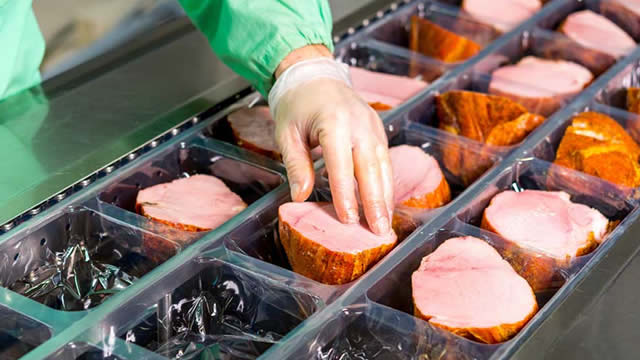
Core Insights - Sysco Corporation's U.S. Foodservice business demonstrated improved execution in Q1 of fiscal 2026, with better operational performance and local volume trends [1][6] Group 1: Sales and Volume Performance - U.S. Foodservice sales increased by 2.9% year over year to $14.8 billion, with total case volume rising by 0.1% sequentially from the previous quarter [2][9] - Local case volume within U.S. Foodservice decreased by 0.2%, impacted by an intentional business exit in the FreshPoint business, which negatively affected local volumes by over 50 basis points; excluding this, local volumes increased by 0.3% [2] - The U.S. Broadline local business achieved a volume growth of 0.4%, reflecting a 130-basis-point sequential improvement compared to the prior quarter, outperforming the 60-basis-point improvement in industry restaurant traffic [3] Group 2: Operational Improvements - Sysco experienced significant gains in customer service levels, including enhancements in on-time and in-full deliveries, alongside strengthened supply-chain performance due to better colleague productivity and reduced product shrink [4] - The momentum in U.S. Foodservice execution is expected to continue into Q2, with management indicating that local volume is anticipated to improve by at least 100 basis points compared to Q1 [5][9] Group 3: Market Position and Stock Performance - Sysco's first-quarter results highlight the benefits of tighter execution and improved service reliability, even amid uneven broader industry demand [6] - Sysco's shares have risen by 0.5% over the past year, contrasting with a 15.7% decline in the industry [7]


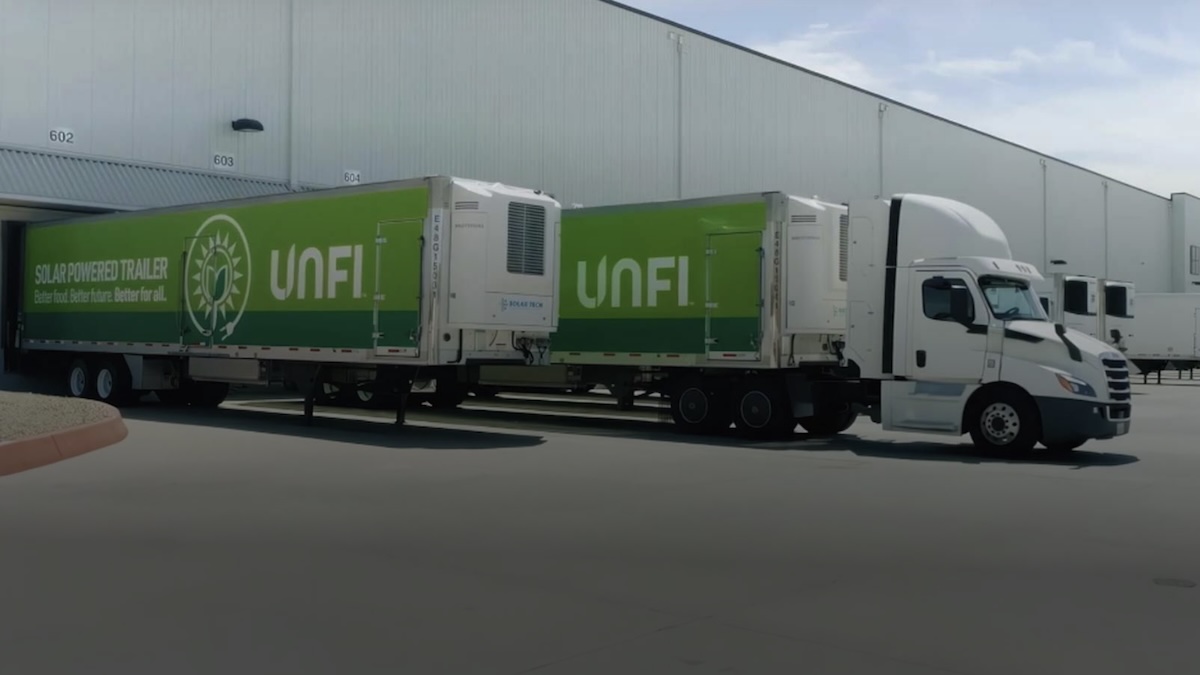
United Natural Foods (UNFI) Faced a Cyber Attack in June
Yahoo Finance· 2026-01-09 15:05
Core Insights - Kingdom Capital Advisors achieved a 17.45% return net of fees in 2025, despite facing significant challenges including a bankruptcy and a cyberattack [1] - The firm's composite return for Q4 2025 was 8.88%, outperforming the Russell 2000 TR (2.19%), S&P 500 TR (2.68%), and NASDAQ 100 TR (2.47%) [1] Company Performance - United Natural Foods, Inc. (NYSE:UNFI) had a one-month return of 0.58% and a 52-week gain of 20.92%, closing at $33.00 per share with a market capitalization of $2.011 billion on January 8, 2026 [2] - Despite being a top contributor for FY25, UNFI faced challenges in Q4, with weakening investor sentiment impacting its stock performance [3] Market Position - UNFI was held by 25 hedge fund portfolios at the end of Q3 2025, a decrease from 27 in the previous quarter, indicating a slight decline in popularity among hedge funds [4] - The company's net sales for Q1 FY26 were $7.8 billion, consistent with the previous quarter, suggesting stable revenue performance [4]
This High-Yield Dividend Stock Could Be One of the Top Buys for 2026
Yahoo Finance· 2026-01-06 00:30
Core Viewpoint - Cal-Maine Foods is positioned as a strong investment opportunity due to its high dividend yield, robust earnings, and strategic expansion into prepared foods, despite recent stock volatility and market challenges [5][17]. Financial Performance - Cal-Maine reported net sales of $922.6 million for Q1, a 17.4% increase year-over-year, with net income of $199.3 million, or $4.12 per diluted share, driven by higher shell-egg prices and prepared-food sales [7]. - The company sold approximately 317.6 million dozen eggs, a 2.5% increase YoY, with a net average selling price of $2.486 per dozen [8]. - Gross profit reached $311.3 million, reflecting a 33.7% margin, while operating income was $249.2 million, supported by lower feed costs [8]. Dividend and Valuation - Cal-Maine's dividend yield stands at approximately 11%, significantly higher than the average yield of 2.9% in the consumer staples sector, with a payout ratio of 33% of earnings [1][5]. - The stock trades at about 3× forward earnings, well below the consumer defensive sector median P/E of roughly 12×, indicating it is undervalued [2][10]. Market Position and Strategy - As the largest fully integrated egg producer in the U.S., Cal-Maine offers a diverse product mix, including cage-free and organic eggs, and has expanded into prepared egg foods [4]. - Recent management changes and a $15 million expansion at Echo Lake Foods aim to enhance production capacity and efficiency in prepared foods, expected to increase output by 30% over the next one to two years [12][13]. Analyst Sentiment - Analysts have noted Cal-Maine's potential for growth, with some projecting a 20% increase in share price over the next year, while others maintain a cautious outlook due to expected easing of egg prices [5][16]. - The average price target among analysts suggests a potential upside of around 19% from current trading levels [16][18].