Alcohol Industry Cross - border M&A

Search documents
青岛啤酒弃购即墨黄酒,酒业跨界算盘为何总落空?
Sou Hu Cai Jing· 2025-10-27 13:48
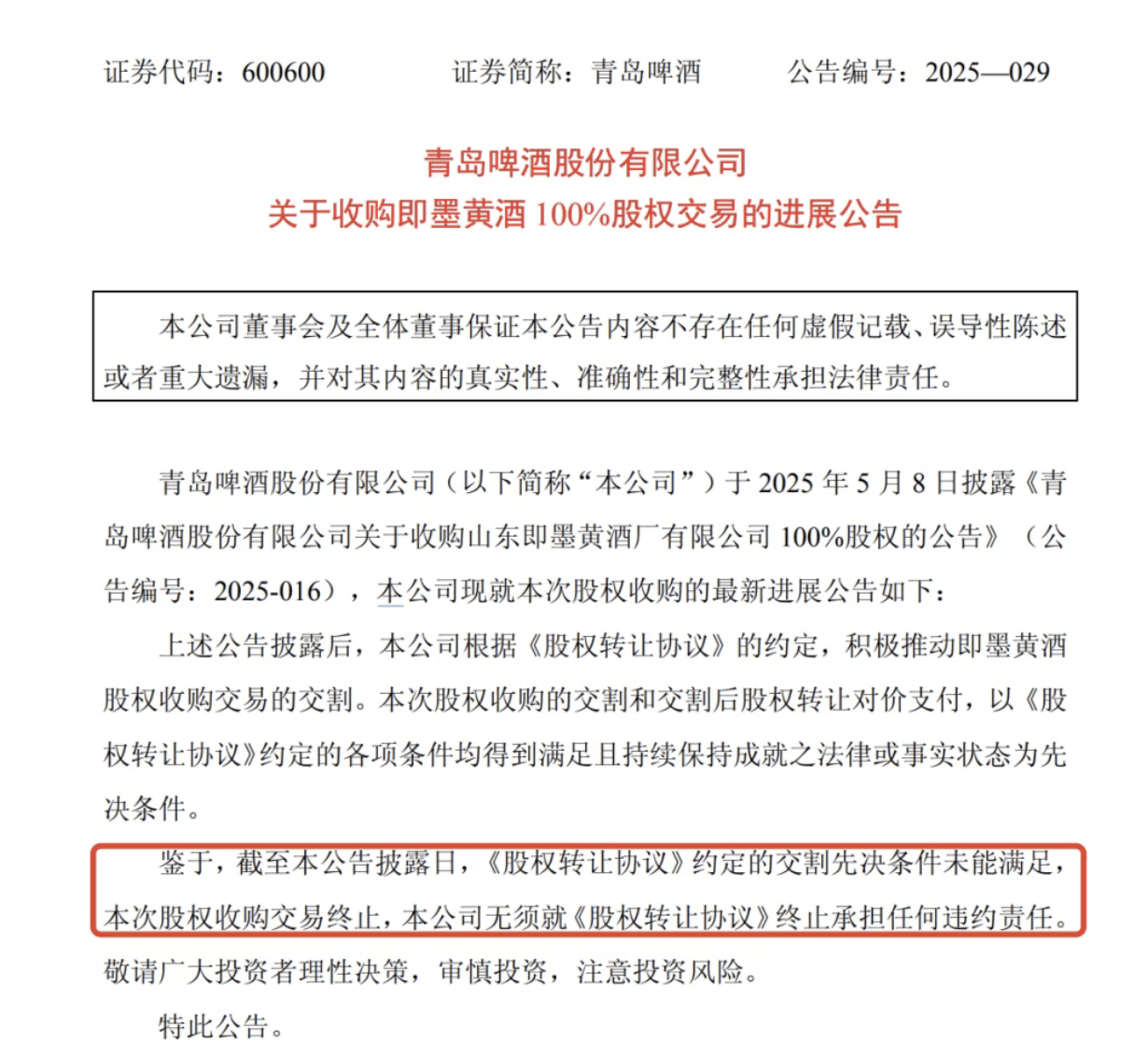
Core Viewpoint - Qingdao Beer has decided to terminate its acquisition of 100% equity in Shandong Jimo Yellow Wine Factory for 665 million yuan due to unmet conditions in the share transfer agreement, ending over five months of anticipation [1][3][5]. Group 1: Acquisition Details - The acquisition was initially seen as a strategic move to complement Qingdao Beer's seasonal sales through the integration of beer and yellow wine, leveraging its 11,600 distributors for nationwide expansion [3][5]. - The 120-day delivery period set in the share transfer agreement was not met due to issues such as asset freezing and financial disputes involving the controlling shareholder, leading to the transaction's failure [5][6]. - Jimo Yellow Wine faced significant financial challenges, including a 77% debt ratio and 705 million yuan in total liabilities, which exceeded industry standards [6][8]. Group 2: Financial Implications - Qingdao Beer reported a revenue of 20.491 billion yuan and a net profit of 3.904 billion yuan in the first half of 2025, indicating a 7.21% year-on-year growth, suggesting that the termination of the acquisition will have a limited impact on its overall financial performance [6][8]. - The company’s high-end product sales increased by 5.1%, reflecting the effectiveness of its high-end strategy despite the acquisition setback [6][12]. Group 3: Industry Context - The yellow wine market is significantly smaller than the beer market, with a market size of only 21 billion yuan in 2024, representing less than 12% of the beer market [10]. - The yellow wine industry has experienced a compound annual growth rate of only 3.2% over the past decade, which is considerably lower than the growth rates of beer and white spirits [10][12]. - The challenges of cross-industry acquisitions in the beverage sector are highlighted by previous unsuccessful attempts by other companies, indicating that such strategies may not be effective in overcoming growth bottlenecks [12].