BEPS 2.0支柱二

Search documents
生命科学企业出海BD税务筹划——支柱二影响网络研讨会
Sou Hu Cai Jing· 2026-02-10 03:38
Core Insights - The Chinese life sciences industry is showcasing its innovative capabilities and is increasingly engaging in outbound business development (BD) activities, despite facing challenges from global tax rule changes and complex tax issues [1][2] Group 1: Industry Trends - Recent large transactions in the BD sector highlight the rapid development of domestic biotech companies, which are playing a crucial role in driving global innovation [2] - Biotech companies are expanding into global markets through various methods such as license-out agreements, establishing overseas operational entities, or forming joint ventures, which involve complex tax considerations [2][3] Group 2: Tax Planning and Compliance - The tax costs and considerations associated with BD transactions are critical for maximizing value, necessitating prior planning of global IP arrangements based on commercial needs, feasibility, R&D costs, and new international tax rules [3] - The OECD's Pillar Two global minimum tax initiative is reshaping cross-border profit distribution and is directly linked to global investment and operational strategies of companies [2][4] Group 3: Regulatory Developments - The BEPS 2.0 Pillar Two international tax rules emphasize economic substance and are becoming a clear trend in international taxation, with increasing scrutiny from overseas tax authorities on the reasonableness of related-party transactions [4][5] - Although Chinese regulations are not yet in place, life sciences companies are already facing stricter international tax compliance requirements as they expand abroad [5]
中亚五国的税收环境及税收风险
Sou Hu Cai Jing· 2025-11-18 12:09
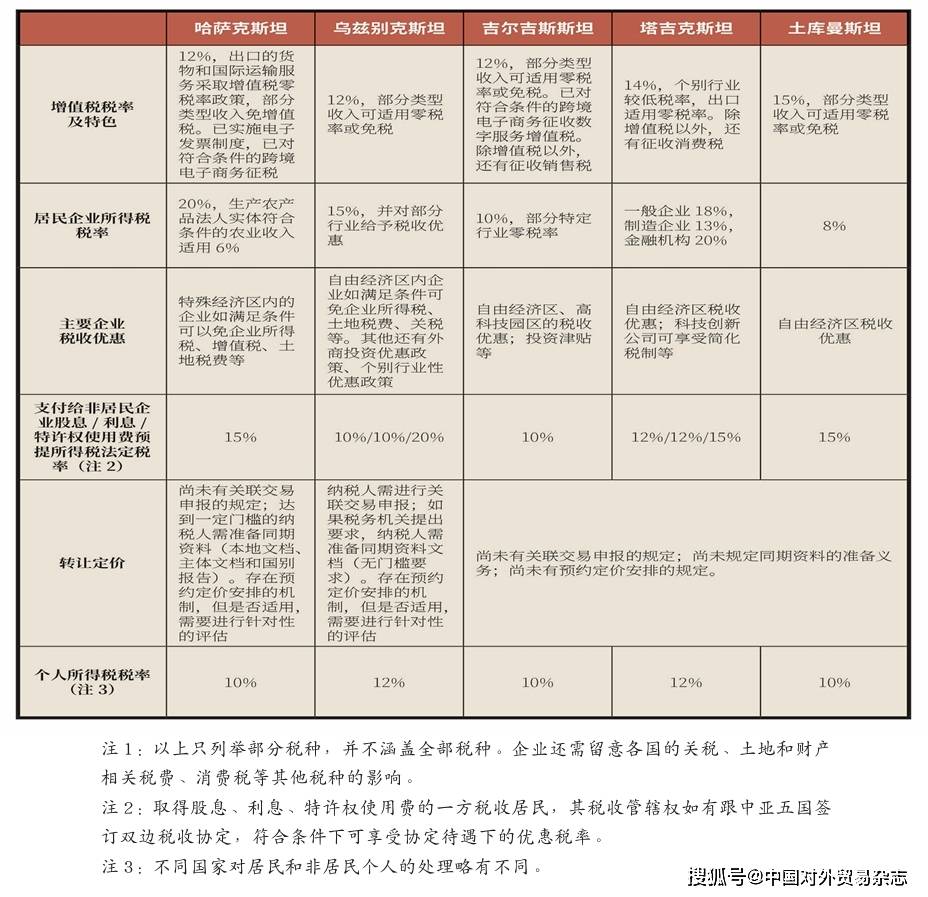
Core Insights - Central Asian countries are actively promoting economic diversification strategies, resulting in distinct industrial structures, with Chinese enterprises focusing on investments in energy, infrastructure, agricultural processing, manufacturing, and services [1] Tax Environment Overview - The tax environment for Chinese enterprises in Central Asian countries is complex, with variations in tax types, rates, and incentives across nations [2] - Kazakhstan has a VAT rate of 12%, with certain exports and international transport services exempted; Uzbekistan also has a 12% VAT rate with specific exemptions [2] - Corporate income tax rates vary, with Kazakhstan at 20%, Uzbekistan at 15%, and Kyrgyzstan at 10% for certain sectors [2] Common Tax Risks - Tax reforms and lack of clarity create uncertainty; Kazakhstan's new tax law will take effect on January 1, 2026, and transfer pricing rules will also be updated [3] - There is a risk of differing interpretations of tax laws by tax authorities, leading to uncertainty in enforcement [3][4] Permanent Establishment Risks - Chinese enterprises involved in infrastructure and engineering projects face scrutiny regarding whether they create a permanent establishment in the host country, which could lead to local tax obligations [5] - In Kazakhstan, local entities are considered tax agents responsible for withholding taxes on payments to unregistered foreign suppliers [5] Utilizing Tax Treaties - China has signed tax treaties with Central Asian countries, allowing for reduced withholding tax rates on dividends, interest, and royalties under certain conditions [6] - Kazakhstan has strict scrutiny for treaty benefits, particularly regarding the "beneficial owner" concept, while Uzbekistan has recently introduced this concept [6] Transfer Pricing Risks - Transfer pricing practices vary significantly across Central Asian countries, with Kazakhstan and Uzbekistan having more developed frameworks compared to others [7] - Kazakhstan has stringent compliance checks, especially for transactions in the oil, gas, and mining sectors [7] Customs Duties and Tax Recommendations - Customs duties differ significantly among Central Asian countries, with Kazakhstan's average most-favored-nation tariff rate at 5.6% for 2024 [9] - Companies are advised to assess compliance costs and utilize tax incentives effectively when planning cross-border transactions [9]