Biodiversidade

Search documents
Florestas: a solução está na natureza | David Canassa | TEDxUSP
TEDx Talks· 2026-02-03 17:10
Hum. Será que é possível a floresta em pé valer mais do que a floresta deitada. Em 2008, eu tinha conduzido minha carreira pensando em eficiência.Eu sou engenheiro eletricista de formação e trabalhei em vários processos, em fábricas, eh, trabalhando numa questão muito importante, eh, que é como que você produz mais com menos uso de combustíveis, né. Isso é fundamental pro futuro do planeta. Mas em 2008 eu recebi um convite para pensar mais amplo sobre sustentabilidade.E uma das primeiras coisas que eu fiz, ...

Restaurar florestas vai além de plantar árvores | Pedro Brancalion | TEDxSaoPaulo
TEDx Talks· 2026-02-02 16:33
Quando eu era criança, eu me aventurava pelas florestas nativas da minha região, coletando folhas, insetos, sementes, galhos e tudo aquilo que despertasse a minha curiosidade. Na época, biodiversidade era para mim só mais uma palavra complicada, mas eu já começava a ter noção do quão complexas e incríveis eram as florestas nativas. Hoje, meu propósito de vida é restabelecer esta complexidade de volta às áreas que já foram desmatadas.Eu me tornei um restaurador de florestas. Para muitos isso pode ser sinônim ...
Lições da minha avó indígena sobre economia e ecologia | Patrícia Ellen da Silva | TEDxSaoPaulo
TEDx Talks· 2026-01-23 16:32
Recentemente, nas férias das minhas filhas, a Malu e a Aninha, gêmeas de 10 anos, eu fui convidada por uma grande amiga, Yacui, Tupinambá, uma anciã, eh, muito querida, que faz um trabalho muito importante de resgate ancestral. Ela nos convidou para conhecer o seu território, Tubirambá de Olivença em Una, no sul da Bahia. Os tupinambá são muito importantes. Todas nossa ancestralidade é muito importante, mas os tupinambá foram os primeiros indígenas que tiveram o contato com os portugueses quando eles aqui c ...
Por que devemos proteger os recifes de corais? | Cristiane Costa Sassi | TEDxJoaoPessoaSalon
TEDx Talks· 2025-12-11 16:36
Coral Reef Ecology and Importance - Coral reefs, though occupying less than 1% of the ocean floor, harbor the planet's greatest biodiversity and are vital for income and food for various populations [2] - Coral reefs are crucial for oxygen production, coastal protection, and supporting local economies through tourism and fishing [3] - Coral reefs are marine nurseries, inspiring peace and love, but are in distress and struggling to survive [3][4] Threats to Coral Reefs - Coral bleaching, caused by rising water temperatures due to global warming, leads to the expulsion of zooxanthellae, weakening and potentially killing corals [8][9] - Coral death leads to ecosystem collapse, reduced biodiversity, and decreased fish populations, impacting those dependent on the sea [9] - Unregulated tourism, including anchor damage and people stepping on corals, poses a significant threat to coral reefs [14] Conservation and Solutions - Advocate for responsible tourism that respects biodiversity, including guided tours and avoiding coral contact and fish feeding [16] - Demand management, oversight, and environmental education in reef areas [16] - Conservation of coral reefs is not just an environmental issue but a fight for life, economy, and future sustainability [18] - The speaker emphasizes the need to raise awareness and take action to protect coral reefs, as corals cannot speak for themselves [17][18]
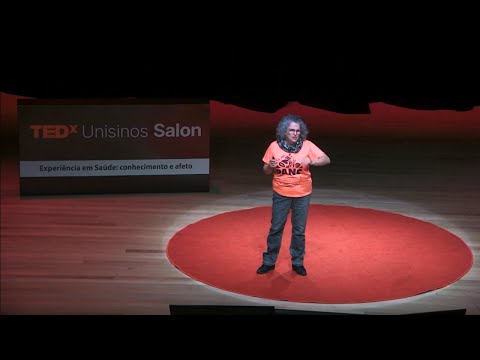
A alimentação, o corpo, a alma e o ambiente | Irany Arteche | TEDxUnisinos Salon
TEDx Talks· 2025-12-10 17:20
Primeiro, eu quero agradecer o tempo de quem está me ouvindo. O nosso tempo é muito precioso, né. Então a gente tem que agradecer.O que significa punk. Plantas alimentícias não convencionais. Elas foram fonte de alimento, porém atualmente são desconhecidas, negligenciadas ou subutilizadas.Elas alimentaram o ser humano ao longo da sua existência. Muitas ocorrem espontaneamente na natureza. São os tais insos, as ervas daninhas, os matos, as plantas alternativas, as plantas incomuns e elas não necessitam de ag ...
Ciência e conhecimento tradicional a favor da biodiversidade | Emiliano Ramalho | TEDxAmazônia
TEDx Talks· 2025-09-26 15:38
Biodiversity & Conservation - 20% of the planet's biodiversity is in Brazil, most of which is in the Amazon, but 20% of the Amazon has already been lost [2] - Traditional conservation separated people from nature, but a new paradigm integrates people into conservation unit management for sustainable use of biodiversity [5] - Monitoring biodiversity is crucial, exemplified by the Pirarucu monitoring technology, which increased populations by over 400% in managed areas [6][9] - Combining scientific methods with traditional knowledge from indigenous communities is powerful for Amazon conservation [25] - Investment in ancestral knowledge and local Amazonian research is essential for solutions, as the solution for the Amazon lies within the Amazon [26] Technology & Monitoring - Current technologies effectively monitor the forest from above, but struggle to monitor what's inside the forest, including animals [10][12] - The Instituto Mamirauá developed technology using AI to monitor biodiversity in real-time, aiming for a system to monitor the entire Amazon [20] - The system integrates photo and audio capture, identifying species in real-time autonomously, forming the largest network of autonomous sensors in the Amazon [21] - This technology integrates with laser monitoring and satellite imagery, providing species presence data and models for prioritizing conservation areas, reducing information gathering time from months/years to hours [22] - The "Drop" technology allows remote deployment via drones, supporting territory surveillance by communities and indigenous peoples, generating alerts for invasions and species presence [23][24]