Carbon Offset

Search documents
Rayonier(RYN) - 2025 Q4 - Earnings Call Transcript
2026-02-12 16:02
Financial Data and Key Metrics Changes - The company reported full-year Adjusted EBITDA of $248 million for 2025, an 8% increase from 2024, exceeding prior guidance [5][6] - Fourth-quarter Adjusted EBITDA was $62 million, down from $95 million in the prior year period [10][6] - Pro forma net income for the full year was $89 million, or $0.57 per share, while fourth-quarter pro forma net income was $32 million, or $0.20 per share [6][9] Business Line Data and Key Metrics Changes - Southern Timber segment generated fourth-quarter Adjusted EBITDA of $32 million, down 8% year-over-year due to lower net stumpage realizations [7][12] - Pacific Northwest Timber segment reported fourth-quarter Adjusted EBITDA of $5 million, a 24% decline from the prior year, primarily due to a 26% decrease in harvest volumes [16][12] - Real estate segment achieved full-year Adjusted EBITDA of $127 million, significantly above guidance, with fourth-quarter Adjusted EBITDA of $33 million [18][19] Market Data and Key Metrics Changes - The company noted that rural HBU markets remained strong, contributing to the real estate segment's performance [6][19] - Pulpwood pricing in the Atlantic region faced downward pressure due to increased supply and mill closures, impacting overall demand [15][52] - The Pacific Northwest is expected to see tightening log markets due to improving demand from sawmills and constraints on Canadian supply [18][17] Company Strategy and Development Direction - The merger with PotlatchDeltic is expected to create a premier land resources company with a diversified timberland portfolio and enhanced operational efficiencies [3][4] - The company plans to focus on disciplined capital allocation and synergies from the merger to create long-term shareholder value [4][29] - The leadership team is implementing best practices from both companies to optimize organizational structure and enhance operational efficiency [4][29] Management's Comments on Operating Environment and Future Outlook - Management expressed optimism about the long-term value creation potential from the merger, despite current market challenges in timber and lumber [28][29] - The company anticipates improved demand and pricing in local markets as sawmills ramp up production in response to higher lumber prices [15][18] - Management highlighted the importance of addressing the underbuilt housing stock in the U.S. as a long-term driver for timber demand [52] Other Important Information - The company repurchased approximately 110,000 shares at an average price of $26.31 per share prior to the merger announcement [11] - The company paid a special dividend of $1.40 per share due to taxable gains from the sale of its New Zealand joint venture [11] - The company finished 2025 with $843 million in cash and $1.1 billion in debt, maintaining a conservative leverage profile [12] Q&A Session Summary Question: Can you provide insights on the drivers for real estate sales in 2026? - Management noted that real estate sales are lumpy and significantly impacted by larger transactions, with strong premiums to timberland value driving performance [34][36] Question: What factors influenced the initial harvest guidance for the combined companies? - Management indicated that the guidance reflects a partial year contribution from PotlatchDeltic and aligns with Rayonier's historical sustainable yield [48][49] Question: Are there signs of stabilization in the pulpwood market? - Management acknowledged challenges in the southern timber segment but expressed optimism for long-term demand growth due to housing market dynamics [51][52] Question: What is the company's stance on M&A opportunities in the current market? - Management stated that while the timberland M&A market remains competitive, the focus is on share repurchases as the best use of capital at this time [60][61] Question: How does the company view the integration of wood products within the timberlands portfolio? - Management believes that the integrated model will benefit shareholders over time, with a focus on evaluating investment opportunities based on return potential [76][77]

Carbon Credit Trading Platform Market Size to Exceed USD 1513.44 Million by 2033, at 25% CAGR | SNS Insider
Globenewswire· 2025-12-06 13:00
Core Insights - The Carbon Credit Trading Platform Market is projected to grow from USD 253.91 million in 2025 to USD 1513.44 million by 2032, with a CAGR of 25% from 2026 to 2033 [1][6] Market Dynamics - The increasing number of industries allowing partial use of carbon offsets is driving market expansion globally, as businesses seek to lower their carbon impact and achieve sustainability objectives [1][2] - Businesses can fund carbon reduction initiatives but can only partially offset their emissions, which allows them to take steps toward sustainability, although it may not meet high sustainability standards [2] Market Segmentation - The market is segmented by type, with the Regulated Carbon segment currently dominating due to strong government policies and compliance requirements, while the Voluntary Carbon Market is growing rapidly due to corporate sustainability commitments [7] - By system type, the Cap & Trade system dominates the market, particularly in regulated carbon markets, while the Baseline & Credit system is growing faster due to voluntary carbon markets and corporate sustainability programs [8] - The Utilities segment leads the carbon credit trading market due to high emission levels and compliance requirements, while the Aviation segment is experiencing the fastest growth driven by carbon offsetting programs and industry commitments [9] Regional Insights - The European market is expected to dominate the global carbon credit trading platforms due to investments in electrification and sustainable power generation [10] - The Asia Pacific region is anticipated to grow with the highest CAGR during the forecast period, driven by robust economic growth and favorable government policies [12] Industry Players - Key players in the market include Nasdaq, Eex Group, Carbon Trade Exchange, Air Carbon Exchange (ACX), and others [5][11] Future Outlook - The demand for carbon offsets is projected to surge significantly, with estimates suggesting the market for carbon credits could be worth over USD 50 billion by 2030, indicating a lucrative opportunity for businesses to invest in sustainable practices [16]



从大气中吸碳的公共气候事业,如今只剩下几家科技公司在支撑
Sou Hu Cai Jing· 2025-10-28 09:55
Core Insights - The carbon removal industry has faced significant challenges, highlighted by the collapse of Running Tide, which aimed to sequester 1 billion tons of CO2 and raised over $50 million [1] - The industry is transitioning from a phase of hype to a reality check, with many companies struggling to survive due to a flawed business model that does not meet immediate consumer or corporate needs [1][2] - The future of carbon removal largely depends on government intervention through policies, subsidies, and mandatory compliance for polluters [2][5] Industry Overview - The rise of the carbon removal industry was driven by climate science warnings indicating that merely reducing emissions is insufficient; proactive carbon removal is necessary [3] - The IPCC's 2022 report suggests that up to 11 billion tons of CO2 may need to be removed annually by mid-century to limit global warming to 2°C [3] - Despite initial enthusiasm and nearly $1 billion in venture capital by 2023, the industry faces structural contradictions, with high costs for durable carbon removal methods [3][4] Market Dynamics - Current market demand is insufficient to support the industry's scale, with only about 38 million tons of carbon removal sold globally, and actual deliveries being less than 1 million tons [4] - The market is heavily reliant on a few major buyers, with Microsoft accounting for 80% of the total procurement, raising concerns about the industry's sustainability [4] - Investment in the carbon removal sector has decreased, with a year-on-year decline of over 13% expected by mid-2025, making it harder for companies without revenue to survive [4][5] Future Prospects - The future of the carbon removal industry hinges on government support, with experts advocating for direct purchases, subsidies, and integration into carbon trading systems [5][6] - Global policy initiatives are emerging, such as the EU's plan to include domestic carbon removal in its emissions trading system by 2030, which could drive demand for carbon removal services [6] - Countries like Canada and Japan are also taking steps to support carbon removal, while the U.S. maintains tax incentives for carbon sequestration [6] Trust and Accountability - The industry faces a "trust crisis," with pressures leading some companies to rush carbon removal claims, risking a repeat of past failures in carbon offsetting [6] - Experts call for stricter verification mechanisms to ensure that claimed carbon removals are legitimate and to build community trust [6] - A fundamental shift in perspective is suggested, viewing carbon removal as a global public good rather than a profit-driven market, with developed nations bearing moral responsibility for funding global carbon cleanup efforts [7]
微软达成超10亿美元合作:处理490万吨有机废物以抵消碳排放
Sou Hu Cai Jing· 2025-07-20 09:35
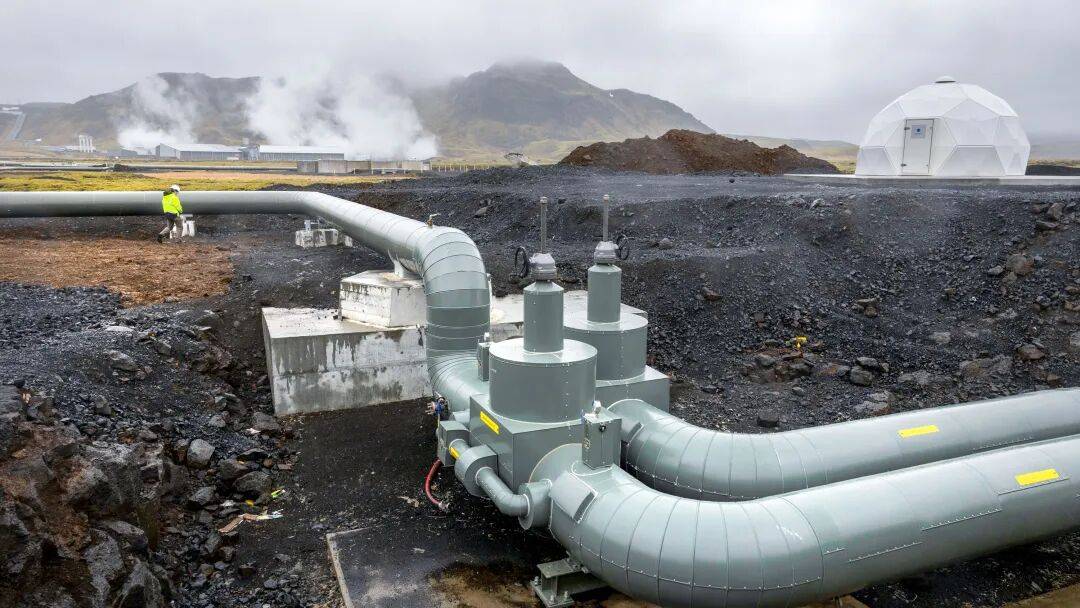
Core Insights - Microsoft has entered into a significant partnership with Vaulted Deep to reduce carbon emissions by processing organic waste [1][3] - The agreement involves Vaulted Deep handling 4.9 million tons of waste over the next 12 years, with a transaction value exceeding $1.7 billion [3] - Vaulted Deep's unique technology involves injecting organic waste underground to prevent carbon emissions from traditional disposal methods [3][4] Summary by Sections - **Partnership Details** - Microsoft collaborates with Vaulted Deep to address carbon emissions through organic waste processing [1] - The deal is valued at over $1.7 billion, with Vaulted Deep's current cost for CO2 removal at $350 per ton [3] - **Waste Processing Technology** - Vaulted Deep's method involves mixing organic waste into a slurry and injecting it approximately 5,000 feet underground [3] - This process prevents waste from being sent to landfills, thus avoiding CO2 and methane emissions [4] - **Environmental Impact** - The project aims to offset the substantial carbon emissions generated by data centers, which rely heavily on fossil fuel-based electricity [4] - The disposal of organic waste traditionally leads to greenhouse gas emissions and potential groundwater contamination [4]