Data Dependence

Search documents
Ferguson: Powell saying we are at a wait and see moment tells me they are data dependent
Youtube· 2025-12-11 13:31
Core Viewpoint - The Federal Reserve is currently in a "wait and see" mode, indicating a data-dependent approach to monetary policy, with no clear consensus among policymakers on future actions [2][4][12]. Group 1: Federal Reserve's Stance - The Fed's decision-making is characterized by a division of opinions among its members, with some advocating for more reductions while others prefer to hold [1][2]. - Chair Powell emphasized the complexity of the current economic situation, suggesting that differing views among governors are a natural outcome of analyzing ambiguous data [3][4]. Group 2: Economic Projections - The summary of economic projections is not a definitive forecast but rather a set of conditional statements reflecting individual policymakers' expectations based on potential economic developments [5][6]. - There is no strong consensus regarding the likelihood of a rate cut next year, with seven participants indicating no movement at all [7]. Group 3: External Economic Factors - Powell's comments on tariffs suggest a belief that their impact on inflation may be diminishing, although opinions vary among analysts [9][11]. - Regarding AI, there is an openness to the potential for a productivity boom, similar to the 1990s, which could influence future monetary policy [12][13]. Group 4: Labor Market and Inflation - The labor market is expected to weaken slightly, and if unemployment rises to around 4.6-4.7%, it could provide justification for a rate cut [15][16]. - A continued decrease in inflation would also be favorable for the Fed's decision-making process [16].


Miran Says Data Should Push Fed in 'Dovish Direction'
Youtube· 2025-11-21 14:18
Core Viewpoint - The discussion highlights concerns regarding inflation rates, suggesting that the perceived inflation excess is largely a statistical mirage rather than a reflection of real supply-demand imbalances in the economy [1][5]. Inflation Analysis - Current inflation is reported to be around 3%, but the argument is made that this figure does not accurately represent the underlying economic conditions [1]. - Market rents have been stable at approximately 1% for a couple of years, indicating that the measured inflation is artificially high due to the lag in statistical convergence [2][3]. - The supply-demand imbalance that existed from 2020 to 2023 should not dictate current monetary policy, as it does not reflect the present economic landscape [3]. Monetary Policy Considerations - Monetary policy operates with significant lags, necessitating that decisions be based on forecasts rather than past data [6][7]. - The lack of recent data does not invalidate existing forecasts; rather, it provides opportunities to reassess them [8]. - Recent data trends indicate weaker inflation and higher unemployment than previously expected, suggesting a potential shift towards a more dovish monetary stance [9]. Data Dependence vs. Forecast Dependence - There is a debate on the relevance of meeting schedules in relation to data availability, with a suggestion that being excessively data-dependent may lead to backward-looking policies [12][13]. - The emphasis should be on forecast dependence to ensure that monetary policy aligns with future economic conditions rather than past data [13]. Interest Rate Decisions - There is a willingness to support a 25 basis point cut if it aligns with the broader economic needs, emphasizing the importance of not causing harm to the economy for the sake of maintaining a certain policy stance [14][15].
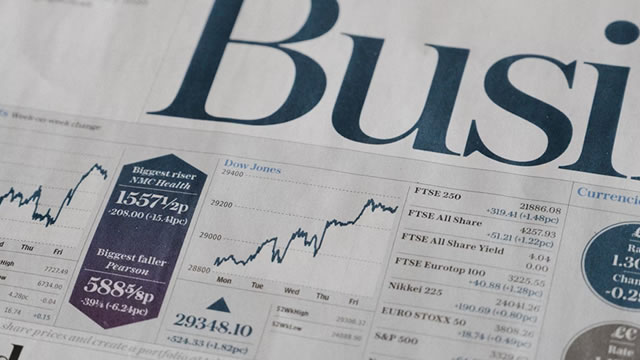
Latest inflation data doesn't mean much for the Fed — what actually matters
Youtube· 2025-09-11 16:29
Economic Outlook - Consumer prices rose in line with expectations in August, indicating no significant surprises for the Federal Reserve [1][2] - The Federal Reserve is likely to cut rates by 25 basis points next week, with a 50 basis point cut being off the table [2][3] - There are tariff effects present in the consumer basket, but they are not substantial enough to alter the Fed's plans [3][5] Labor Market Analysis - Initial jobless claims have increased, and continuing claims are trending higher, indicating a weakening labor market [9][10] - The duration of unemployment is at its highest in four to five years, suggesting challenges in job recovery [10] - Revisions to last year's job growth data indicate that the labor market was not as strong as previously thought [12][13] Inflation and Consumer Impact - Inflation is expected to worsen before improving, with businesses struggling to pass on cost increases to consumers [6][7] - Lower-end consumers are particularly unable to absorb price increases, leading businesses to explore cost-cutting measures [7][8] - Profit margins are likely to come under pressure, which could lead to lower market multiples and affect investor returns [22][24] Market Sentiment - The current economic data suggests a potential for slower growth rather than a hard landing [20] - Market valuations may be high relative to fundamentals, indicating that expectations for rapid growth may not be sustainable [21][22] - There is concern that a weakening jobs market combined with compressing profit margins could negatively impact the stock market [22][24]


How mixed signals are complicating the case for #fed rate cuts #politics #oddlots
Bloomberg Television· 2025-08-18 18:30
What's your take on why long-term interest rates haven't gone lower. >> I think there's probably two things here that stick out to me. One is well, inflation still seems like it's there, right.We haven't gotten things back to 2%. And so there's just a risk of the Fed being caught off sides here if the Fed starts to cut more aggressively at a time when inflation might pick up. You can say, well, this time inflation's transitory.But we're dealing with potentially big macro adjustments. They might be costly. A ...