
Economic Decoupling

Search documents
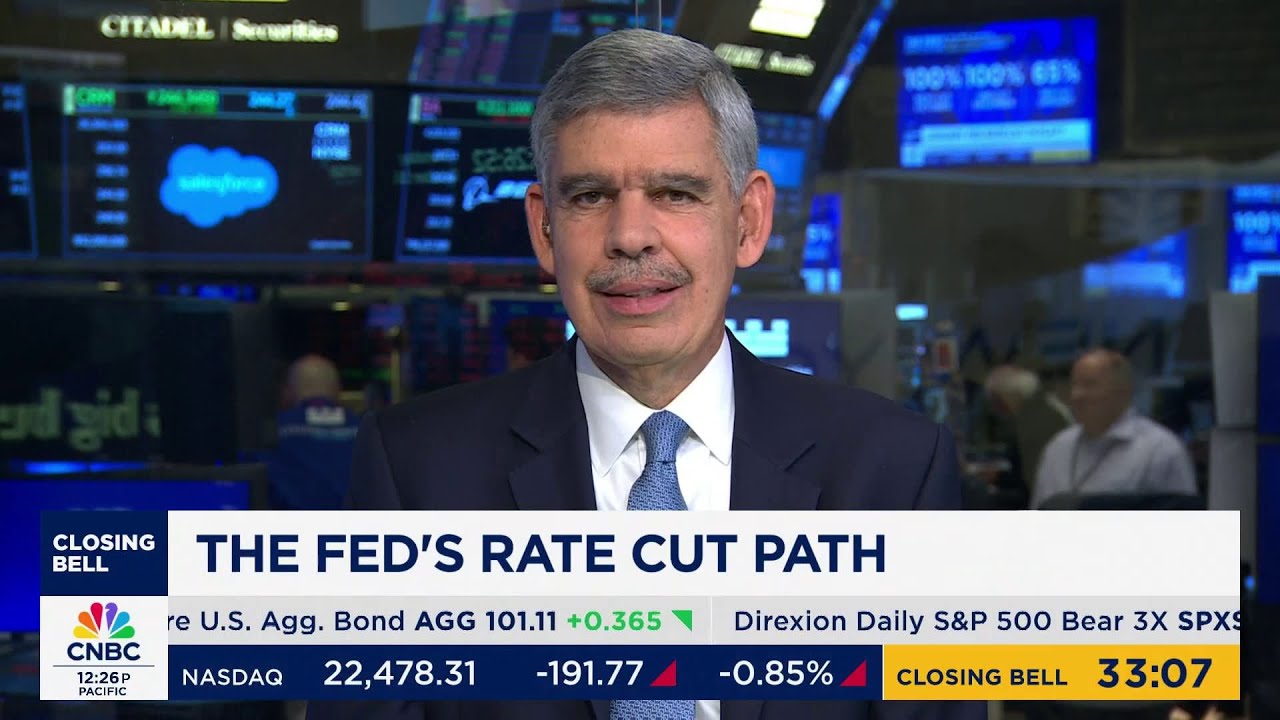
Mohamed El-Erian: Bond yields are moving due to concerns about credit and regional banks
Youtube· 2025-10-16 20:26
Economic Outlook - The economy shows strong growth with a reported 3.8% growth in the second quarter, the highest in two years, and is expected to maintain over 3% growth with contained inflation [11] - Despite positive economic indicators, there are concerns regarding the labor market and potential decoupling between low-income households and middle to upper-income households [14] Federal Reserve Actions - The Federal Reserve is under pressure to cut interest rates, with discussions around a potential quarter-point cut versus a half-point cut, reflecting uncertainty in economic clarity [8][9] - The Fed's decision-making is heavily data-dependent, and there are concerns about cutting rates while inflation is projected to rise above 3% [9] Credit Market Concerns - There are significant concerns regarding credit quality, particularly among regional banks and alternative asset managers, which could lead to defaults but are not expected to be systemic [2][3][4] - The current environment of tight credit spreads may encourage excessive lending and risk-taking, potentially leading to credit issues [5][6] Market Reactions - The stock market is performing well, but gold prices are at record levels, indicating a potential risk-off sentiment among investors who are hedging against the dollar [12][13] - There is a notable inflow into U.S. companies from foreign investors, suggesting confidence in U.S. equities despite concerns about the dollar's strength [13]

ASIAN MANUFACTURING ACTIVITY FALLS TO 17-MONTH LOW AS TARIFFS HIT CHINA-BASED SUPPLIERS: GEP GLOBAL SUPPLY CHAIN VOLATILITY INDEX
Prnewswire· 2025-06-12 12:05
Core Insights - The GEP Global Supply Chain Volatility Index fell to -0.46 in May from -0.39 in April, indicating increasing spare capacity in global supply chains due to tariffs and trade tensions [1][5][10] Group 1: Regional Analysis - Asia reported the greatest degree of spare capacity in 18 months, with raw material purchases declining for the second consecutive month, primarily driven by a decrease in Chinese factory demand [2][8][10] - North America's supply chains remain underutilized, particularly in Mexico and Canada, although U.S. manufacturers increased raw material purchases to bolster inventories against potential price hikes [3][9][10] - Europe's industrial sector showed signs of recovery, with activity levels stabilizing, particularly in Germany due to fiscal stimulus, while the U.K. faced significant underutilization in its manufacturing sector [4][10] Group 2: Supply Chain Metrics - Global demand for raw materials and components remained weak, marking the lowest level year-to-date, with procurement activity in Asia experiencing its sharpest decline in nearly 18 months [8][17] - The North American index improved to -0.24 from -0.34, reflecting a slight increase in purchasing volumes in the U.S., while the European index remained stable at -0.30, indicating underutilized capacity [10][17] - The U.K. index rose to -0.97 from -1.12, still indicating significant slack in supply chains and ongoing weakness in the manufacturing industry [10][17]
