Electric vehicle transformation

Search documents
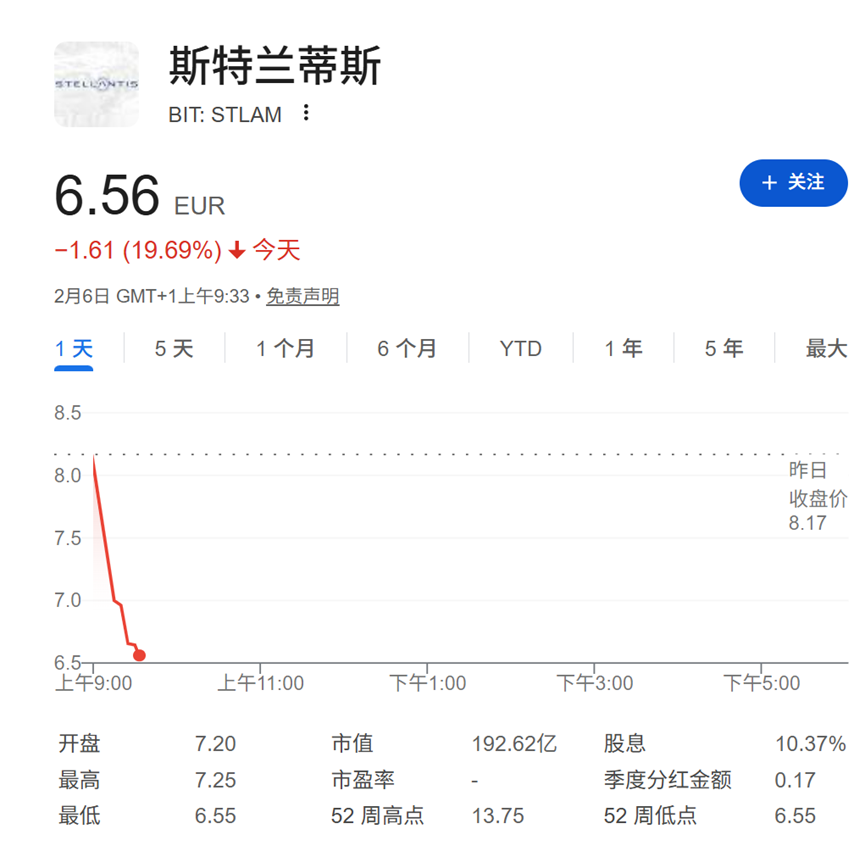
暴跌20%!Stellantis宣告“电车大撤退”,计提220亿巨额亏损
Hua Er Jie Jian Wen· 2026-02-06 08:40
Core Viewpoint - Stellantis, the world's fourth-largest automaker, is acknowledging a strategic miscalculation with a massive write-down of approximately €22 billion, leading to a comprehensive adjustment of its operational strategy, including exiting battery joint ventures and halting production of electric pickup trucks [1] Group 1: Strategic Adjustments - Stellantis is systematically reducing its electric vehicle (EV) business footprint, including exiting a joint venture with LG Energy Solution in Canada, where it had planned to invest over CAD 5 billion (USD 3.7 billion) in a large EV battery plant [3] - The company has discontinued several electric vehicle models, including the RAM 1500 electric pickup in the U.S. market, and postponed Alfa Romeo's EV projects in Europe, contrasting sharply with the aggressive targets set by former CEO Carlos Tavares [4] - As part of the strategic overhaul, Stellantis has also decided to abandon certain investment projects, including a planned hydrogen joint venture [5] Group 2: Financial Outlook - Stellantis anticipates a net loss of up to €21 billion in the second half of 2025, with an expected full-year operating profit margin in the low single digits, which includes approximately €1.6 billion in tariff-related expenses [6] - To strengthen its balance sheet, Stellantis plans to issue up to €5 billion in bonds as a financial self-rescue measure following significant market share losses [6] - The company is set to release detailed annual financial results on February 26 and plans to present its strategic plan to investors in May [7] Group 3: Leadership and Market Strategy - Since taking over in June last year, CEO Antonio Filosa has been implementing comprehensive reforms aimed at regaining market share while scaling back EV ambitions and addressing U.S. tariff costs [7] - Filosa has committed to investing $13 billion in the U.S. market, reintroducing V8 engines, and delaying EV projects, alongside significant price reductions to capture market share [7]