Energy rationing

Search documents
能源行业_亚洲如何应对迄今为止的能源冲击-Energy Sector_ How Asia is dealing with the energy shock so far
2026-03-16 02:20
Summary of Key Points from the Conference Call Industry Overview - The conference call discusses the energy sector in Asia, particularly in response to the ongoing energy price and volume shock due to geopolitical tensions, specifically the Iran conflict [1][2][5]. Core Insights and Arguments - **Policy Responses**: Asia's approach to the energy crisis is categorized into four main responses: fuel price hikes, tax cuts, rationing of energy supply, and export restrictions [2][5]. - **Fuel Price Pass-Through**: The pass-through to domestic pump prices has been broader than expected, with only India, Indonesia, and Thailand maintaining unchanged pump prices. Countries like Singapore, the Philippines, and China have allowed greater price pass-through [4][5][11]. - **Rationing Focus**: The focus of Asian countries is more on rationing energy supply rather than conserving demand, prioritizing consumers over industries. This could negatively impact downstream sectors and squeeze profit margins [5][11]. - **Intervention Measures**: Thailand and India have implemented the most intervention measures due to their higher energy exposure, while Singapore has taken a minimal intervention approach [5][11]. Important but Overlooked Details - **Regional Divergence**: There is significant divergence in government intervention across Asian economies. Countries like Thailand, Vietnam, and India are more proactive, while Singapore and Malaysia have adopted a more market-based approach [7][11]. - **Rationing Systems**: India has introduced a comprehensive rationing system, prioritizing consumer gas allocation and reallocating LPG from industrial to household use. This is indicative of its higher dependence on Gulf energy supplies [6][11]. - **Future Expectations**: It is still early in the crisis, and government responses are expected to evolve based on the duration of the disruption [9][11]. Specific Measures by Country - **China**: Increased retail prices for gasoline and diesel by 8.6% and suspended diesel and gasoline exports [12]. - **India**: Implemented tiered gas allocation and increased retail LPG cylinder prices by 7% [12]. - **Vietnam**: Prioritized domestic gas supplies for power generation and allowed immediate gasoline price adjustments if base prices increase by 7% or more [12]. - **Thailand**: Plans to raise bio-additive content in diesel and freeze LPG prices for cooking through May [12]. This summary encapsulates the key points discussed in the conference call regarding the energy sector's response to the ongoing crisis in Asia, highlighting the varied approaches taken by different countries and the implications for consumers and industries.
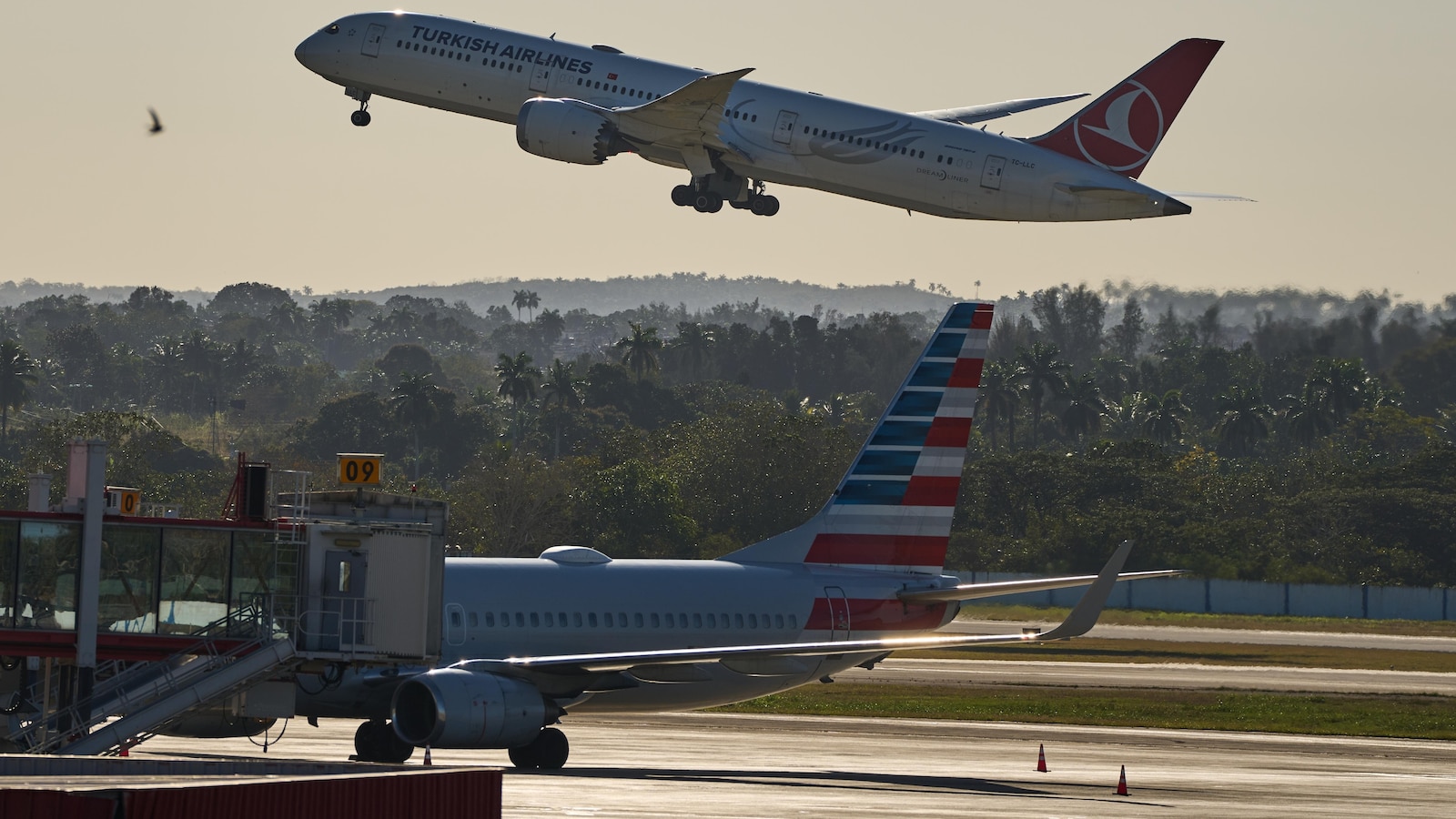
Airlines can no longer refuel on island as US blockade deepens energy crisis: Cuba
ABC News· 2026-02-09 18:43
Core Viewpoint - Cuban aviation officials have issued a warning regarding a fuel shortage for airlines, which is part of a broader energy rationing effort due to U.S. sanctions impacting Cuba's fuel resources [1][3]. Aviation Industry Impact - Airlines have been notified of the fuel shortage, which is unprecedented for Cuba, a country already familiar with crises [2]. - The fuel rationing is expected to affect long-haul flights from countries like Russia and Canada, crucial for Cuba's tourism economy, while shorter regional flights may not be significantly disrupted [4]. - Air Canada has announced the suspension of flights to Cuba in response to the fuel shortage [4]. Economic Consequences - The fuel shortage poses a significant challenge to Cuba's tourism sector, which previously generated $3 billion annually [6]. - The energy crisis has led to the suspension of major cultural events and reduced bank operating hours, further straining the economy [6][7]. - Public transportation in Havana has been severely affected, with the bus system nearly non-functional due to power outages and fuel shortages [6]. Government Response - Cuban President Miguel Díaz-Canel has acknowledged the crisis and indicated that further measures will be implemented [8]. - U.S. sanctions have intensified, particularly following political changes in Venezuela, exacerbating Cuba's economic difficulties [8]. Social Impact - The ongoing crisis has resulted in power outages lasting up to 10 hours, fuel shortages, and a lack of essential goods, reminiscent of the economic depression during the 1990s [9].