
Energy supply disruption

Search documents
Oil prices extend gains after record monthly rally as Iran war fuels supply worries
CNBC· 2026-04-01 02:04
Group 1: Oil Price Movements - U.S. crude oil for May increased by 1.5% to $102.92 per barrel, with prices rising approximately 51% in March, marking West Texas Intermediate's best month since May 2020 [1] - Brent contract for June delivery also rose by 1.5% to $105.56 per barrel, with prices surging over 60% in March, representing the strongest monthly rally since 1988 [1] Group 2: Geopolitical Tensions and Supply Disruptions - Escalating attacks in the Persian Gulf and U.S. President Trump's signals regarding exiting the Iran conflict have kept markets on edge, contributing to energy supply disruptions since the war began on February 28 [2] - The war has effectively halted shipments through the Strait of Hormuz, a critical waterway that typically accounted for 20% of global oil flows before the conflict [3] Group 3: U.S. Military and Diplomatic Stance - President Trump indicated that U.S. military forces are expected to leave Iran in "two or three weeks," suggesting a declaration of victory without the need for a negotiated deal [3] - White House spokesperson announced that Trump will deliver a national address regarding Iran, indicating ongoing military hostilities and potential threats to U.S. companies in the region [4] Group 4: Iranian Response and Communications - Iranian Revolutionary Guards announced intentions to attack U.S. companies in the region, listing major corporations such as Google, Microsoft, and Apple [4] - Iranian Foreign Minister stated that while messages have been exchanged with the U.S., they do not constitute negotiations, emphasizing that communications are strictly through the Foreign Ministry [5]


能源大宗商品 :油价波动的持续性不确定性-Energy Commodities_ Chart Book_ Duration uncertainty
2026-03-30 05:15
Summary of Key Points from the Conference Call Industry Overview - The report focuses on the **energy commodities** sector, particularly the impact of geopolitical events on oil prices and supply dynamics in the Middle East, especially concerning the **Iran war** and its implications for global oil flows and prices [1][7]. Core Insights and Arguments - The **Iran war** has led to a significant reduction in oil and refined product flows through the **Strait of Hormuz**, which accounts for approximately **25% of global seaborne trade**. Currently, over **180 million barrels** of oil, including refined products, are stranded in the Middle East Gulf [7]. - The reaction of oil prices to the Iran war has been the most pronounced since the **First Gulf War**, with prompt-month **Brent futures** experiencing the largest price reaction to any major geopolitical escalation in the last 25 days [2][7]. - **China's dependence** on seaborne oil imports through the Strait of Hormuz is estimated at **28%** for 2025, significantly lower than the average **66%** for other major Asian economies such as India, Japan, Korea, Singapore, and Thailand [4][7]. - The **implied volatility** in oil markets, measured by the difference between the **OVX** and **VIX**, remains elevated but is gradually subsiding, currently standing slightly below **5 sigma** compared to the average since 2020 [7]. - Recent events underscore the risk of sustained damage to the region's supply outlook, which could further impact energy prices [7]. Additional Important Insights - The report includes various **charts and figures** that illustrate trends in oil prices, positioning, inventory levels, and market flows, providing a comprehensive view of the current state of the energy commodities market [8]. - The **Brent and WTI futures curves** indicate ongoing fluctuations in pricing, reflecting market sentiment and expectations regarding future supply and demand dynamics [8]. - The **aggregate positioning** in Brent and WTI futures shows a percentile ranking based on data since 2014, which can provide insights into market sentiment and speculative behavior [11][13]. This summary encapsulates the critical points discussed in the conference call, highlighting the current state of the energy commodities market and the implications of geopolitical events on oil prices and supply dynamics.
Hungary to curb gas flows to Ukraine until Druzhba oil flows resume, Orban says
Reuters· 2026-03-25 10:30
Core Viewpoint - Hungary will gradually halt natural gas deliveries to Ukraine until the Druzhba oil pipeline resumes operations, escalating tensions over energy supplies disrupted by the ongoing conflict [1][5]. Group 1: Hungary's Actions - Prime Minister Viktor Orban announced the decision to stop gas shipments to Ukraine, stating that any remaining gas will be stored in Hungary [3]. - Hungary's gas shipments to Ukraine were reported to continue on the morning of the announcement, with 8.3 million cubic meters (mcm) scheduled for delivery on that day [3][4]. Group 2: Pipeline Situation - The Druzhba oil pipeline, which supplies crude oil to Hungary and Slovakia, is currently experiencing outages, with both countries blaming Ukraine for the disruption [2]. - Ukraine claims that the pipeline was damaged by a Russian drone attack in late January and is working to repair it as quickly as possible [2]. Group 3: Ukraine's Gas Imports - For March, Ukraine has contracted a total of 180 mcm of gas from Hungary, accounting for 28% of its total gas imports, down from 200 mcm (31%) in February [4]. - Ukraine plans to import a total of 25 mcm of gas from Eastern Europe on the day of the announcement [4]. Group 4: EU Relations and Support - European Union leaders were unable to persuade Orban to lift his blockade on a €90 billion ($104.36 billion) EU loan intended to assist Ukraine [5]. - EU experts have arrived in Ukraine to assess the condition of the Druzhba pipeline, with Ukraine indicating that the resumption of crude deliveries may take weeks [6].

Oil execs warn of long-term damage from Iran war as US downplays crisis
Reuters· 2026-03-23 19:33
Core Insights - The ongoing U.S.-Israel war with Iran is causing significant long-term concerns among oil executives regarding its impact on the global economy, despite U.S. Energy Secretary Chris Wright downplaying the crisis [1][4]. Group 1: Economic Impact - The conflict has led to one of the largest disruptions in energy supplies in history, particularly due to the effective closure of the Strait of Hormuz, which is crucial for global oil and gas transit [2][11]. - Patrick Pouyanne, CEO of TotalEnergies, highlighted that the consequences extend beyond high energy prices, affecting other supply chains, including helium shipments vital for semiconductors and medical supplies [3][9]. - Sultan Al Jaber, CEO of ADNOC, warned that rising oil prices are slowing global economic growth and increasing the cost of living, particularly affecting those least able to afford it [9]. Group 2: Oil Prices and Market Reactions - Brent crude prices remained high at $99 per barrel, with gasoline prices increasing over 30% to nearly $4 per gallon since the conflict began [2][4]. - Analysts from JP Morgan noted that the shut-ins have quickly resulted in shortages of crude and refined products across Asia [5]. - Ben Marshall, CEO of Vitol Americas, cautioned that severe demand destruction could occur if oil prices reach $120 per barrel, with Brent futures briefly hitting $119 in early March [10]. Group 3: Infrastructure and Future Outlook - The war has inflicted long-term damage on production infrastructure in the Middle East, including significant facilities like QatarEnergy's liquefied natural gas plant, which will take years to repair [11]. - Chevron's CEO Mike Wirth stated that the tightness in the energy market due to the Strait of Hormuz closure has not been fully reflected in forward oil prices [12]. - The International Energy Agency's attempt to release a record 400 million barrels from strategic reserves has not sufficiently calmed the markets, indicating ongoing volatility [12].

5 Stocks Wall Street Is Rushing to Upgrade as Iran Conflict Reshapes Global Energy Markets
247Wallst· 2026-03-20 15:37
Core Viewpoint - The ongoing conflict in Iran is reshaping global energy markets, leading to significant stock upgrades for companies like Cheniere Energy, Equinor, and SM Energy, as they benefit from supply disruptions and rising oil prices [1][3][5]. Group 1: Company Performance - Cheniere Energy (LNG) has seen a year-to-date stock surge of 45.38%, with FY2025 revenue reaching $19.98 billion and net income of $5.33 billion, marking increases of 26.62% and 63.9% year-over-year respectively [2][8]. - Equinor (EQNR) has experienced a 73.76% increase year-to-date, benefiting from being Europe's lowest-cost gas supplier, with a cash flow impact of $1.2 billion for every $10 increase in oil prices [2][9]. - SM Energy (SM) has gained 49.65% year-to-date, with FY2025 operating cash flow of $2.01 billion, and each dollar above its $60/bbl guidance directly contributes to cash flow [2][10]. Group 2: Market Dynamics - The closure of the Strait of Hormuz by Iran has driven WTI crude prices from $65 to $98.48 per barrel, while Brent has surpassed $100, prompting European and Asian buyers to seek alternatives from US producers [3][5]. - The geopolitical tensions have led to a significant shift in energy supply dynamics, with companies like Cheniere and Equinor positioned to capture increased demand from Europe [3][9]. - Analysts are monitoring oil prices, with a focus on whether they can hold above $90, as this will impact earnings estimates for the companies mentioned [17]. Group 3: Future Outlook - Cheniere is expected to produce approximately 51 to 53 million tons of LNG in 2026, with over 95% of its capacity contracted for the next decade, providing long-term revenue visibility [8]. - Equinor anticipates a 3% production growth in 2026, with substantial earnings tailwinds due to current oil prices being significantly above their planning assumptions [9]. - SM Energy's recent merger with Civitas Resources is expected to yield $200-300 million in synergies, enhancing its market position [11]. Group 4: Additional Companies - ONEOK (OKE) has seen a 22% increase year-to-date, benefiting from sustained volume growth in US natural gas and NGL exports, with 90% of its earnings being fee-based [12][13]. - Air Products and Chemicals (APD) is facing execution risks due to its NEOM Green Hydrogen Project in Saudi Arabia, but analysts still see potential upside with a consensus target around $307 [14][16].






The world's largest natural-gas complex is now battered. Here's who will benefit.
MarketWatch· 2026-03-19 19:26
Group 1 - A recent attack involving Iranian missiles has caused significant fires and additional damage to the world's largest liquefied natural gas (LNG) plant located in Qatar [1] - The LNG plant had already experienced extensive damage prior to this incident, indicating ongoing vulnerabilities in its operations [1]
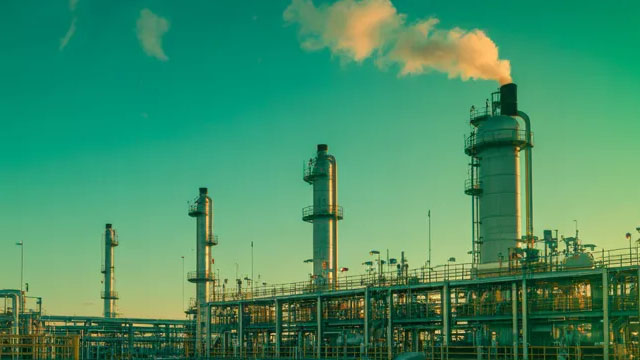
Oil prices will drop after Iran war ends ‘in the next few weeks,' Energy Secretary Chris Wright says
New York Post· 2026-03-15 14:19
Core Viewpoint - Energy Secretary Chris Wright anticipates that gas prices will remain elevated for the next few weeks due to ongoing disruptions but is optimistic that prices could fall below $3 a gallon by summer [1][6]. Gas Prices and Market Conditions - Current national average gas prices are $3.69 per gallon, having been below $3 prior to the outbreak of the war in Iran [1]. - Wright noted that gasoline prices had previously approached $5 per gallon during the Biden administration, but he does not expect a repeat of that scenario this time [5][7]. Oil Prices and Future Projections - Oil prices have been around $100 per barrel since the U.S. military action against Iran's Kharg Island, a key oil export hub [6]. - Wright expressed confidence that once the conflict in Iran concludes, there will be a rebound in oil supplies and a subsequent decrease in prices [7]. Geopolitical Factors and Supply Chain - Iranian officials have warned that oil prices could rise to $200 per barrel due to tensions in the Strait of Hormuz, a critical passage for global oil transport [7]. - Wright dismissed these warnings, emphasizing that significant energy flows through the Strait and that military actions are being taken to ensure its safety [8][11]. Strategic Responses - The International Energy Agency (IEA) plans to release 400 million barrels of oil to stabilize the market [8]. - The Trump administration is set to release 172 million barrels from U.S. oil reserves, which would lower emergency supplies to the lowest level since 1982 [10].
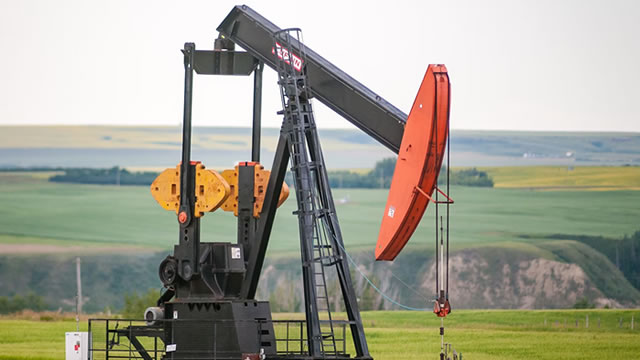
Iran holds the key to reopening global energy markets
Reuters· 2026-03-15 12:55
Core Viewpoint - The article emphasizes that Iran plays a crucial role in determining the reopening of global energy markets amid ongoing conflicts in the Gulf region, overshadowing U.S. and Israeli efforts to stabilize oil supply chains [1]. Group 1: Impact on Oil Supply - Saudi Aramco's uncertainty regarding oil export ports highlights the significant influence Iran has on global oil supply, with potential disruptions affecting 20% of global oil and LNG supply [1]. - The International Energy Agency (IEA) has described the current oil and gas supply disruptions as the most severe ever, prompting a record emergency oil release of 400 million barrels [1]. - Iranian attacks have led to shutdowns at refineries in multiple countries, causing oil and gas prices to surge by as much as 60% [1]. Group 2: Production Cuts and Market Disruption - Total oil output cuts in the Middle East are estimated at 7-10 million barrels per day, representing 7-10% of global demand [1]. - Major producers like Saudi Arabia and Iraq have significantly reduced their output, with Saudi Aramco cutting production by 20% and Iraq experiencing a 70% drop [1]. - Qatar has fully shut down its liquefied natural gas production, impacting 20% of the world's LNG supplies [1]. Group 3: Future Outlook and Industry Confidence - The crisis has led to a collapse in confidence regarding supply routes, with repairs expected to take months and insurance for shipments becoming more expensive and harder to obtain [1]. - Analysts predict that even a quick resolution to the conflict would result in weeks of market disruption, with global oil companies likely to be slow in returning to the Gulf [1]. - The potential for further Iranian disruptions, including proxy attacks from allied groups, raises concerns for the energy and shipping industries [1].

European stocks set to slide further as oil prices stay above $100 a barrel
CNBC· 2026-03-13 07:16
Oil Market Impact - Oil prices surged about 20% due to the ongoing U.S.-Israeli conflict with Iran, raising concerns over prolonged energy supply disruptions [1] - Brent crude prices remain above $100, last seen at $100.96, while West Texas Intermediate was at $95.96 [3] - The U.S. Energy Department announced a release of 172 million barrels from its Strategic Petroleum Reserve to address supply concerns [3] European Market Reaction - European equities ended the previous session lower, with the pan-European Stoxx 600 closing about 0.7% down [1] - The Stoxx 600 was 0.5% lower in early trading on Friday, with most sectors trading negatively [1][2] - Investors are weighing the impact of the Middle East conflict on economic growth, contributing to the negative sentiment in European markets [2] U.S. Market Trends - U.S. futures showed slight gains, with S&P 500 futures rising 0.25% and Dow Jones Industrial Average futures adding 0.32% [5] - Despite the gains in futures, U.S. markets are lower week-to-date [5] Geopolitical Developments - U.S. Treasury Secretary announced that vessel escorts through the Strait of Hormuz would begin "as soon as militarily possible" due to recent attacks on vessels [4] - Iran's Supreme Leader stated that the country would continue to block the shipping channel, contributing to the spike in oil prices [4]


Oil Armada Heads to Red Sea as Saudis Divert From Hormuz
Yahoo Finance· 2026-03-10 16:40
Core Insights - A fleet of at least 25 supertankers is heading to Saudi Arabia's Red Sea port of Yanbu to expedite oil shipments following disruptions caused by the Iran war [1] - This fleet could enable the shipment of 50 million barrels of oil, serving as a crucial response to the significant disruption in energy supplies from the Persian Gulf [2] Group 1: Shipping and Logistics - The data indicates that the fleet size may be larger than reported, as some tankers do not disclose their destinations for safety reasons during conflicts [3] - Saudi Arabia has faced challenges in shipping crude through the Strait of Hormuz due to ongoing military actions, making transit risky for shipowners [4] Group 2: Global Oil Production Impact - The conflict has resulted in a global oil output reduction of approximately 6%, with countries like Iraq and Kuwait halting production due to logistical challenges [5] - Saudi Arabia and the UAE are strategically positioned to bypass the Strait of Hormuz using pipeline networks, allowing them to maintain production levels [5] Group 3: Company Operations - Saudi Aramco is increasing crude flows through its east-west pipeline, which has a capacity of 7 million barrels per day, with expectations to reach full capacity soon [6] - The UAE is also enhancing its crude exports through a pipeline to Fujairah, with current exports from the terminal rising to about 1.6 million barrels a day, up from an average of 1.1 million in recent months [6]