Extended Producer Responsibility

Search documents
5 packaging industry trends to watch in 2026
Yahoo Finance· 2026-01-08 11:00
M&A Activity - Megamergers have increased in the packaging industry over the last two years, leading to fewer large players and a shift in focus towards smaller companies for potential deals in 2026 [1] - Analysts predict that only companies with sufficient balance sheet capacity will pursue acquisitions this year due to excess capacity and a dampened demand outlook [2] - M&A activity is expected to be prevalent among companies dealing with distressed substrates like glass, as organic growth is limited [3] - Lower interest rates and pressure from struggling stock prices are anticipated to drive an increase in M&A activity in 2026 [4] - The pace of packaging mergers and acquisitions is expected to hold steady or increase slightly in 2026, with a shift in the type and size of deals [5] Industry Trends - The packaging industry is expected to adapt to changing consumer spending habits and evolving regulatory attitudes, particularly in the food and beverage sectors [6] - North America led in paper and packaging M&A in 2025, but there is still potential for consolidation in Europe, especially in containerboard and flexible packaging [8] - Major packaging companies have divested non-core assets, indicating a trend towards streamlining operations [9] Extended Producer Responsibility (EPR) - The implementation of extended producer responsibility for packaging in the U.S. is becoming more significant, with many companies preparing for multiple state programs [10] - The Circular Action Alliance is growing more sophisticated in managing producer responsibilities and aligning reporting deadlines across states [11] - By the end of 2026, more evidence is expected regarding the reinvestment of EPR fees, with initial funding already allocated to recycling facilities [13] Containerboard Sector - The containerboard sector has faced challenges, with production capacity in North America shrinking by approximately 4 million tons, or nearly 10% [18] - Analysts expect further facility closures in 2026, but anticipate a retooling year for containerboard companies rather than a significant pullback [19] - Operating rates are projected to improve, with expectations of reaching the mid-90s, leading to potential price increases later in the year [21] Labor and Automation - The manufacturing sector, including packaging, is experiencing a labor shortage, with nearly 400,000 open manufacturing jobs reported [24] - Recruiting and retaining workers is a significant challenge for manufacturers, with predictions of up to 1.9 million unfilled jobs by 2033 if workforce issues are not addressed [25] - Companies are increasingly turning to automation to fill labor gaps, which also presents opportunities for upskilling workers [28][29]
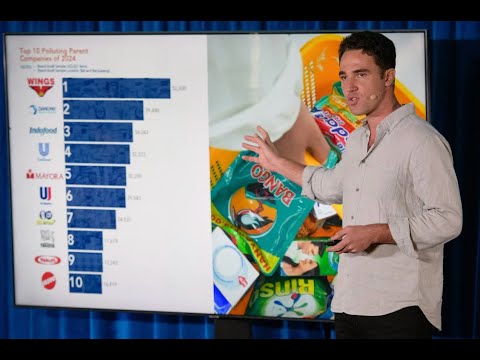
What Rivers Tell Us About Plastic Pollution | Gary Bencheghib | TEDxGreatPacificGarbagePatch
TEDx Talks· 2025-12-11 16:04
Environmental Impact & Challenges - Rivers in Indonesia are heavily polluted with plastic, creating hazardous conditions for those working to clean them [1][2] - The scale of plastic pollution has become normalized, posing a significant challenge to addressing the issue effectively [2] Company Strategy & Operations - Sungai Watch, founded to clean rivers, now focuses on analyzing plastic waste to identify the source of pollution [3][4] - The company has shifted from solely cleaning rivers to tracing the origins of plastic waste by sorting, counting, and documenting packaging [3][4] - Sungai Watch collaborates with a team of 200 people to clean hundreds of rivers [3] - Over 3 million pieces of packaging have been scanned to identify patterns and work towards upstream solutions [5] Government & Corporate Engagement - Data collected on plastic waste is presented to governments and brands to promote accountability [4] - The company is working with Indonesian ministers to establish an extended producer responsibility plan nationwide [6] Impact & Future Goals - Success is now measured by the reduction in the need for river cleanups, indicating a shift towards preventative measures [7]