FIMT技术

Search documents
2024年全球金属管内光纤市场Top10生产商排名及市场占有率调查
QYResearch· 2025-08-27 08:59
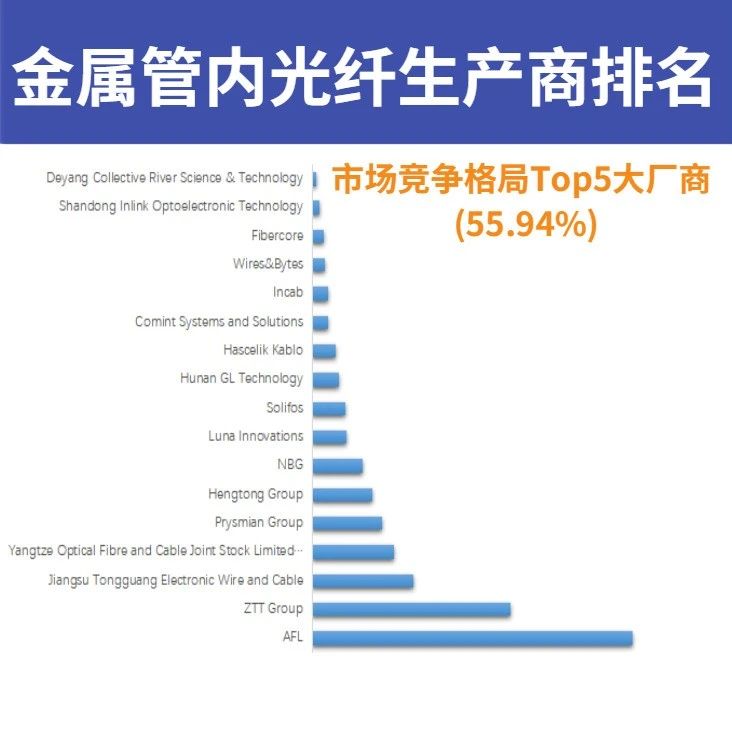
Core Viewpoint - The metal tube fiber optic market is projected to reach a size of $356.51 million by 2030, with a compound annual growth rate (CAGR) of 4.82% in the coming years [2]. Market Overview - The metal tube fiber optic technology is designed to protect fiber optics from mechanical damage and environmental factors, making it suitable for harsh conditions in communication, sensing, and industrial applications [1]. - The largest downstream market for this technology is OPGW (Optical Fiber Composite Overhead Ground Wire) and OPPC (Optical Fiber Composite Phase Conductor), which together hold a market share of 44.74% due to the demand from power communication systems [6]. - Key global manufacturers include AFL, Jiangsu Zhongtian Technology Co., Ltd., Jiangsu Tongguang Electronic Cable Co., Ltd., Yangtze Optical Fibre and Cable Joint Stock Limited Company, Prysmian Group, and Hengtong Group, with the top five companies accounting for approximately 55.94% of the market share [14]. Key Drivers - **Growing Demand in the Energy Sector**: The FIMT technology shows unique advantages in extreme conditions, particularly in oil and gas extraction and renewable energy applications, supported by government policies promoting clean energy [16]. - **Infrastructure Development Boom**: Developing countries are undergoing significant urbanization, leading to increased demand for communication network upgrades and smart grid construction, particularly in 5G deployment and smart city projects [17]. - **Technological Innovations**: Recent advancements in FIMT technology, such as new anti-microbend fibers and the use of special alloy materials, have improved product competitiveness and opened new markets like industrial IoT and smart transportation [18]. Key Challenges - **Fragmented Market Structure**: The FIMT industry has a "pyramid" structure with a few leading companies at the top and many small regional firms below, leading to inconsistent technical standards and low average profit margins due to price competition [19]. - **Competition from Alternative Technologies**: Plastic optical fibers are gaining market share in short-distance data transmission due to their flexibility and cost advantages, while advancements in wireless communication technologies are also encroaching on traditional FIMT applications [20]. - **Supply Chain Vulnerabilities**: The manufacturing of FIMT relies on specialized materials, with high-performance stainless steel and alloy materials often imported, making the industry susceptible to geopolitical supply fluctuations [21].