False advertising

Search documents
Elon Musk's Tesla Sues California DMV Following False Advertising Row Around FSD, Autopilot
Yahoo Finance· 2026-02-26 11:00
Core Viewpoint - Tesla Inc. is suing the California DMV over the removal of the "Autopilot" term from its marketing, claiming the DMV's accusations of false advertising are unfounded [1][2]. Group 1: Legal Dispute - Tesla's lawyers argue that the DMV's labeling of the company as a false advertiser is "wrongful and baseless," asserting that the DMV's order is fundamentally flawed [2]. - The court filing indicates that the DMV failed to demonstrate any consumer confusion regarding the capabilities of Tesla's technologies, relying mainly on the testimony of a single law professor without consumer witnesses [3]. Group 2: Regulatory Actions - The California DMV has initiated legal action against Tesla, seeking a 30-day suspension of the company's sales and manufacturing operations in the state, alleging misleading marketing practices [4]. - Although a court initially ruled in favor of the DMV, the agency did not proceed with the suspension and instead granted Tesla a 90-day period to amend its marketing practices [5]. Group 3: Technology Performance - Tesla's Supervised Full-Self Driving (FSD) system has recorded over 8.2 billion miles of driving, although concerns about its capabilities persist, highlighted by five additional Robotaxi crashes reported in Austin during January 2026 [6].

Elon Musk's Tesla Sues California DMV Following False Advertising Row Around FSD, Autopilot - Tesla (NASDAQ:TSLA)
Benzinga· 2026-02-24 03:51
Core Viewpoint - Tesla Inc. is suing the California DMV over the removal of the "Autopilot" term from its marketing, claiming the agency's allegations of false advertising are unfounded [1][2]. Group 1: Legal Dispute - The California DMV has accused Tesla of misleading consumers regarding its technology capabilities and sought a 30-day suspension of Tesla's sales and manufacturing operations [3]. - A court initially ruled in favor of the DMV, but the agency did not proceed with the suspension, allowing Tesla a 90-day period to adjust its marketing practices [3]. Group 2: Tesla's Defense - Tesla's legal team argues that the DMV failed to demonstrate any consumer confusion regarding the capabilities of its technologies, relying mainly on the testimony of a single law professor [2]. - The company emphasizes that it has clearly communicated that its Autopilot and FSD Supervised technologies do not render vehicles fully autonomous [2]. Group 3: Market Performance - Tesla's stock price experienced a decline of 2.91%, closing at $399.83, but saw a slight recovery of 0.19% to $400.57 in after-hours trading [4]. - Benzinga Edge Rankings indicate that Tesla performs well on the Momentum metric, suggesting a favorable long-term price trend [4].


South Korea’s consumer watchdog probes Bithumb over ‘false advertising’ suspicions
Yahoo Finance· 2026-02-05 17:11
Core Viewpoint - Bithumb, a South Korean crypto exchange, is under investigation by the Fair Trade Commission for potentially misleading advertising claims regarding its liquidity and promotional practices [1][2][4]. Group 1: Investigation Details - The Fair Trade Commission has sent investigators to Bithumb's headquarters to probe claims made in marketing materials that Bithumb has "the highest level of liquidity in the domestic crypto exchange sector" [1][2]. - The commission is also looking into allegations that Bithumb unfairly attracted customers through a cash giveaway promotion [6]. Group 2: Market Competition - Competition among South Korea's major crypto exchanges is intensifying, with Bithumb and its rival Upbit preparing for significant developments in 2025 [2]. - Upbit currently holds a dominant position in the Korean won trading market, with a market share of 68%, while Bithumb has a 28% share [4]. Group 3: Promotional Practices - Bithumb previously offered new customers approximately $70 for using its application programming interface (API) but is suspected of changing the eligibility conditions during the promotion [7]. - After over 50,000 participants signed up, around 30,000 reportedly did not receive the promised cash handouts due to the altered conditions [8].
Costco’s beloved $5 rotisserie chickens are ruffling feathers—here’s why
Fastcompany· 2026-01-29 18:45
Core Viewpoint - Costco is facing a lawsuit for allegedly misleading customers by advertising its rotisserie chicken as containing "no preservatives," despite the presence of two preservatives in the product [1][2]. Group 1: Lawsuit Details - The lawsuit was filed in the Southern District and claims that Costco's labeling misleads "reasonable consumers" into believing that no preservatives were added to the chicken [1]. - The specific preservatives mentioned in the lawsuit are sodium phosphate and carrageenan, which are included in the ingredient list [1]. Group 2: Financial Implications - The lawsuit alleges that Costco has systematically cheated customers out of tens to hundreds of millions of dollars through false advertising regarding its Kirkland Signature Seasoned Rotisserie Chicken [2].


Costco sued over its $4.99 rotisserie chicken. Here's why
Yahoo Finance· 2026-01-28 17:53
Core Viewpoint - A proposed class action lawsuit has been filed against Costco, alleging false advertising regarding its rotisserie chicken, which is claimed to contain preservatives despite being marketed as having "no preservatives" [1][2]. Group 1: Lawsuit Details - The lawsuit was filed on January 22 in the U.S. District Court for the Southern District of California, accusing Costco of misleading customers and potentially cheating them out of tens to hundreds of millions of dollars [1][2]. - The complaint includes allegations of violations of multiple consumer protection laws in California and Washington state, where Costco is headquartered [3]. - The lawsuit was initiated by two women from California, highlighting the issue of misleading advertising practices [3]. Group 2: Company Response - Costco has responded by stating that it has removed the misleading signage regarding preservatives from its stores and online presentations [4]. - The company clarified that carrageenan and sodium phosphate are used in their rotisserie chicken to maintain moisture retention, texture, and product consistency, and both ingredients are approved by food safety authorities [4]. Group 3: Advertising Claims - The lawsuit cites a specific in-store advertisement claiming that the Kirkland Signature Seasoned Rotisserie Chicken contains no preservatives, artificial flavors, colors, MSG, or gluten [5]. - The complaint alleges that sodium phosphate and carrageenan, both preservatives, are included in the product, contradicting the advertising claims [6]. - It is noted that the preservatives are listed on the packaging in smaller print, which the lawsuit argues is misleading [7]. Group 4: Legal Allegations - In addition to false advertising, the lawsuit accuses Costco of violating unfair competition laws by engaging in deceptive business practices that misled consumers into paying a premium for the rotisserie chicken [8].
Costco's popular bargain meal at center of new lawsuit
Fox Business· 2026-01-26 18:26
Core Viewpoint - Costco is facing a class-action lawsuit for allegedly misleading advertising regarding its Kirkland Signature Seasoned Rotisserie Chicken, claiming it contains no preservatives while it actually includes two added preservatives: sodium phosphate and carrageenan [1][2]. Group 1: Lawsuit Details - The lawsuit was filed in the U.S. District Court for the Southern District of California, asserting that Costco's advertising creates a false impression that the Rotisserie Chicken is preservative-free [2]. - Plaintiffs argue that customers make purchasing decisions based on the "preservative free" label and were unable to ascertain the presence of added preservatives before purchase [3]. - The lawsuit claims that ingredient disclosures, if present, were inadequately displayed in small print and did not clarify the preservative function of the ingredients [5]. Group 2: Consumer Trust and Company Accountability - The lawsuit emphasizes that consumers rely on clear claims like "No Preservatives" when making food choices for themselves and their families [7]. - Legal representation for the plaintiffs stated that Costco's ingredient list contradicts its marketing claims, seeking to hold the company accountable for misleading its customers [8]. Group 3: Market Impact - Following the news of the lawsuit, Costco's stock traded around $977, reflecting a decrease of approximately 0.5%, although shares have increased over 13% year-to-date [11].
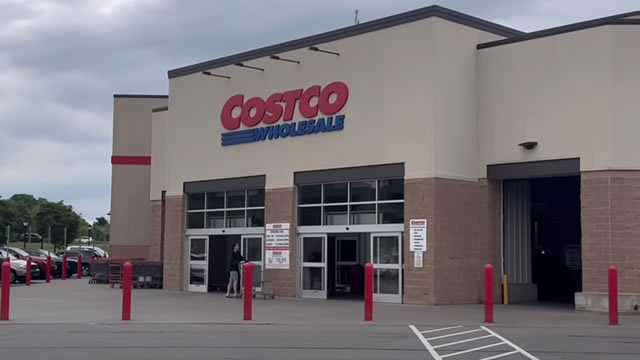
Costco's $4.99 chicken under fire over 'no preservatives' claim
Yahoo Finance· 2026-01-26 19:17
Core Viewpoint - Costco's $4.99 rotisserie chicken, while popular, is facing a class-action lawsuit over alleged false advertising regarding its ingredients [3][4][6] Group 1: Product Popularity and Perception - The rotisserie chicken has sold over 100 million units annually since 2020, indicating its strong market presence [1] - Celebrity chef David Chang criticized the chicken's taste, stating it lacks proper seasoning, which is essential for cold consumption [2] Group 2: Legal Issues - A proposed class-action lawsuit has been filed in San Diego federal court, claiming Costco falsely advertises that its rotisserie chicken contains "no preservatives" [3] - The lawsuit alleges that the chicken contains additives such as sodium phosphate and carrageenan, contradicting Costco's marketing claims [4] - Plaintiffs argue that consumers rely on clear claims like "No Preservatives" when making food choices, and the presence of these additives is unlawful and unfair [4] - The lawsuit claims that Costco has potentially cheated customers out of tens to hundreds of millions of dollars due to this alleged false advertising [6]
After Supreme Court Denies Crocs’ Appeals Request, ‘Patent’ Claim Resurfaces Once Again
Yahoo Finance· 2025-10-07 21:45
Core Viewpoint - The ongoing legal battle between Crocs Inc. and USA Dawgs Inc. centers around allegations of misleading patent statements and false advertising claims related to Crocs' molded Croslite resin [1][2][3]. Group 1: Legal Proceedings - Crocs and Dawgs have been in litigation since 2006, with initial patent infringement claims resolved, but Dawgs' counterclaim regarding false advertising remains outstanding [1][2]. - The U.S. Supreme Court denied Crocs' request for a review, allowing a federal district court in Colorado to reassess whether Crocs' statements could mislead consumers [3][4]. - A federal district court previously dismissed claims against Crocs for false marketing under the Lanham Act, but this decision was reversed by the Federal Circuit court, which allowed the case to return to the lower court for further examination [5][6]. Group 2: Company Statements - A spokesperson for Crocs expressed disappointment over the Supreme Court's decision but maintained confidence that the district court would dismiss Dawgs' claims upon remand [4]. - The case has seen various developments, with the appellate court ruling that claims of patent misrepresentation could proceed if they potentially mislead consumers [6].

New York Sues Capital One, Pursuing Similar Case CFPB Dropped
PYMNTS.com· 2025-05-14 20:34
Core Viewpoint - The New York Attorney General has filed a lawsuit against Capital One, alleging that the bank misled customers regarding the existence of a higher interest savings account, similar to previous allegations made by the Consumer Financial Protection Bureau (CFPB) [1][6]. Group 1: Allegations Against Capital One - The lawsuit claims that Capital One marketed its 360 Savings accounts as having "one of the nation's best savings rates" while keeping interest rates "artificially low" despite rising rates nationwide [2]. - It is alleged that Capital One created a "nearly identical" savings account called 360 Performance Savings, which offered interest rates up to 14 times higher than the 360 Savings account [3]. - The lawsuit accuses Capital One of intentionally misleading its 360 Savings customers about the existence of the 360 Performance Savings account to avoid paying them additional interest [3]. Group 2: Responses from Capital One - A spokesperson for Capital One stated that the bank "strongly" disagrees with the attorney general's claims and intends to "vigorously defend" itself in court [4]. - Capital One emphasized its pride in the 360 suite of banking products, asserting that they offer great rates with no fees and no minimums, and that the 360 Performance Savings product was widely marketed [5].


New York AG sues Capital One after Trump-led CFPB drops similar case
CNBC· 2025-05-14 18:35
Core Viewpoint - Capital One Financial Corp is facing a lawsuit from New York Attorney General Letitia James, accusing the bank of misleading customers regarding interest payments on its savings accounts, resulting in significant financial losses for consumers [2][4]. Group 1: Lawsuit Details - The lawsuit alleges that Capital One marketed its "360 Savings" account as a high-yield savings option but failed to inform customers about the superior "360 Performance Savings" product, which offered interest rates as high as 4.35% [3][4]. - Capital One reportedly froze the interest rate of its 360 Savings product at 0.3% while the new product provided substantially higher returns, leading to millions of dollars in lost interest for customers [4]. - The complaint claims that Capital One instructed employees not to disclose the new product to 360 Savings customers unless specifically asked [4]. Group 2: Regulatory Context - This lawsuit follows a similar case previously filed by the Consumer Financial Protection Bureau (CFPB), which was dropped earlier this year under the Trump administration, alleging that Capital One's marketing practices caused U.S. customers to miss out on over $2 billion in interest [5]. - The New York Attorney General's office is seeking restitution and damages for all affected Capital One customers, asserting violations of state and federal law [6].