Financialisation of savings

Search documents
ETMarkets Smart Talk | Only 16% IPOs beat market returns; be selective, says Ajay Tyagi who follows Warren Buffett
The Economic Times· 2026-02-18 03:30
Budget Analysis - The government is maintaining a fiscal glide path, committing to reduce the fiscal deficit each year, which has led to a cautious approach in expanding spending despite market expectations for consumer-related initiatives [1][3][59] - The government previously forewent significant revenue through direct tax reductions and GST rationalization, which were substantial measures [2][59] - The market's initial negative reaction to the Budget was followed by stabilization, indicating a rational investor perspective on the government's prudent fiscal management [3][59] Market Valuations - Largecaps are considered relatively comfortable, with potential for a 5% to 10% correction to normalize valuations, while midcaps and smallcaps are trading significantly above long-term averages, necessitating a correction [5][6][31] - Current valuations for midcaps and smallcaps exceed their previous peaks over the last 15 years, indicating a need for caution in these segments [7][8][30] - Investors are advised to wait for better entry points in midcaps and smallcaps, despite mutual funds holding cash and viewing market sell-offs as buying opportunities [9][30] Mutual Fund Trends - There has been a structural shift towards equity investment, with mutual funds becoming a primary asset class in households, although mutual fund assets as a percentage of GDP in India remain around 20%, compared to over 100% in the US [10][12] - The surge in Systematic Investment Plans (SIPs) is partly cyclical, driven by recent strong market returns, and a dip in SIP numbers could occur despite the overall upward trend [13][14] Sector Opportunities - The consumption sector is expected to improve due to government measures that have infused approximately $35 billion into households, which is close to 1% of a $4 trillion GDP [18][21] - The upcoming Pay Commission is anticipated to positively impact consumption trends, as historical data shows strong consumption growth following such payouts [20][21] - The IT sector is viewed positively, with expectations that AI will be net positive for the industry in the medium to long term, despite short-term disruptions [22][24] Earnings Outlook - Earnings growth in India is projected to improve to 12% to 13% in FY27, following a cyclical upswing after a slowdown in FY25 and FY26, which saw only 7% to 8% growth [39][40] - The reduction of tariffs from 50% to 18% is not expected to create a significant earnings windfall, but it may improve sentiment and restart FDI flows, which could positively impact GDP growth [36][37] IPO Market Insights - Only about 16% to 17% of IPOs have historically outperformed the broader market, indicating that investors should be selective rather than indiscriminate in their IPO investments [44][61] - The trend of high-quality companies going public is seen as net positive, but investors are cautioned against the excitement surrounding SME board IPOs, which are considered riskier [42][46] Foreign Institutional Investors (FIIs) - FII ownership in Indian equities has declined from a peak of 22% in 2021 to around 17% to 17.5%, indicating under-ownership rather than over-ownership, which is viewed positively [48][49] - The sentiment-driven negative impact from previous tariff uncertainties is expected to improve, potentially leading to a resurgence in FII investment as earnings growth returns to trend levels [52][53]



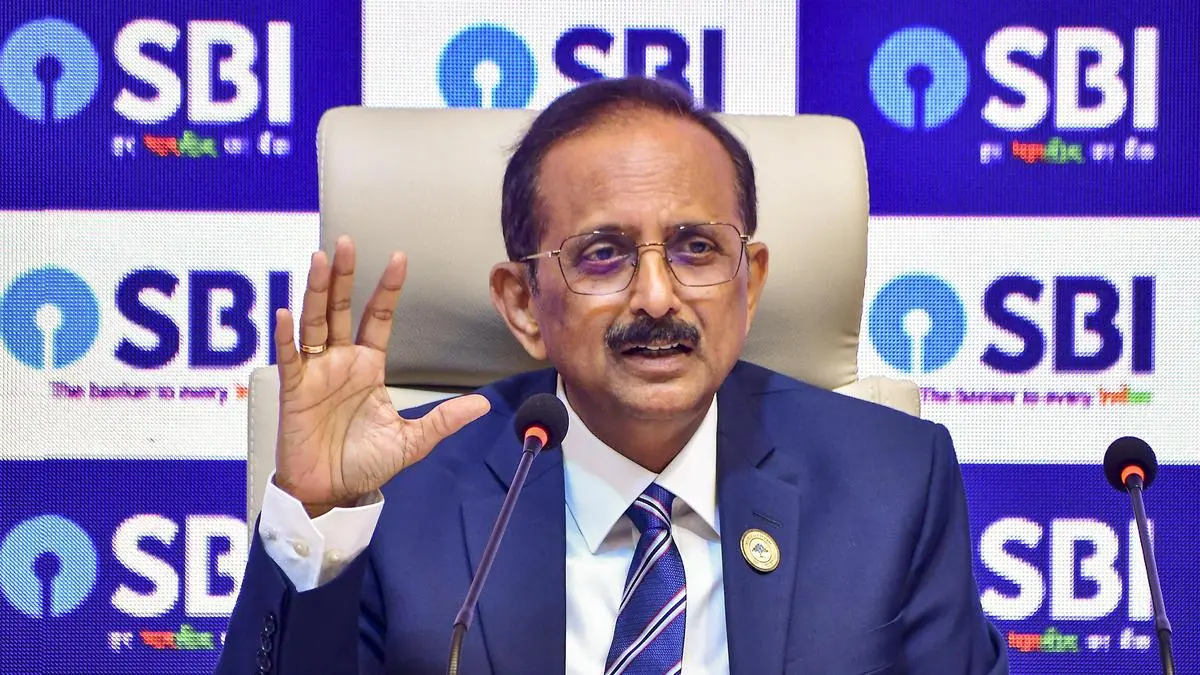
SBI’s wealth management service AUM to grow to ₹15 lakh crore by 2030: Chairman Setty
BusinessLine· 2026-02-07 13:52
Core Viewpoint - State Bank of India (SBI) anticipates its wealth management assets under management (AUM) to increase nearly fivefold to ₹15 lakh crore by 2030 from ₹2.83 lakh crore as of March 2025, driven by the growing financialisation of savings [1]. Group 1: Current AUM and Components - SBI's wealth management service currently has an AUM of approximately ₹4 lakh crore, which consists of a deposit component (fixed deposits and CASA) and an investment component [2]. - The investment component of SBI's overall AUM is currently low and primarily deposit-driven [2]. Group 2: Future Projections and Breakdown - Of the projected ₹15 lakh crore AUM, around ₹4 lakh crore is expected to come from the investment side [3]. - SBI provides wealth management services to affluent customers through various products, including mutual funds, insurance, portfolio management services, bonds, and Alternative Investment Funds, tailored to individual risk profiles [3]. Group 3: Support Structure - The wealth management business is supported by 1,068 Relationship Managers and a tiered Relationship Manager structure, as per the bank's latest annual report [4].