Free Expression

Search documents
CNBC Founder Tom Rogers: We put free market capitalism on America's daily agenda
CNBC Television· 2026-03-09 17:45
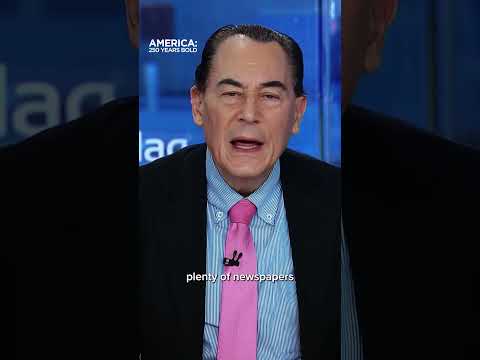
The two things that really make America what America is is free expression along with free market capitalism. And those two themes are really the bedrock of what makes the United States such a great country. When the United States was created, there was plenty of newspapers and that evolved into radio and television and digital.But until 37 years ago when we created CNBC, there was really no daily window into the world of free market capitalism for the average citizen. So when we think about the 250th anniv ...

X @The Economist
The Economist· 2025-11-21 09:40
Regulatory Landscape - The UK's Online Safety Act has sparked significant discussion regarding harm reduction versus privacy and free speech [1] - The Act's impact has been limited thus far [1]
How Google shifted from a bastion of accurate information to a steward of free expression
CNBC· 2025-09-26 11:00
Core Viewpoint - Google is shifting its focus from prioritizing factual accuracy to emphasizing "free expression," as evidenced by its new policy allowing previously banned accounts to apply for reinstatement [1][4][30] Group 1: Policy Changes - YouTube will allow accounts previously banned for spreading misinformation related to Covid-19 and the 2020 U.S. election to apply for reinstatement, effectively rolling back a policy that imposed lifetime bans [2][26] - The new reinstatement policy comes amid significant regulatory pressure and follows a trend of changing speech policies, similar to actions taken by Meta [3][4] - In June 2023, Google announced it would stop removing false claims of widespread election fraud, aiming to balance community protection with open discussion [18][19] Group 2: Historical Context - Google has historically emphasized the importance of accurate information, ramping up fact-checking operations ahead of the 2016 U.S. elections and expanding these efforts during the Covid-19 pandemic [7][11] - The company introduced a "Fact Check" tag in Google News in 2016 and expanded it globally in 2017, showcasing results from verified fact-checking organizations [8][9] - Despite these efforts, misinformation has continued to spread on its platforms, leading to criticism and the need for policy adjustments [14][15] Group 3: Regulatory and Legal Challenges - Alphabet is facing heavy regulatory scrutiny, having lost antitrust cases related to its dominance in online search and advertising [4] - The company is also involved in legal discussions with Trump lawyers following lawsuits related to the suspension of Trump's social media accounts after the January 6 Capitol riot [4][30] - In a recent letter, Alphabet's counsel indicated that the Biden administration attempted to influence content moderation decisions, which the company opposed on First Amendment grounds [30]


Meta global affairs chief says decision not to offer Instagram, Facebook in China helps defend free expression
Fox Business· 2025-03-21 20:01
Core Insights - Meta's decision to not offer services in China has strengthened its commitment to free expression principles [1][4][7] - CEO Mark Zuckerberg previously expressed a desire to connect with the Chinese market but faced insurmountable challenges [2][5] - The company continues to generate revenue through partnerships with Chinese advertisers targeting global markets despite its services being blocked in China [4] Company Strategy - Meta's Chief Global Affairs Officer Joel Kaplan highlighted that the inability to reach an agreement with Chinese authorities has allowed the company to advocate for its values more freely [4][7] - Kaplan emphasized that this position enables Meta to defend and promote the foundational values of free expression [8] Historical Context - Zuckerberg's 2019 comments at Georgetown University reflected the company's initial interest in entering the Chinese market [2][5] - Kaplan's recent remarks at the Raisina Dialogue conference reiterated the company's past intentions and the eventual decision to withdraw from the Chinese market [5][7] Future Outlook - Meta is investing significantly in AI, with plans to allocate up to $65 billion by 2025, indicating a focus on technological advancement [9]