
Full employment

Search documents
Fed official issues stark warning on inflation, rate-cut outlook
Yahoo Finance· 2026-03-26 01:52
Group 1 - Federal Reserve Governor Michael Barr expresses concerns about inflation potentially remaining high due to rising oil prices, which could impact consumer costs [1][3] - Barr emphasizes the need for evidence of sustainably retreating inflation before considering further reductions in the policy rate, contingent on stable labor market conditions [2] - Wall Street firms now predict inflation to be closer to 3% this year, exceeding the Fed's target of 2%, which may affect disposable incomes and hiring [4] Group 2 - The ongoing conflict in the Middle East, particularly the Iran war, poses additional risks to the U.S. economy, affecting prices and job availability for low- and moderate-income families [3][5] - The Federal Open Market Committee recently voted to maintain the benchmark federal funds rate at 3.50% to 3.75%, marking its second pause after previous rate cuts due to a weakening labor market [8] - The dual mandate of the Fed requires balancing full employment and price stability, which often conflict and are influenced by unpredictable global events [6][7]
X @Bloomberg
Bloomberg· 2026-03-17 14:40
The Federal Reserve has a dual mandate to pursue price stability and full employment. A sharp increase in oil prices and a weaker job market risk putting those goals into conflict https://t.co/lWysaLIv4L ...
X @Bloomberg
Bloomberg· 2026-03-17 14:24
The Federal Reserve has a dual mandate to pursue price stability and full employment. A sharp increase in oil prices and a weaker job market risk putting those goals into conflict https://t.co/CGW3cbRlLA ...
Fed Chair Powell: Housing market faces significant challenges
Youtube· 2025-12-10 20:52
Economic Overview - Higher-income households are currently driving consumer spending, supported by home equity and stock market wealth, while lower-income consumers are struggling due to five years of rising prices, which are affecting their purchasing power more than the inflation rate itself [1][2] - The economy is exhibiting a K-shaped recovery, where higher-income individuals are benefiting more than lower-income groups, leading to concerns about sustainability [2][3] Consumer Behavior - Consumer-facing companies report that low and moderate-income consumers are tightening their spending, changing their purchasing habits, and buying less [2] - The top third of income earners account for a disproportionately high share of overall consumption, raising questions about the sustainability of this consumption pattern [3] Labor Market and Wage Gains - A strong labor market has been beneficial for lower-income individuals, with significant wage gains observed in the bottom quartile over the last two years [5] - Maintaining price stability and maximum employment is crucial for supporting lower-income households [6] Housing Market Challenges - The housing market is facing significant challenges, including low supply and high demand, which are exacerbated by the current economic conditions [7][8] - The average age of first-time home buyers has reached a record high of 40 years, indicating affordability issues in the housing market [7] - Structural housing shortages persist, and while interest rate adjustments can be made, they are insufficient to address the underlying issues in the housing market [9]


What a Federal Reserve rate cut means for your finances
Yahoo Finance· 2025-10-29 19:42
Core Points - The Federal Reserve has cut its benchmark interest rate by a quarter point for the second time since September, following a nine-month period without cuts [1] - The federal funds rate influences borrowing costs for consumers, affecting credit cards, auto loans, and mortgages [1][3] - The Fed aims to manage inflation and encourage full employment, facing challenges with inflation above the 2% target and a weak job market [3] Impact on Savings and Loans - Falling interest rates will reduce the attractiveness of yields on savings accounts and certificates of deposit [4] - After the last rate cut in September, three of the top five high-yield savings accounts reduced their rates, with current top rates around 4.46% to 4.6% [5] - The national average for traditional savings accounts is significantly lower at 0.63% [6] - Prospective homebuyers have already factored in the recent rate cut into the housing market [7]
Here are five key takeaways from the Fed's big interest rate decision
CNBC· 2025-09-17 21:24
Core Points - The Federal Reserve has implemented a quarter percentage point interest rate cut, lowering the benchmark to a target range of 4%-4.25%, the lowest in nearly three years [1] - The Federal Open Market Committee has indicated future directions for monetary policy [1] Group 1 - There was only one dissenting vote during the Federal Reserve's decision, contrary to expectations of multiple "no" votes, suggesting a unified front among committee members [2] - The primary challenge for the Federal Reserve in the coming years will be maintaining full employment, as the hiring environment is becoming less healthy despite a well-operating economy [2] - Analysts suggest that the Federal Reserve may tolerate inflation above its target due to upcoming personnel changes, indicating a potential shift in monetary policy approach [2]
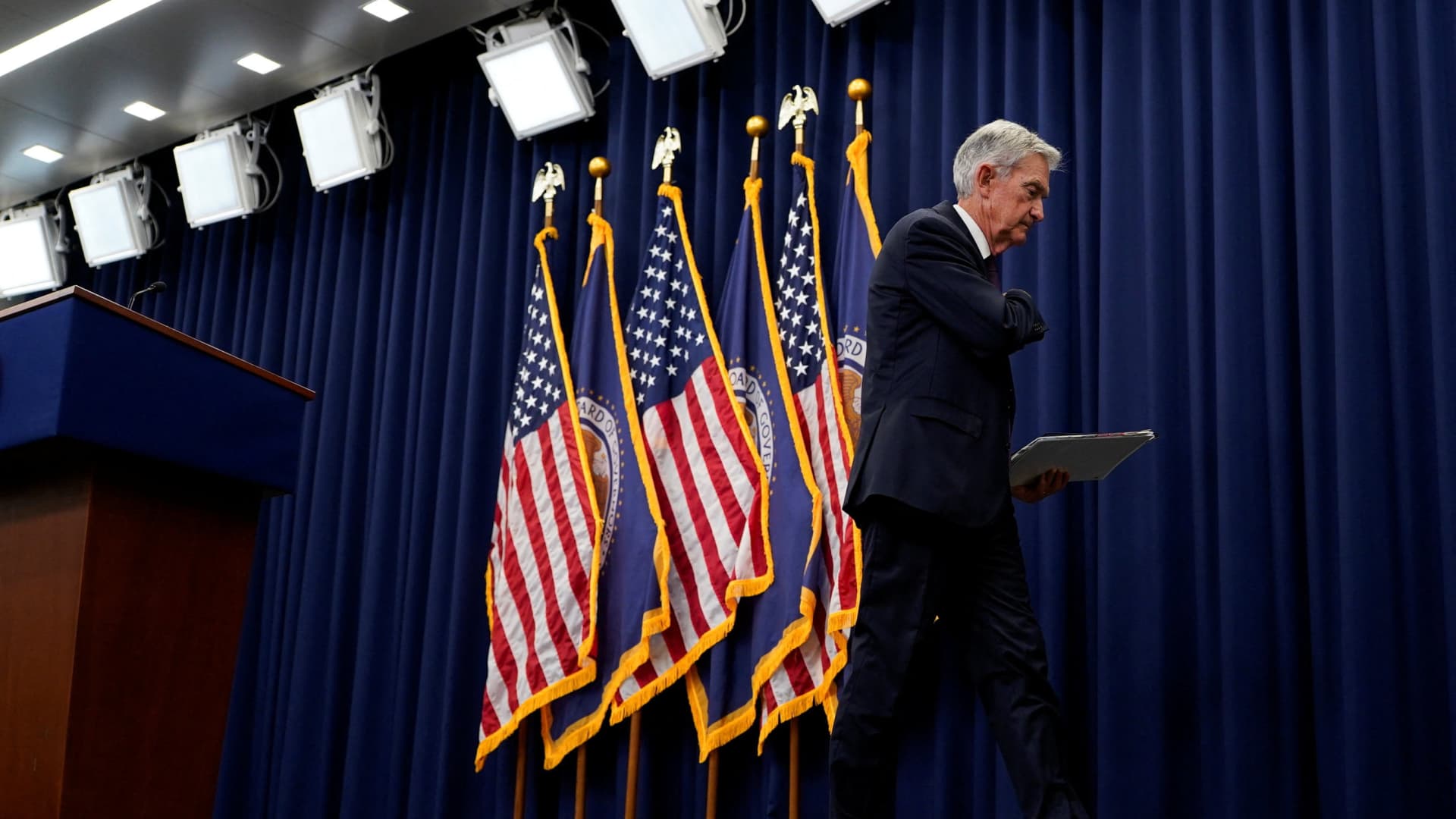
Fed Lowers Interest Rates And Signals More Cuts This Year
Forbes· 2025-09-17 18:30
Core Points - The Federal Reserve has voted to lower interest rates by a quarter-point to a range of 4% to 4.25%, with expectations for additional cuts later this year [1][2] - The Federal Open Market Committee anticipates two more quarter-point cuts by the end of the year, potentially lowering the funds rate to between 3.5% and 3.75% [2] - Inflation remains above the Fed's target of 2%, with the latest figure at 2.9% in August, while unemployment has increased to 4.3% [4] Federal Reserve Actions - The FOMC voted 11-1 in favor of the interest rate cut, with Fed Governor Stephen Miran being the only dissenting vote [2] - The Fed's decision comes amid concerns over a weakening labor market and is part of a broader strategy to address economic conditions [2][4] Economic Indicators - Inflation has worsened, rising to 2.9% in August, while job growth has been below projections, contributing to an increase in unemployment to 4.3% [4] - The Fed's dual mandate focuses on achieving full employment and stabilizing prices, which is currently challenged by the economic data [4]
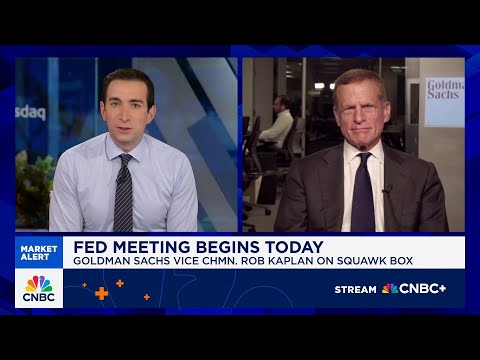
Former Dallas Fed Pres. Robert Kaplan: There are a number of disinflationary forces going on
CNBC Television· 2025-07-29 11:05
Monetary Policy & Interest Rates - The Federal Reserve is widely expected to hold rates steady at the current FOMC meeting [1] - Some governors may dissent, arguing for lower rates [2] - The Fed is likely to keep options open, including a potential action in September [3][4][10] - The market believes that the Fed cutting rates is not a certainty, as evidenced by long rates increasing the last time rates were cut [11] - The Fed's control over the long end of the curve is limited, influenced more by future growth prospects and treasury supply/demand [12][14] Inflation & Economic Factors - There are disinflationary forces at play, including sluggish growth, regulatory review, and the AI boom [3] - Tariffs will increase costs, but the impact on persistent price pressures in a disinflationary environment is uncertain [4][5] - The Fed is trying to determine if cost increases are one-time events [6] - The unemployment rate is low due to decelerating workforce growth, not aggressive hiring [9] Labor Market - Hiring levels are sluggish and may continue to be so [10] Fed's Mandate - Price stability is considered a primary job for the Federal Reserve by many [8] - The Fed has been overbalanced towards inflation concerns recently due to the tariff situation [10] - The Fed is expected to try to get more balanced between inflation and full employment, which may lead to action [10] Fed's Decision-Making - The decision to cut rates requires a consensus among the 12 voting members, not solely the Fed chair's decision [14]
X @Investopedia
Investopedia· 2025-06-23 02:00
Economic Indicators - Full employment occurs when all willing workers are employed, resulting in a 0% unemployment rate [1]