Global Trading Order

Search documents
Trump's tariffs 'blew up the global trading order': Foreign policy journalist
MSNBC· 2026-02-20 16:16
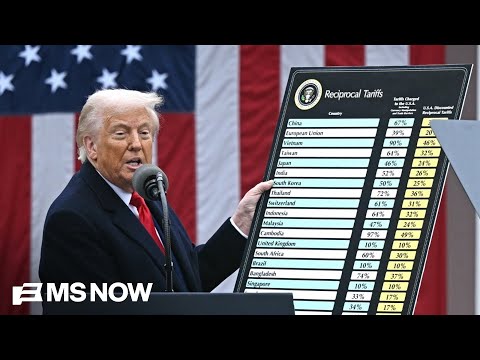
this a seismic decision how do you see i It really is look I think if you step back and look at the last fourteen months tariffs and the use of tariffs as a foreign policy cudgel has really been a very big part of the trump administration's global foreign policy and country after country has faced the brunt of unprecedented use of tariffs to induce, to coerce countries into doing things that this administration wanted it to do. So for example, coercive pressure with tariffs on Europe to get them to maybe se ...

US Trade Chief Says Trump Reset Global Trading Order
Bloomberg Television· 2025-12-19 14:01
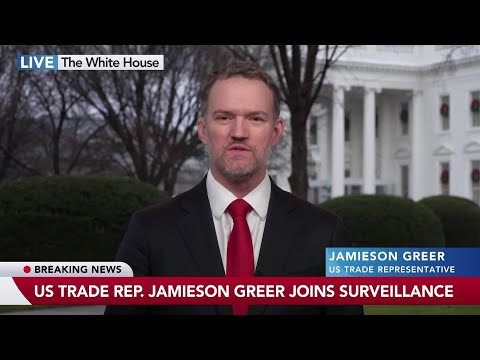
Trade Policy & Tariffs - The administration aimed to reset the global trading order towards a fair and balanced approach, implementing numerous trade deals and tariffs [1][2] - The tariff program is considered crucial for building a new global trading order and protecting US industry, with trading partners having largely accepted the system [5] - The removal of tariffs on specific goods like bananas, coffee, and cocoa was considered to address affordability concerns, especially for goods not produced in the United States [9] - The primary goal of the trade program is to reshore American manufacturing, protect American food security, create jobs, and increase wages, rather than driving prices [12][13] US-China Trade Relations - The US aims for stability in trade relations with China, seeking a more balanced trade relationship, with the trade deficit decreasing by 25% [20] - A potential agreement with China in the first half of next year could outline specific trade items and volumes, representing a form of managed trade [21] - Rare earth elements continue to flow from China, and China has purchased over 5 million metric tons of soybeans, indicating ongoing trade between the two countries [18] - Discussions regarding the TikTok deal involve both private sector agreements and government approvals from the US and China, with an expectation of Chinese government approval [15][16] Trade Relations with Other Regions - The US has expressed strong concerns regarding discriminatory regulatory measures by Europe against US tech companies, which appear to target companies based on revenue or business models [31][32] - Negotiations with India are ongoing to find a good landing zone, while other trade partners have concluded negotiations more quickly [36] - Mexico has requested modifications to steel and aluminum tariffs, and discussions are ongoing, with the US acknowledging Mexico's constructive approach in addressing US concerns [39][40][41] Export Controls & National Security - Export controls are fluid and constantly reviewed to balance national security with technological advancements and foreign availability [25] - Approvals for exporting certain items, like H2O chips, to China are subject to Commerce Department review to ensure US national security is not jeopardized [26] - The US government is closely monitoring China's development of AI chips and semiconductor tools [25]
US Trade Chief Says Trump Reset Global Trading Order
Youtube· 2025-12-19 14:01
Trade Policy and Economic Outlook - The U.S. administration has shifted towards a fair and balanced trade approach, moving away from total liberal trading [1] - Numerous trade deals and tariffs have been announced, with expectations to finalize many in the coming year [2] - The economy is reportedly booming, with inflation down and wages up, indicating a positive economic trajectory [3] Tariffs and Compliance - Concerns exist regarding potential Supreme Court actions that could overturn tariffs, which are seen as foundational to the new global trading order [4][5] - The administration is prepared to maintain necessary tariffs and trade deals, leveraging emergency powers if needed [6] Cost of Living and Tariff Adjustments - The administration is considering removing tariffs on specific goods, particularly food items, to address affordability concerns [8] - Recent reductions in prices for basic food staples have been noted, attributed to tariff adjustments [9] Job Creation and Manufacturing - The tariff program is primarily aimed at job creation and reshoring American manufacturing, with a focus on protecting food security [12] - The administration emphasizes that trade policy is not driving prices but rather driving job growth [13] U.S.-China Trade Relations - A potential agreement with China regarding trade volumes is anticipated in the first half of next year, aiming for a more balanced trade relationship [21] - The trade deficit with China has decreased by 25% this year, reflecting progress under current policies [20] Export Controls and National Security - Export controls are dynamic and subject to constant review to balance national security with trade interests [25] - The administration is cautious about technology transfers to China, ensuring that any approvals respect U.S. national security [27] U.S.-EU Trade Dynamics - Discussions with the European Union have revealed concerns over discriminatory regulations affecting U.S. tech companies [31][32] - The U.S. seeks to negotiate over these regulatory measures, which are perceived as protectionist against American firms [30] Mexico and Tariff Negotiations - Mexico has recently approved tariffs on certain Chinese imports and is seeking modifications to U.S. aluminum and steel tariffs [39][41] - The U.S. has found Mexico to be constructive in discussions regarding longstanding trade concerns [41]