Trade
Search documents
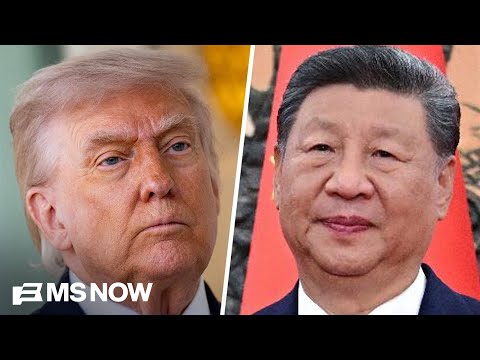
Trump Says He Talked With China's Xi About Taiwan, Russia, Oil, and More
Barrons· 2026-02-04 16:06
Trump Says He Talked With China's Xi About Taiwan, Russia, Oil, and More - Barron'sSkip to Main ContentThis copy is for your personal, non-commercial use only. Distribution and use of this material are governed by our Subscriber Agreement and by copyright law. For non-personal use or to order multiple copies, please contact Dow Jones Reprints at 1-800-843-0008 or visit www.djreprints.com.# Trump Says He Talked With China's Xi About Taiwan, Russia, Oil, and MoreBy [Reshma Kapadia]ShareResize--- ReprintsPresi ...
中国展望-2026年通胀率走低-Lower 2026 inflation
2026-01-15 06:33
Summary of Key Points from the Conference Call Industry Overview - The focus is on the **Chinese economy** and its inflation dynamics, particularly for the year 2026, with a significant emphasis on various cyclical drivers affecting inflation rates [1][2][3][4]. Core Insights and Arguments - **CPI Inflation Forecast**: The CPI inflation forecast for 2026 has been downgraded to **0.4%** from **0.8%**, reflecting downward pressures from both external and domestic factors [2]. - **Imported Inflation**: Anticipated lower imported inflation due to the appreciation of the Chinese Yuan (CNY) and declining oil prices [2][5]. - **Domestic Price Pressures**: Domestic price pressures are weakening, indicated by a faster decline in housing rents and intensified competition in electricity pricing [2][3]. - **Auto Price Wars**: A resurgence of auto price wars is expected in 2026, which may hinder recovery in transportation CPI, with reports of over **76 models** cutting prices by up to **40%** [7]. - **Electricity Pricing**: Increased competition in electricity pricing is anticipated, with some regions, like Jiangsu, expected to cut rates by **17%** compared to 2025 [7]. - **Property Market Weakness**: The property sector continues to show weakness, with housing rents declining by **0.3%** year-on-year in December, marking a significant downturn [6][7]. - **Labor Market Challenges**: The labor market is expected to face challenges, with a rising percentage of firms planning to downsize, increasing from **17.6%** in Q3 2025 to **24.5%** in Q4 2025 [7][19]. Additional Important Insights - **Geopolitical Risks**: Rising geopolitical tensions and trade frictions are seen as downside risks to global trade and China's exports in 2026 [3]. - **Commodity Prices**: Base metal prices showed sequential improvement in December, but the impact on CPI is expected to be limited due to weak demand [7]. - **Pork Prices**: CPI pork deflation has narrowed, but recovery is expected to be gradual due to subdued demand and high inventories [7]. - **Policy Support**: Modest policy support is anticipated in 2026, with a budget deficit maintained at **4%** and limited fiscal stimulus [7][9]. Conclusion - The overall outlook for the Chinese economy in 2026 suggests persistent low inflation, driven by various factors including currency appreciation, weak domestic demand, and ongoing challenges in the property and labor markets. The anticipated modest policy support may not be sufficient to reverse these trends [2][3][7].
Watch CNBC's full interview with White House senior trade counselor Peter Navarro
CNBC Television· 2025-12-23 13:23
Tariffs and Trade Policy - The administration believes tariffs are not a tax on U S companies but a form of leverage against foreign countries that depend on the U S market [7][8][24] - The administration argues that countries with trade deficits with the U S depend on the U S economy and therefore bear the cost of tariffs by reducing prices [9][25] - The administration asserts that tariffs are a tool to rebalance global trade and bring back manufacturing and supply chains to the U S [19][5][14] - The administration views tariffs as a "beautiful thing" and a "dial for leverage" to negotiate trade deals and address non-tariff barriers [18][20][21] - The administration claims that tariffs have not caused inflation and are bringing investment into the U S [11][26] Manufacturing and Supply Chains - The administration acknowledges that bringing back manufacturing and supply chains takes time, similar to the time it took for China to build its manufacturing base [4][13][14] - The administration aims to bring back both factories and supply chains to the U S, emphasizing the national security aspects of domestic production [5][14] - The administration suggests that construction jobs will come first, followed by manufacturing jobs, as investment increases [6] Economic Outlook - The speaker expressed optimism about the economy, predicting the Dow Jones Industrial Average would reach 50,000 [16] - The administration is focusing on reducing inflation by addressing key areas such as housing, healthcare, and food [17] - The administration anticipates a great year in 2026, with tariffs playing a significant role in bringing investment [17][18]
X @The Wall Street Journal
The Wall Street Journal· 2025-12-22 21:26
Trade Policy - Tariffs are not a magic solution but a tool to enforce discipline [1] - Tariffs aim to incorporate the real cost of dependency into corporate planning [1] - Tariffs are used to counter predatory trade behavior [1]
X @The Wall Street Journal
The Wall Street Journal· 2025-12-22 20:00
Trade Policy Impact - Tariffs rose to the highest levels in centuries [1] - The U S lost tens of thousands of manufacturing jobs this year due to increased tariffs [1] Industry Focus - The report focuses on the manufacturing industry, specifically in Detroit [1] - The report aims to identify the winners of the new trade paradigm [1]
X @Bloomberg
Bloomberg· 2025-12-22 07:26
Trade Policy & Leadership - Vietnam's trade minister, who oversaw US tariff deal negotiations, has been replaced [1] Geopolitical Implications - The replacement may signal shifts in Vietnam's trade strategy or its relationship with the US [1]
US Trade Chief Says Trump Reset Global Trading Order
Bloomberg Television· 2025-12-19 14:01
Trade Policy & Tariffs - The administration aimed to reset the global trading order towards a fair and balanced approach, implementing numerous trade deals and tariffs [1][2] - The tariff program is considered crucial for building a new global trading order and protecting US industry, with trading partners having largely accepted the system [5] - The removal of tariffs on specific goods like bananas, coffee, and cocoa was considered to address affordability concerns, especially for goods not produced in the United States [9] - The primary goal of the trade program is to reshore American manufacturing, protect American food security, create jobs, and increase wages, rather than driving prices [12][13] US-China Trade Relations - The US aims for stability in trade relations with China, seeking a more balanced trade relationship, with the trade deficit decreasing by 25% [20] - A potential agreement with China in the first half of next year could outline specific trade items and volumes, representing a form of managed trade [21] - Rare earth elements continue to flow from China, and China has purchased over 5 million metric tons of soybeans, indicating ongoing trade between the two countries [18] - Discussions regarding the TikTok deal involve both private sector agreements and government approvals from the US and China, with an expectation of Chinese government approval [15][16] Trade Relations with Other Regions - The US has expressed strong concerns regarding discriminatory regulatory measures by Europe against US tech companies, which appear to target companies based on revenue or business models [31][32] - Negotiations with India are ongoing to find a good landing zone, while other trade partners have concluded negotiations more quickly [36] - Mexico has requested modifications to steel and aluminum tariffs, and discussions are ongoing, with the US acknowledging Mexico's constructive approach in addressing US concerns [39][40][41] Export Controls & National Security - Export controls are fluid and constantly reviewed to balance national security with technological advancements and foreign availability [25] - Approvals for exporting certain items, like H2O chips, to China are subject to Commerce Department review to ensure US national security is not jeopardized [26] - The US government is closely monitoring China's development of AI chips and semiconductor tools [25]
X @Bloomberg
Bloomberg· 2025-12-17 22:56
Trade Policy - US Trade Representative supports keeping the US in the trade accord with Canada and Mexico [1]
Japan's exports rise 6% in November as shipments to the US bounce back
Yahoo Finance· 2025-12-17 06:32
Core Insights - Japan's exports increased by 6% in November year-over-year, with a notable rise in shipments to the U.S. for the first time since March, attributed to reduced tariff uncertainties following a trade deal with the Trump administration [1][5] - Total imports rose by 1.3%, resulting in a trade surplus of 322.2 billion yen (approximately $2.1 billion) [1] Exports to the U.S. - Exports to the U.S. saw a nearly 9% increase, driven by shipments of cars, chemicals, and cameras, which offset declines in machinery and iron and steel [2] - The tariff deal with the Trump administration set the baseline import duty for most products at 15%, which boosted passenger car shipments by 8% in terms of vehicle numbers, although the value of these vehicles only increased by 1.5% [3] Imports from the U.S. - Imports from the U.S. rose by over 7%, contributing to a trade surplus of 739.8 billion yen ($4.7 billion), which is an 11% increase from the previous year [4] Exports to Other Regions - Exports to the European Union surged by about 20%, supported by increased demand for machinery, vehicles, and other manufactured goods [4] - However, exports to China fell by 2.4% due to weaker shipments of chemicals, machinery, and vehicles, influenced by rising tensions following comments from Prime Minister Sanae Takaichi regarding Taiwan [5] Future Outlook - Despite the recent recovery in trade with the U.S., higher tariffs are expected to continue impacting exports negatively, although forecasts suggest that Japan's exports may improve in the coming year [5] - Increased U.S. spending related to AI is anticipated to support Japan's exports [6]
X @外汇交易员
外汇交易员· 2025-12-16 02:37
Trade Forecast - Germany's exports to China are predicted to decrease by 10% to 81 billion euros this year [1] - China's share of Germany's total exports is expected to fall from approximately 75% in 2021 to 52% this year [1] Economic Impact - China is projected to drop to seventh place in Germany's export destination rankings [1]