
Homeownership affordability

Search documents
Apartment REITs Part 1: Sector Level Macro
Seeking Alpha· 2026-03-06 22:22
Core Viewpoint - The apartment REIT sector is currently facing weak fundamentals but presents a potentially attractive investment opportunity due to low valuations and the expectation of improving rental rates in the future [18][50]. Group 1: Market Dynamics - The pandemic significantly disrupted the apartment sector, leading to a surge in demand and a 21% increase in national median rental rates, which rose from under $1200 to over $1400 [5][9]. - Following the peak in 2022, national median rent has decreased by 5.9%, with a current vacancy rate of 7.4%, indicating a shift from high demand to increased supply [9][15]. - The development boom initiated during the pandemic is expected to result in heavy deliveries in 2024 and 2025, contributing to elevated vacancy rates [14][15]. Group 2: Economic Factors - The personal savings rate increased dramatically during the pandemic due to stimulus checks, which temporarily boosted rental demand [3][11]. - The current economic environment is characterized by high homeownership costs, with average monthly owner costs reaching $2,035 in 2024, making renting more economical at a median asking rent of $1,357 [33][34]. - The gap between homeownership and rental costs suggests that rental rates may need to rise to achieve equilibrium, especially as homeownership becomes increasingly unaffordable [38][40]. Group 3: Future Outlook - The rental rate equilibrium is believed to be significantly higher than current rates, indicating potential for rental increases as the development wave subsides [22][41]. - Despite the elevated vacancy rate, which may remain due to subdued demand growth from population increases, apartment REITs are expected to manage occupancy better than the national average [42][50]. - The overall sentiment is that while current fundamentals are weak, they are likely to improve, making the apartment REIT sector a worthwhile investment opportunity [50][51].


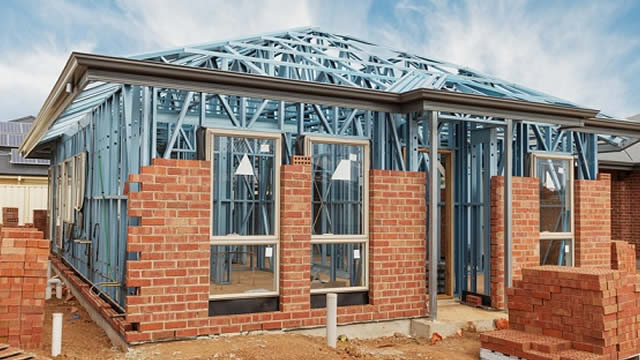
Trump pushes for lower rates and ban on investor home purchases in bid to make homes more affordable
Yahoo Finance· 2026-01-21 18:59
Core Viewpoint - President Trump's administration is focusing on policies aimed at making homeownership more affordable for Americans, particularly through lowering interest rates and restricting institutional investors from purchasing single-family homes [1][2]. Group 1: Policy Proposals - Trump outlined four key policies during his address at the World Economic Forum, which are part of a broader initiative to tackle housing affordability ahead of the midterm elections [2]. - The administration aims to lower interest rates on home loans and credit cards to enhance financial flexibility for potential homebuyers [4]. Group 2: Current Housing Market Conditions - The U.S. housing market has been experiencing a sales slump since 2022, attributed to rising mortgage rates, high home prices, and a significant shortage of available homes [3]. - Sales of previously occupied homes in the U.S. remained at 30-year lows, indicating a challenging environment for aspiring homeowners [3]. Group 3: Government Actions - The federal government has been directed to purchase $200 billion in mortgage bonds, which Trump claims will help reduce mortgage rates [4]. - Fannie Mae and Freddie Mac reportedly have $200 billion in cash available for buying mortgage bonds, although economists suggest this may have a limited effect on mortgage rates [4]. Group 4: Federal Reserve Considerations - Trump has been advocating for the Federal Reserve to lower interest rates and plans to announce a new Fed chair to replace Jerome Powell [5]. - Historical context indicates that Fed rate cuts do not always lead to lower mortgage rates, as seen in the fall of 2024 when mortgage rates increased despite a rate cut by the Fed [6].
Homes.com Report: National home price appreciation strengthens in November
Businesswire· 2025-12-11 21:30
Core Insights - Homes.com released a report analyzing home price trends in November, indicating moderate home price appreciation with a nationwide median increase of 2.4% year-over-year, reaching $385,000 [2][3] Market Trends - Homeownership affordability has slightly improved due to income growth and a decline in mortgage interest rates by approximately 0.7 percentage points since late May [3] - The inventory of homes for sale increased by 17.9% year-over-year, marking the highest November level since 2015, which suggests a better balance between supply and demand [3] Regional Performance - The Midwest region outperformed other areas, with notable price increases in Cleveland (11.6%), Cincinnati (10.0%), Pittsburgh (8.7%), and Saint Louis (7.5%) [4] - Despite some markets experiencing price declines, such as Jacksonville, Florida with a 4.1% drop, nearly 65% of the 1,000 markets tracked by Homes.com showed price appreciation over the past year [4]


I’m a Real Estate Expert: Here’s Why I Think Trump’s 50-Year Mortgage Idea Will Work
Yahoo Finance· 2025-12-08 16:04
Core Insights - More than half (54%) of Millennials are open to considering a 50-year mortgage, contrasting with only 29% of Boomers, indicating a generational shift in home financing preferences [1] - The proposal for 50-year mortgages has sparked debate, with proponents arguing that it could help more Americans qualify for home loans by reducing monthly payments [2] Group 1: Mortgage Trends - The average reduction in monthly payments from a 50-year mortgage is estimated to be between $125 to $250, which can significantly impact affordability for many Americans [2] - Most first-time homebuyers typically opt for a 30-year mortgage but often refinance into shorter terms later, suggesting flexibility in mortgage choices [1] Group 2: Impact on Rental Market - An increase in homeownership is expected to decrease demand for rental units, leading to downward pressure on rents and improved affordability for renters [3] - Experts suggest that lower demand for rental housing may compel landlords to offer more flexible terms to tenants [3] Group 3: Homeownership Dynamics - Critics argue that longer loan terms may result in homeowners remaining in debt longer; however, many homeowners already do not pay off their mortgages, often selling or refinancing within seven to ten years [4] - Home appreciation tends to create more equity than the principal pay-down on the mortgage, indicating that the length of the mortgage may not significantly affect overall debt levels [4] Group 4: Market Affordability - The affordability divide between high-demand and lower-demand markets may widen with the introduction of 50-year mortgages, as buyers may leave affordable areas for more expensive cities [5] - In lower-demand markets, such as Cleveland, where the average home price is around $111,728, 50-year mortgages could potentially lower prices further, enhancing affordability [5]
D.R. Horton(DHI) - 2025 Q4 - Earnings Call Transcript
2025-10-28 13:30
Financial Data and Key Metrics Changes - For the fourth quarter, consolidated pre-tax income was $1.2 billion on revenues of $9.7 billion, resulting in a pre-tax profit margin of 12.4% [5] - For the full year, consolidated pre-tax income was $4.7 billion with a pre-tax profit margin of 13.8% [5] - Net income for the quarter was $905.3 million or $3.04 per diluted share, while for the year, net income was $3.6 billion or $11.57 per diluted share on revenues of $34.3 billion [7] - The average closing sales price for the quarter was $365,600, down 1% sequentially and down 3% year over year [7] - The company generated $3.4 billion of cash from operations after making home building investments totaling $8.5 billion [6] Business Line Data and Key Metrics Changes - Home sales revenues for the fourth quarter were $8.5 billion on 23,368 homes closed [7] - Net sales orders in the fourth quarter increased 5% year over year to 20,078 homes, with order value increasing 3% to $7.3 billion [8] - The average price of net sales orders in the fourth quarter was $364,900, flat sequentially and down 3% from the prior year [8] - Rental operations generated $81 million of pre-tax income on $805 million of revenues from the sale of 1,565 single-family rental homes and 1,815 multifamily rental units [14] Market Data and Key Metrics Changes - The average number of active selling communities was up 1% sequentially and up 13% from the prior year [8] - The company’s home building lot position at year-end consisted of approximately 592,000 lots, with 25% owned and 75% controlled through purchase contracts [13] - In the Southeast region, particularly Florida, some markets like Jacksonville and Southwest Florida faced excess inventory issues [68] Company Strategy and Development Direction - The company remains focused on capital efficiency to generate strong operating cash flows and deliver compelling returns to shareholders [6] - The strategy includes tailoring product offerings and sales incentives based on demand in each market to maximize returns [6] - The company plans to purchase approximately $2.5 billion of its common stock during fiscal 2026, in addition to paying dividends of around $500 million [19] Management's Comments on Operating Environment and Future Outlook - Management expects new home demand to reflect ongoing affordability constraints and cautious consumer sentiment [19] - For fiscal 2026, the company anticipates generating consolidated revenues of approximately $33.5 to $35 billion and homes closed to be in the range of 86,000 to 88,000 [19] - Management expressed a positive outlook for the housing market over the medium to long term despite current volatility and uncertainty in the economy [21] Other Important Information - The company’s return on equity was 14.6%, and return on assets was 10% [5] - The company repurchased 4.6 million shares of common stock for $689 million in the fourth quarter, totaling 30.7 million shares for $4.3 billion for the full year [17] - The company’s book value per share increased by 5% from a year ago to $82.15 [18] Q&A Session Summary Question: How to think about the walk from the 20% gross margin in Q4 to 20-20.5% in Q1? - Management indicated that the unusual impact from litigation is not expected to persist into Q1, and the guide reflects the current environment and level of incentives [24][26] Question: How quickly can the company ramp starts to meet demand? - Management acknowledged that starts were intentionally lower to align inventory and expressed confidence in their ability to respond to market demand [25][26] Question: Is the outlook for Q1 anticipating seasonal lightness in profitability? - Management expects rental operations to be softer in Q1, impacting consolidated operating margin due to lower closings volume [29][30] Question: Can you provide additional color on the Southeast region's performance? - Management noted that while some markets in Florida are struggling with inventory balance, there are still bright spots throughout the state [68] Question: What are the expectations for lot costs and stick and brick costs? - Management expects lot costs to remain sticky, but anticipates reductions in stick and brick costs as they renegotiate terms [50][51]
