
Hybrid Vehicle

Search documents
Ford's February EV Slump: Why the F-150 Lightning is Losing Charge
ZACKS· 2026-03-06 14:41
Core Insights - Ford's February sales data indicates a significant slowdown in its electric vehicle (EV) business, particularly with a 71% year-over-year decline in total EV sales, selling only 2,122 units [1][9] - The F-150 Lightning experienced a drastic drop in sales, plummeting over 76% to just 522 units, while the Mustang Mach-E and E-Transit van also saw substantial declines in demand [1][2] Group 1: Sales Performance - Total Ford sales decreased by 5.5% to 149,962 units in February, with internal combustion engine vehicles remaining the primary sales driver at 135,830 units, nearly unchanged from the previous year [2] - Hybrid vehicle sales totaled 12,010 units, reflecting a decline of about 22% [2] Group 2: F-150 Lightning and Production Adjustments - The F-150 Lightning's sales trajectory has been disappointing, attributed to high battery costs and interest rates, leading Ford to scale back production and adjust output to manage inventory levels [3][4] - Ford has ceased production of a fully electric version of the F-150, with future models expected to include hybrid elements [4] Group 3: Strategic Shift - Ford is refocusing its strategy towards more profitable hybrids and traditional vehicles while narrowing its pure EV efforts due to slower EV adoption and rising costs [5] - The company plans to concentrate on smaller, more affordable EV models built on its upcoming Universal EV Platform, aiming for higher volume at lower costs [6] Group 4: Industry Context - The broader automotive industry is experiencing similar challenges, with automakers like General Motors and Stellantis also realigning their strategies in response to weaker-than-expected EV demand [7][8] - The U.S. has fallen behind in EV adoption, exacerbated by reduced government support and the expiration of key tax credits [7] Group 5: Financial Overview - Ford's stock has declined by 6% over the past six months, trading at a forward price-to-sales ratio of 0.29, significantly below the industry average [13][14] - Earnings estimates for 2026 and 2027 indicate potential year-over-year growth for Ford [16]


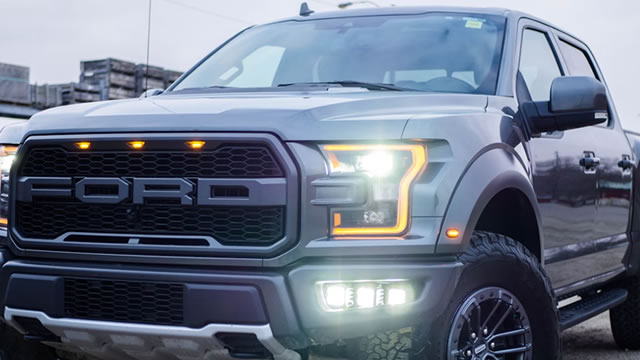
Ford CEO says 'customer has spoken' after EV shift drives major quarterly loss
Fox Business· 2026-02-11 19:16
Core Insights - Ford reported its largest quarterly loss since 2008, with a net loss of $11.1 billion in Q4, primarily due to losses in its electric vehicle division, tariffs, and supply chain issues [1][2]. Financial Performance - The company experienced a loss of $4.8 billion on electric vehicles in the previous year and anticipates further losses of $4 billion to $4.5 billion in 2026, with a target to break even by 2029 [2]. - Ford's fourth quarter revenue reached $45.9 billion, exceeding analysts' expectations, although it narrowly missed its revised earnings guidance of $7 billion, reporting earnings before interest and taxes of $6.8 billion for the year [7]. Tariff Impact - Ford's tariff costs were approximately $2 billion last year, with an additional loss of $900 million due to changes in the tariff-relief program announced by the Trump administration [3][6]. - The company expects tariff costs to remain at similar levels this year, influenced by reliance on imported aluminum following fires at a supplier's plant [6]. Strategic Shifts - Ford announced a strategic shift by cutting production of the electric F-150 Lightning and taking a $19.5 billion charge on its EV assets, refocusing investments on hybrid vehicles and affordable EVs [4][8]. - The company plans to introduce a $30,000 EV platform and is set to roll out an electric pickup on that platform next year, alongside pursuing targeted partnerships and investments in hybrid technologies [12][13].
Ford, China's BYD in Talks for Hybrid-Vehicle Batteries After EV Market Flames Out
WSJ· 2026-01-15 16:49
Core Insights - A potential deal may see Ford acquiring batteries from a Chinese carmaker for its factories located outside the U.S. [1] Company Summary - Ford is exploring the possibility of purchasing batteries from a Chinese manufacturer to support its production facilities outside the United States [1]

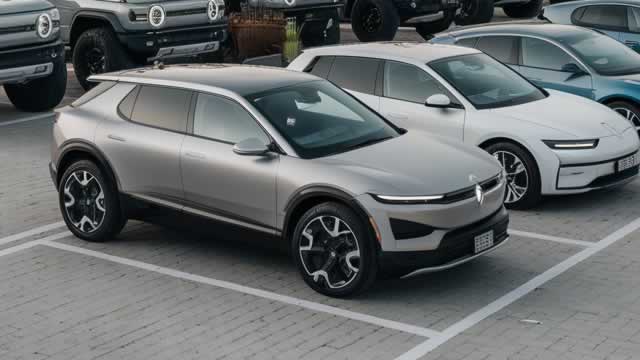
Ford takes $19.5bn hit amid electric vehicle retreat as Trump policies bite
The Guardian· 2025-12-15 22:02
Core Viewpoint - Ford is taking a significant $19.5 billion writedown and discontinuing several electric vehicle (EV) models, reflecting the auto industry's retreat from battery-powered vehicles due to changing policies and declining demand for EVs [1][5]. Group 1: Company Actions - Ford will cease production of the F-150 Lightning in its electric form and will instead focus on an extended-range electric model, a hybrid called Erev [2]. - The company is also canceling the next-generation electric truck, T3, and planned electric commercial vans [2]. - Ford plans to pivot towards gas and hybrid models, expecting its global mix of hybrids, extended-range EVs, and pure EVs to reach 50% by 2030, up from 17% today [3]. Group 2: Financial Implications - The $19.5 billion writedown will be spread out, primarily occurring in the fourth quarter and continuing through 2027, with $8.5 billion related to canceled EV models, $6 billion tied to a dissolved battery joint venture with SK On, and $5 billion for "program-related expenses" [4]. - Sales of the F-150 Lightning have decreased by 10% year-over-year, with only 25,583 units sold through November [8]. Group 3: Market Context - US sales of electric vehicles fell approximately 40% in November, following the expiration of a $7,500 consumer tax credit, which had been in place for over 15 years [6]. - The shift in Ford's strategy reflects a broader trend in the auto industry, as companies reassess their investments in EVs amid waning demand and changing regulatory environments [5][7]. Group 4: Future Plans - Ford's future EV lineup will focus on more affordable models, with the first model from a specialized team in California expected to be priced around $30,000 and available in 2027 [9].

USED CAR BOOM: Valvoline CEO reveals what's driving the charge
Youtube· 2025-12-12 07:00
Core Insights - New car prices are at an all-time high, with average monthly payments reaching $766 and average amounts financed at $43,218, driving consumers towards the used car market [1][2] - Companies like Carvana, Autoation, and CarMax are benefiting from this trend, with stock prices increasing significantly [2] - Valvalene, which operates 2,300 car servicing stores, is positioned to capitalize on the growing demand for maintenance services as consumers hold onto their older vehicles longer [2][3] Company Performance - Valvalene's CEO noted that the average age of vehicles in the U.S. has increased to nearly 13 years, leading to higher maintenance needs and revenue opportunities for the company [4] - The company has been experiencing a steady influx of customers seeking maintenance for their older vehicles, which aligns with the trend of consumers opting for used cars over new ones [3][4] - Valvalene's growth in the electric vehicle (EV) segment has slowed since the removal of EV subsidies, with EV penetration in the car park currently below 2% [6][7] Market Dynamics - The shift towards maintaining older vehicles rather than purchasing new ones is expected to continue, as consumers find it more economical to keep their current cars [5] - Valvalene's hybrid business is performing well, with penetration rates comparable to traditional internal combustion engine vehicles [8] - The company aims to improve its market perception and investor understanding following a significant acquisition and a focus on clear financial commitments for growth [12][10] Community Engagement - Valvalene has a strong commitment to community involvement, having raised over $1.8 million for the Children's Miracle Network and engaging in various charitable activities [15][16]


Indiana couple with $172K in debt resorting to credit cards to buy groceries — why Dave Ramsey blames their cars
Yahoo Finance· 2025-10-05 11:00
Core Insights - Electric vehicles (EVs) depreciate significantly faster than gas-powered cars, with an average depreciation of 58.8% over five years compared to 45.6% for all vehicles [1][4] - The Honda Prologue, an electric SUV, has a projected depreciation of 49% after three years, with a resale value of approximately $29,701 [5][6] - The depreciation rates for various EV models vary, with the Jaguar I-PACE experiencing the highest average depreciation rate at 72.2% [5] Depreciation Factors - Rapid technological advancements in EVs, particularly in battery technology, contribute to faster depreciation as older models become outdated [6] - Concerns regarding battery life may also affect resale values, despite federal warranties of eight years or 100,000 miles for EVs [6] Financial Implications - The financial burden of car loans can lead to significant debt, as illustrated by a case where a couple owes $110,000 in car debt alone, alongside $62,000 in credit card debt [3][10] - Financial advisors recommend that monthly car expenses should not exceed 10% of monthly income to avoid becoming "car poor" [7][8] Recommendations for EV Buyers - Potential EV buyers should explore local or state incentives, as well as rebates from automakers, to mitigate costs [9] - Consideration of home charging installation costs and the availability of charging stations is crucial for prospective EV owners [10]
X @Bloomberg
Bloomberg· 2025-09-07 13:16
Porsche is launching the most powerful 911 factory model to date, leaning on its combustion-engine clout to create a hybrid version of the Turbo S https://t.co/I2dHlYcDpq ...