India Semiconductor Mission (ISM)

Search documents
Budget 2026 could drive a power shift in India’s semiconductor push
The Economic Times· 2026-01-22 05:23
Core Insights - India's government aims to be among the top four semiconductor manufacturing nations by 2032, with four companies set to begin commercial production in 2026 [1] - Significant investments are being made in semiconductor manufacturing, with Micron's ATMP facility in Gujarat costing over Rs 22,500 crore and Tata Electronics' fab in Dholera estimated at nearly Rs 91,000 crore [1][2] - The upcoming Budget is critical for transitioning the India Semiconductor Mission (ISM) from a subsidy-led program to a long-term industrial strategy [4] Investment and Capacity - Micron Technology's ATMP facility in Gujarat has an investment of Rs 22,516 crore with phased ramp-up [2] - Tata Electronics, in partnership with Powerchip Semiconductor Manufacturing Corp, plans a fab in Dholera with an investment of approximately Rs 91,000 crore, targeting an output of 50,000 wafers per month [2] - Other projects include CG Power's investment of Rs 7,600 crore for 15 million chips per day in Sanand, and Tata Semiconductor's Rs 27,000 crore investment in Assam for 48 million chips per day [2] Industry Demand and Support - India's internal semiconductor demand is projected to account for nearly 10% of global consumption over the next five years, indicating a strong case for domestic manufacturing [5] - Continued policy support similar to ISM 1.0 is essential to maintain momentum and prevent greenfield projects from relocating [6][7] - The FY27 Budget is expected to prioritize direct capital subsidies over long-term operating support due to the capital-intensive nature of semiconductor manufacturing [9] Infrastructure and Ecosystem Development - There is a need for semiconductor-ready infrastructure, including land, water, and power grids, which are often under state jurisdiction [13] - Competitive selection models for clusters and anchor investments are recommended to align state strengths with semiconductor manufacturing needs [14] - A national skills pipeline and technical tie-ups with global companies are critical for training in semiconductor technologies [19] Long-term Strategy and Governance - ISM 2.0 should adopt a long-term, milestone-linked investment model, with support extending beyond fabs to include suppliers and skilled talent [25] - A dedicated governance body is recommended to track metrics such as capex committed and project completion [19] - The upcoming Budget will be closely monitored for signals of continuity and strategic clarity in India's semiconductor ambitions [24]



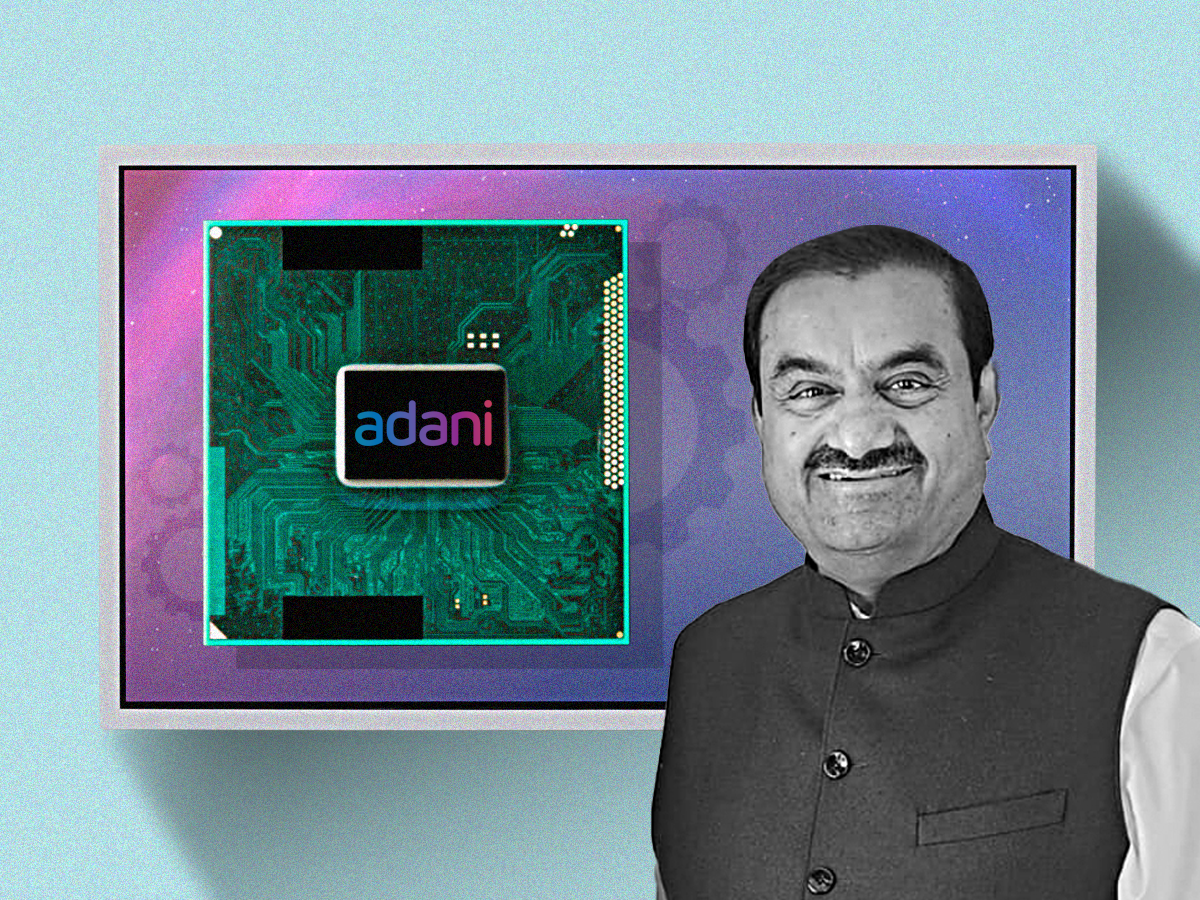
Adani scouts for partners again for LCD display fab
The Economic Times· 2025-09-12 00:30
Core Viewpoint - The Adani Group is making a second attempt to enter the semiconductor sector by establishing a joint LCD display fabrication plant in India, following the collapse of its previous $10 billion chip manufacturing proposal with Tower Semiconductor [1][2][10]. Group 1: Adani Group's Strategic Moves - The Adani Group had previously announced a $10 billion plan to set up a chip manufacturing facility in Maharashtra, which was later paused due to concerns over commercial viability and strategic alignment [2][10]. - The group is now focusing on establishing an LCD display fab, with discussions reportedly gaining momentum after Prime Minister Modi's visit to Japan [3][10]. - The Maharashtra government has provided a 'comfort letter' to the Adani Group, indicating readiness to offer land for data centers or semiconductor-related projects, contingent on finding a suitable partner [4][10]. Group 2: Market Context and Opportunities - The Ministry of Electronics and Information Technology (MeitY) has prioritized establishing display fabs under the proposed Semicon 2.0 scheme to boost domestic manufacturing and reduce imports [4][10]. - India currently consumes nearly 9% of the global display panel market, and establishing display fabs could unlock nearly 70% of display value within India, significantly reducing import dependency [4][10]. - Analysts suggest that display fabs present lower entry barriers and quicker returns compared to chip fabs, aligning well with Adani's infrastructure strengths [5][10]. Group 3: Partnerships and Technological Expertise - The Adani Group is in discussions with Sharp and Panasonic, both of which have shifted their focus to niche, high-value B2B sectors, leveraging their unique technologies [5][11]. - Sharp is recognized for its Indium-Gallium-Zinc-Oxide (IGZO) technology and is investing in new technologies like nano LED and reflective displays, while Panasonic is a key player in the automotive display sector [7][11]. - The collaboration with Sharp and Panasonic is seen as a strategic move to enhance Adani's capabilities in high-growth electronics manufacturing [4][10].