Industrial Digital Transformation

Search documents
PepsiCo Partners With Siemens and Nvidia on AI Digital Twins
PYMNTS.com· 2026-01-28 21:31
Core Insights - PepsiCo has initiated a multi-year collaboration with Siemens and Nvidia to enhance plant and supply chain operations using advanced digital twin technology and artificial intelligence (AI) [1] - The initiative aims to position PepsiCo as a leader in industrial AI adoption, particularly for complex manufacturing and logistics systems [1] Group 1: Strategic Vision - PepsiCo's Chairman and CEO Ramon Laguarta emphasized that the initiative is crucial for making the company "future-fit," enabling it to respond to consumer demand with greater agility [3] - Traditional expansion methods are described as slow and capital-intensive, while digital twin-driven planning allows for quicker and less risky testing and scaling of changes [3] Group 2: Technological Framework - The operational goals are supported by Siemens' industrial AI and automation platform, which reflects a shift towards AI-native manufacturing [4] - Siemens CEO Roland Busch noted that the collaboration enables companies like PepsiCo to implement AI at production scale rather than in isolated pilot projects [4] Group 3: Role of Digital Twins - Nvidia's founder and CEO Jensen Huang highlighted that digital twins serve as a crucial layer for transforming manufacturing processes, allowing companies to optimize real-world systems through high-fidelity simulation and generative AI [5] - The combination of digital twins and AI is reported to enhance design and operational efficiency significantly [5] Group 4: Early Results and Impact - Early deployments of the technology have shown measurable results, including a 20% increase in throughput at initial facilities and nearly 100% design validation [6] - The pilots have also helped uncover hidden capacity and potential operational issues before physical implementation [6] Group 5: Broader Industry Trends - PepsiCo's digital strategy aligns with broader trends in industrial digital transformation, where companies are increasingly adopting digital twins and AI to simulate changes and reduce capital expenditure [7] - The partnership with Siemens and Nvidia aims to create a replicable model that could influence supply chain strategies across various manufacturing and distribution sectors [7]



CIMG Inc. Announces Entry into Computing Power Industry; Initial Contracts with Aggregate Value of Approximately $124 Million
Prnewswire· 2026-01-05 14:20
Core Insights - CIMG Inc. has executed initial commercial contracts related to computing power, with a total contract value of approximately $124 million in Q4 2025, indicating a strategic shift towards technology-driven growth [1][2][3] Group 1: Strategic Deployment - The company has elevated its computing power business to a core strategy, recognizing its importance in the digital economy and its role in driving AI and big data analytics [2] - Mr. Wenlong Tong has been appointed as President to lead the expansion of the computing power business, aiming to transform technological capabilities into sustainable market competitiveness [2][3] Group 2: Initial Contracts and Commercial Progress - CIMG's subsidiary, Xinmiao Shidai, was shortlisted for a server procurement tender by Guangzhou Bank with a benchmark bid of approximately $15.95 million, although this does not guarantee a contract [4] - A sales contract valued at approximately $106.5 million was signed by Zhongyan Shangyue Technology Co., Ltd., subject to inspection and acceptance [5] - Two separate sales contracts for computing power products were signed, totaling approximately $1.78 million, covering high-performance computing servers and GPUs [6] Group 3: Synergy with Core Business - The computing power deployment is synergistic with the company's traditional digital health business, exemplified by the development of the "LifeNode" product in collaboration with FLock Technology Holdings [7] - The CEO emphasized the goal of establishing computing power as a foundational technology connecting various business segments, aiming to create an innovative commercial ecosystem [8][9]

从“盆景工程”到核心生产力:华为如何让AI真正走进油气矿山与高炉车间
Feng Huang Wang· 2025-11-26 14:01
Core Insights - Huawei aims to transform the perception of industrial internet from a "showpiece" to a productivity-enhancing tool by integrating AI into core production processes [1][2] - The shift from traditional experience-based operations to data-driven approaches is highlighted as a key value in the digital transformation of heavy industries [2] Group 1: Breakthroughs in Core Production Systems - AI applications in industrial sectors have historically been limited to auxiliary roles, but Huawei is now pushing AI into core processes, exemplified by advancements in steel production [2] - Huawei's AI-driven temperature control in blast furnaces can save approximately 10 million RMB annually, showcasing the financial benefits of this transition [2] Group 2: Efficiency and Cost Reduction - Huawei's AI model significantly reduces analysis time in the aluminum alloy sector from 3-5 minutes to under 10 seconds, achieving over 90% efficiency improvement with 99.5% accuracy [3] - In extreme conditions, autonomous mining trucks in Inner Mongolia have improved transportation efficiency by 20%, saving about 15,000 tons of fuel annually, equivalent to around 100 million RMB [3] Group 3: Addressing Fragmentation and Safety - The oil and gas mining industry faces challenges with fragmented systems; Huawei's unified architecture has improved data collection rates from below 60% to over 90% [4] - AI technology has enhanced safety measures, achieving a 94.1% identification rate for hazards in special operations, significantly improving upon traditional methods [4] Group 4: Ecosystem and Implementation Methodology - Huawei's strategy involves a dual-driven model of "partners + Huawei" to deepen AI integration within industry practices [5] - Collaborations with leading companies like Baowu Steel have transformed AI from auxiliary systems to core production intelligence engines, indicating a shift towards scalable implementation across the industry [6] Group 5: Future Outlook - By 2025, Huawei aims to transition from pilot projects to large-scale implementation across the entire industrial chain, making AI an essential tool rather than a luxury [6]
广西百色市首个“万兆工厂”示范项目在平果市竣工
Zhong Guo Jin Rong Xin Xi Wang· 2025-06-06 02:24
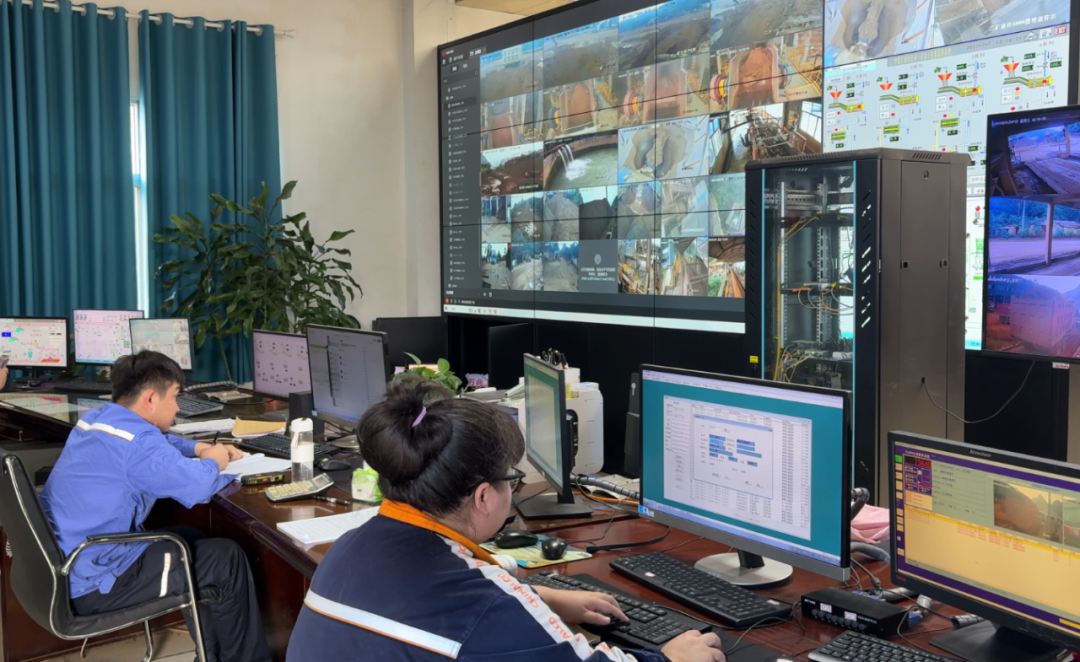
Group 1 - The completion of the "10,000-Channel Factory" demonstration project by China Aluminum Guangxi Company marks a significant upgrade in the industrial internet infrastructure in Pingguo, Guangxi, enabling digital and intelligent transformation for industrial enterprises [1] - The project utilizes a "full optical base + industrial PON" architecture, achieving end-to-end 10G network coverage and integrating cutting-edge technologies such as industrial OTN and optical bus [1] - The 10G optical network features a single wavelength bandwidth of 50Gbps and deterministic network latency, catering to demanding industrial internet applications like 8K visual inspection and cloud-based robot control [1] Group 2 - The factory's production processes have been transformed, enabling real-time data transmission from raw material storage to finished product delivery, significantly enhancing production efficiency and accuracy [2] - Remote equipment control experiences near-zero latency, allowing for synchronized command issuance and device response, which supports rapid data transmission and in-depth analysis for informed decision-making [2] - The project supports intelligent application platforms such as industrial AOI systems, digital twin systems for production processes, and intelligent safety monitoring platforms, contributing to high-quality industrial development [1][2]