Insolvency and Bankruptcy Code (IBC)

Search documents
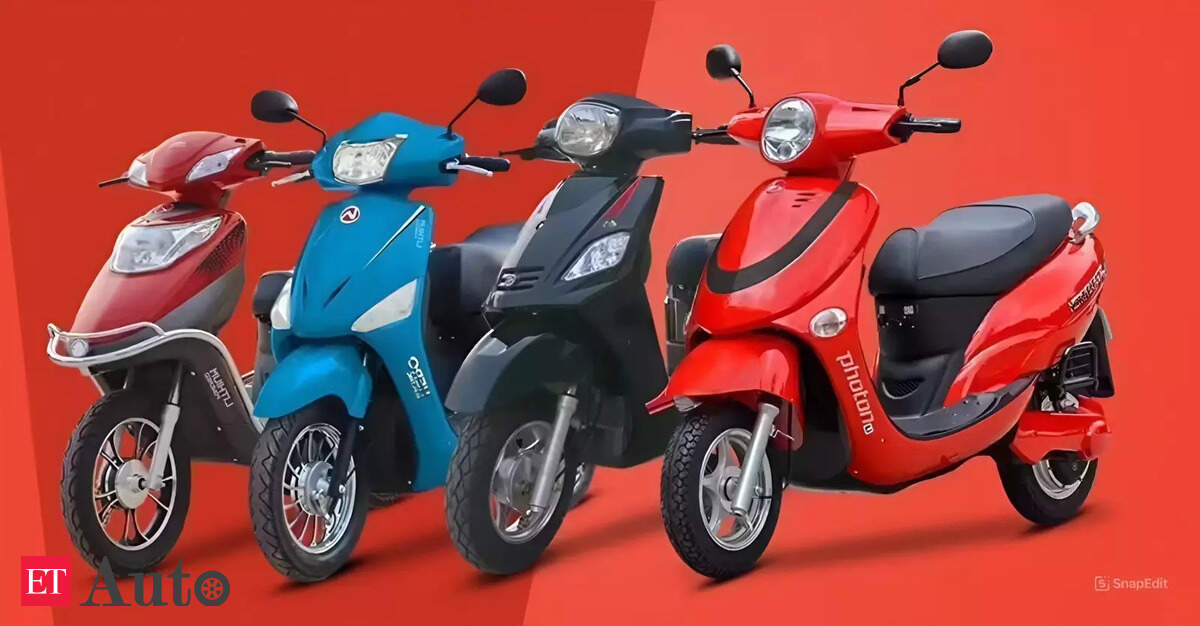
NCLT orders liquidation of Hero Electric Vehicles after creditors reject resolution plans
ETAuto.com· 2026-03-13 06:21
Core Insights - The National Company Law Tribunal (NCLT) ordered the immediate liquidation of Hero Electric Vehicles Pvt Ltd due to the failure to secure the required 66 percent approval from the Committee of Creditors (CoC) during the Corporate Insolvency Resolution Process (CIRP) [8][10] - The liquidation order was issued on 3 March 2026, following the expiry of the CIRP on 13 February 2026, after multiple attempts to revive the company failed [8][10] - The case highlights significant challenges in India's electric two-wheeler sector, including over-leverage, subsidy delays, and battery supply issues, which are critical to achieving India's 2030 electrification goals [7][10] Company Overview - Hero Electric Vehicles Pvt Ltd entered the CIRP on 20 December 2024, initiated by an operational creditor, Metro Tyres Ltd, under Section 9 of the Insolvency and Bankruptcy Code (IBC) [8] - The reconstituted CoC included key lenders such as Bank of Baroda with a secured claim of ₹55.35 crore (39.70 percent voting share), South Indian Bank with ₹17.62 crore (12.64 percent), and IDFC First Bank with a 6.76 percent share [8][10] Resolution Attempts - Over 16 CoC meetings were held, during which the Resolution Professional (RP) conducted two rounds of Expressions of Interest and received multiple resolution plans, but none secured the necessary creditor approval [2][8] - Initial plans were proposed in May 2025, but the CoC annulled the process and sought extensions, leading to further viable plans by August 2025, which also failed to gain approval [3][8] Liquidation Process - NCLT appointed Lekhraj Bajaj as Liquidator, transferring all records and relieving the previous RP, with a fresh moratorium under Section 33(5) barring suits against the estate [5][10] - The Liquidator is required to issue a 75-day preliminary report and investigate affairs under Section 35(1), while fees will follow IBBI scales prioritizing the liquidation estate [6][10] Industry Implications - The liquidation of Hero Electric Vehicles Pvt Ltd is part of a broader trend of insolvencies in the electric vehicle sector, raising concerns about the sustainability of companies in this market [7][10] - Stakeholders are closely monitoring whether the liquidation process will yield fair value or simply accelerate consolidation within the industry [7][10]


Supreme Court says repeated challenges by unsuccessful bidders erode IBC’s framework
MINT· 2026-02-27 07:58
Core Viewpoint - The Supreme Court of India has reinforced the integrity of the insolvency framework by dismissing appeals from unsuccessful bidders, emphasizing that such challenges undermine the resolution process and delay operational control for successful bidders [1][2][5]. Group 1: Court Rulings and Observations - The Supreme Court upheld the resolution plan of Sarda Energy & Minerals Ltd for SKS Power Generation, dismissing appeals from Torrent Power Ltd, Jindal Power Ltd, and Vantage Point Asset Management [2][4]. - The court criticized unsuccessful bidders for attempting to challenge commercial decisions of the committee of creditors (CoC) by framing them as procedural flaws, which it stated could lead to protracted legal battles and erode the value of the corporate debtor [3][4]. - The court noted that such litigation incentivizes delays and is inconsistent with the economic logic of the Insolvency and Bankruptcy Code (IBC) [4]. Group 2: Background and Financial Context - The dispute originated from the NCLAT's approval of Sarda Energy's ₹1,950-crore bid to acquire SKS Power, which was contested by several bidders [6]. - SKS Power was facing insolvency proceedings initiated by Bank of Baroda due to admitted claims of approximately ₹2,560 crore, with lenders like State Bank of India also involved [7]. - Sarda Energy's resolution plan was approved by the NCLT, covering nearly the entire amount owed to financial creditors [7]. Group 3: Company Information - SKS Power operates a 4x300 MW coal-based thermal power plant in Raigarh district, Chhattisgarh [8]. - Sarda Energy & Minerals, founded in 1973, is a leading low-cost steel producer and a major manufacturer and exporter of ferroalloys in India [8].
Spectrum can't be transferred, sold by telcos: Supreme Court
The Economic Times· 2026-02-14 00:31
Core Viewpoint - The Supreme Court ruled that telecom spectrum is a scarce public resource and cannot be transferred or sold under the Insolvency and Bankruptcy Code (IBC), marking a significant win for the government and a setback for lenders involved with Aircel Ltd [7]. Group 1: Legal Framework and Court Rulings - The court stated that the bankruptcy code cannot guide the restructuring of ownership and control of spectrum, emphasizing that its control must be secured for citizens [1][7]. - The court dismissed appeals from the State Bank of India-led committee of creditors and others, who argued that spectrum, as an intangible asset, could be monetized under the insolvency process [7]. - The court found that spectrum allocated to telecom service providers (TSPs) cannot be subjected to IBC proceedings, reinforcing that the statutory regime under IBC should not interfere with the telecom sector's legal framework [4][7]. Group 2: Implications for Telecom Sector - The court criticized the lenders' interpretation of the law as "myopic," stating that the entirety of the telecom sector cannot be governed by the IBC due to differing subjects and purposes of the statutes involved [5][7]. - The tripartite agreement between the Department of Telecommunications (DoT), TSPs, and banks is designed to secure financial assistance for phone companies while protecting lender interests, but lenders are barred from operating services [6][7]. - The court highlighted that while the telecom license may be conditionally transferable to protect lender interests, such transfers remain under the licensor's regulatory control [6][7]. Group 3: Ownership Rights and Asset Classification - The IBC explicitly excludes assets over which corporate debtors do not have ownership rights from the resolution framework, aligning with the 2015 Bankruptcy Legislative Reforms Committee Report that states not all assets can be liquidated [6][7].

Telecom service providers do not own spectrum: Supreme Court
The Hindu· 2026-02-13 20:31
Core Viewpoint - The Supreme Court ruled that telecom service providers (TSPs) do not own spectrum and cannot classify it as an asset in insolvency proceedings, emphasizing that spectrum is a public resource held in trust by the Union of India for the public good [1][8]. Group 1: Legal Ownership and Rights - Spectrum is a scarce natural resource owned by the people of India, with legal title vested exclusively in the Union of India [2]. - TSPs only have a limited, conditional, and revocable privilege to use spectrum, not a proprietary interest [3][4]. - The relationship between the Union and the licensee is characterized as that of a sovereign licensor and licensee, rather than a commercial creditor-debtor relationship [10]. Group 2: Implications of the Ruling - The court clarified that the Insolvency and Bankruptcy Code (IBC) does not apply to the telecom sector regarding spectrum, as it operates under a different legal regime [6]. - Dues owed by TSPs to the Department of Telecommunications (DoT) are not classified as "operational debts" under the IBC [9]. - The judgment prevents insolvency proceedings from undermining statutory and regulatory control over natural resources [10]. Group 3: Background of the Case - The ruling stems from appeals related to corporate debtors, including Aircel Limited, who failed to pay license fees after acquiring rights to use spectrum [7]. - Domestic lenders, including the State Bank of India, had provided loans to these corporate debtors for spectrum rights acquisition [7]. - The Supreme Court's decision overturned a 2021 NCLAT judgment that required TSPs in insolvency to clear statutory dues to DoT before transferring or selling spectrum [8].
SC says spectrum of bankrupt telecom operators can't be sold to repay lenders
MINT· 2026-02-13 05:23
Core Viewpoint - The Supreme Court ruled that telecom spectrum is a "material resource of the community" and cannot be treated as an ordinary asset under the Insolvency and Bankruptcy Code (IBC) for the repayment of lenders in the insolvency proceedings of Aircel and Reliance Communications (RCom) [1][4]. Group 1: Legal Framework and Ruling - The court stated that spectrum belongs to the people of India, with the government acting as a trustee, and that the IBC cannot override the statutory framework governing its allocation, control, and use as a public resource [2][8]. - The ruling clarifies that telecom spectrum, recognized as belonging to Indian citizens, cannot be liquidated under the insolvency regime to maximize lender recoveries, setting a precedent for future telecom insolvency cases involving spectrum rights [7] [9]. Group 2: Background and Context - The dispute arose from petitions filed by State Bank of India and the two insolvent telecom operators challenging a 2021 order of the National Company Law Appellate Tribunal (NCLAT), which ruled that spectrum could be transferred or sold under a resolution plan only after clearing all outstanding government dues [4][11]. - RCom, Aircel, and Videocon entered insolvency between 2018 and 2019, with unpaid statutory dues exceeding ₹40,000 crore [5]. Group 3: Arguments from Stakeholders - The Centre argued that the IBC cannot override the state's control over natural resources, asserting that telecom companies do not own spectrum but are granted limited rights to use it, and that unpaid statutory dues must result in the spectrum reverting to the government [8]. - Lenders contended that spectrum usage rights are commercially valuable and transferable with government approval, and that preventing monetization would sharply reduce recoveries and undermine the objective of insolvency resolution [9].
Vedanta urges NCLT to review Adani's resolution plan for Jaiprakash Associates
MINT· 2026-02-12 11:56
Core Viewpoint - Vedanta Ltd is challenging the approval of Adani Enterprises' resolution plan for Jaiprakash Associates Ltd, claiming it is a "commercial conspiracy" and requesting a review by the National Company Law Tribunal (NCLT) [1] Group 1: Vedanta's Position - Vedanta argues that it was the highest bidder at ₹12,505 crore but was sidelined by lenders during the bidding process [2] - The company is not seeking to be declared the successful bidder but wants the court to assess the compliance of the bidding process with the Insolvency and Bankruptcy Code (IBC) [3] - Vedanta submitted a revised payment structure shortly before the lenders' voting, increasing upfront cash from approximately ₹3,770 crore to ₹6,563 crore and doubling equity infusion from ₹400 crore to ₹800 crore [4] Group 2: Lenders' Defense - Lenders, led by State Bank of India, defended the bidding process, stating that Vedanta's arguments lack legal basis and that the process was conducted in accordance with the IBC [5] - The committee of creditors noted that Vedanta's revised offer was not considered due to alleged violations of bidding rules, resulting in a lower evaluation score for Vedanta compared to Adani [6] - The lenders emphasized that if Vedanta had concerns about the bidding rules, they should have raised them prior to participating in the process [7] Group 3: Adani's Proposal - Adani Enterprises submitted a resolution plan exceeding ₹15,000 crore, which received approximately 93% approval from financial creditors [8] - Adani's plan was favored due to its payment structure, offering about ₹6,000 crore upfront and proposing to clear the remaining amount within two years, while Vedanta's payments were spread over five years [10] - If approved, Adani will gain significant assets, including land in Noida and Greater Noida, cement capacity, and a stake in Jaiprakash Power Ventures Ltd [11]
Supreme Court reserves verdict on whether insolvent telcos RCom, Aircel can sell spectrum to repay lenders
MINT· 2025-11-13 09:14
Core Viewpoint - The Supreme Court is deliberating on the treatment of telecom spectrum held by Aircel and Reliance Communications (RCom) during their insolvency proceedings, with a decision pending that could clarify the ownership and monetization of spectrum under the Insolvency and Bankruptcy Code (IBC) [1][2]. Group 1: Legal Proceedings - The Supreme Court is reviewing petitions from State Bank of India (SBI) and the two insolvent telecom companies, challenging a 2021 order from the National Company Law Appellate Tribunal (NCLAT) regarding the transferability of spectrum during insolvency [2][7]. - The court's decision will address whether telecom spectrum is an asset that can be liquidated under the IBC or if it remains a government asset, as the government claims it is held in trust for the public [6][7]. Group 2: Arguments Presented - Advocates for Reliance Telecom's resolution professional argue that the telecom department has accepted the IBC's framework and cannot deny its role in the insolvency process [3][4]. - The argument emphasizes that without the spectrum and licenses, the companies would be left with no viable assets for resolution, potentially undermining the IBC's objectives [5][6]. Group 3: Stakeholder Positions - SBI contends that the telecom spectrum should be considered part of the insolvency process and can be sold to recover dues, positioning it as an intangible asset [6][7]. - The government maintains that the spectrum belongs to the state and cannot be sold or transferred under insolvency proceedings, asserting that the license only grants usage rights [6][7].

Mint Explainer: Why are India's top conglomerates racing to take over bankrupt Jaiprakash Associates?
MINT· 2025-10-24 08:16
Core Insights - The Competition Commission of India (CCI) has approved Vedanta's ₹17,000-crore bid for Jaiprakash Associates Ltd (JAL), setting up a competitive landscape with Adani Group's previously approved ₹12,600-crore bid [1][2] - JAL, despite its liabilities of ₹55,371 crore as of September 2025, is viewed as a highly attractive acquisition target due to its diversified portfolio [1][6] Group 1: Acquisition Context - Six major companies have had their bids approved for JAL, including Vedanta, Adani Group, Jindal Steel & Power Ltd, PNC Infratech, Suraksha Group, and Dalmia Bharat [2] - JAL has received a total of 26 bids, with the final contenders being Vedanta and Adani Group [7] Group 2: JAL's Financial Background - JAL was founded in 1982 and became a significant player in India's infrastructure sector, known for projects like the Yamuna Expressway [4] - The company faced financial difficulties due to over-leveraging and operational challenges, leading to its bankruptcy proceedings initiated by ICICI Bank in 2018 [5][6] Group 3: Strategic Importance of JAL - For conglomerates like Vedanta and Adani, acquiring JAL offers strategic opportunities across various sectors, including cement, infrastructure, and real estate [9][10] - JAL's assets include cement plants, captive power units, limestone mines, and prime real estate, which are critical for expansion in north and central India [10][11] Group 4: Implications for the Insolvency and Bankruptcy Code (IBC) - The competitive bidding for JAL indicates the evolution of the IBC from a creditor recovery tool to a platform for strategic acquisitions [12] - Bidders can leverage discounted valuations and regulatory protections under the IBC framework, reshaping the landscape of corporate control [13][14] Group 5: Next Steps in the Acquisition Process - Following CCI approval, the committee of creditors (CoC) is reviewing bidders' financing plans and will evaluate non-conditional resolution plans over the next few weeks [15] - The final resolution plan is expected to be voted on by the CoC in November, requiring at least 66% approval before submission to the National Company Law Tribunal (NCLT) [16] Group 6: Status of Other Jaypee Group Entities - Other entities within the Jaypee Group are also undergoing insolvency proceedings, with some already acquired, such as Jaypee Infratech Ltd by Suraksha Group [18]