International Emergency Economic Powers Act (IEEPA)

Search documents
U.S. Tariffs: A New Trade War?
Seeking Alpha· 2026-03-13 11:30
Core Viewpoint - The recent U.S. Supreme Court ruling did not eliminate Donald Trump's tariffs, despite expectations that the repeal of the International Emergency Economic Powers Act (IEEPA) would mitigate economic emergency risks [1] Group 1 - The ruling indicates that tariffs imposed by the Trump administration remain in effect, contrary to assumptions that they would be lifted following the Supreme Court's decision [1] - The repeal of IEEPA has removed certain economic emergency risks, but it does not affect the status of existing tariffs [1]


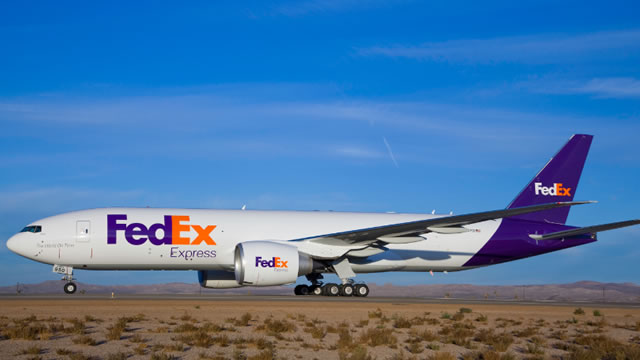
FedEx sues US for refunds on Trump tariffs
Yahoo Finance· 2026-02-24 09:57
Core Insights - FedEx has filed a lawsuit seeking tariff refunds following a Supreme Court ruling that ended tariffs imposed under the International Emergency Economic Powers Act (IEEPA) [3][6] - The uncertainty surrounding the tariff refund process remains, as highlighted by Justice Brett Kavanaugh's dissenting opinion, indicating potential complications in the government's approach to returning collected duties [4][5] Company Actions - FedEx is actively pursuing a full refund from the U.S. for all duties paid under IEEPA, claiming it has made numerous payments and is seeking refunds with interest [6] - The company has communicated its commitment to assist customers in navigating the regulatory environment and will provide updates as more information becomes available [5][6] Legal Context - The lawsuit filed by FedEx in the Court of International Trade seeks to have U.S. Customs and Border Protection (CBP) reliquidate import entries that incurred IEEPA duties and ensure that unliquidated entries are not subject to these tariffs [6] - The case raises questions about the obligations of importers like FedEx to pass on any potential refunds to customers who may have shared in the tariff costs [5]

FedEx sues Trump administration for full tariff refunds after Supreme Court ruling on IEEPA
Fox Business· 2026-02-24 03:41
Core Viewpoint - FedEx has filed a lawsuit against the U.S. government seeking a full refund of tariffs imposed under President Trump's order, following a Supreme Court ruling that deemed such tariffs unlawful under the International Emergency Economic Powers Act (IEEPA) [1][3][12]. Group 1: Lawsuit Details - The lawsuit was filed in the Court of International Trade against the U.S. government and U.S. Customs and Border Protection (CBP), claiming that FedEx incurred costs to expedite shipments and is entitled to a refund of duties with interest [2]. - FedEx is seeking a full refund of all IEEPA duties paid to the United States, along with compensation for financial harm suffered [2][5]. - The lawsuit does not specify the total amount of tariffs paid by FedEx, but the company previously indicated an expected $1 billion impact on fiscal-year earnings due to U.S. trade policies, partially related to IEEPA duties [5][11]. Group 2: Supreme Court Ruling and Implications - The Supreme Court ruled that the IEEPA does not authorize the imposition of tariffs by the president, confirming that the Court of International Trade has exclusive jurisdiction over such tariffs [12]. - Following the ruling, CBP announced that the collection of IEEPA duties would cease, although no refund process has been established yet [14]. - FedEx has stated that it is taking necessary actions to protect its rights as an importer of record to seek duty refunds [5][8]. Group 3: Context of Tariffs - The tariffs in question were imposed by Trump in February 2025, targeting imports from China, Canada, and Mexico, citing national security concerns and unfair trade practices, and were later expanded to include reciprocal tariffs on 57 countries [11]. - U.S. businesses and consumers have paid over $175 billion in duties as a result of these tariffs [11].
Trump now says he will raise 'worldwide' tariff from 10% to 15%
Business Insider· 2026-02-21 17:02
Core Viewpoint - President Trump is escalating his tariff strategy by raising the global tariff from 10% to 15% despite a Supreme Court ruling that limited his authority to impose tariffs under the International Emergency Economic Powers Act (IEEPA) [1][2][6] Group 1: Tariff Strategy - The new 15% worldwide tariff will be imposed on countries that have been perceived as taking advantage of the U.S. economically [1] - Following the Supreme Court's decision, Trump plans to utilize a different legal authority, Section 122, to impose a 10% global tariff temporarily [2][5] - The IEEPA-justified tariffs have been a significant tool for Trump in renegotiating trade agreements globally, including the "Liberation Day" tariffs [7] Group 2: Legal Authority and Implementation - Section 122 allows for a temporary tariff imposition for 150 days, after which Congress must vote to extend it [5] - A White House official confirmed that countries previously subject to IEEPA tariffs will now face the 10% tariff under Section 122, while the administration seeks other legal avenues for more permanent tariff rates [6] - The administration is expected to determine and announce new legally permissible tariffs in the coming months as part of its broader trade strategy [8]
Will refunds be issued after Supreme Court ruling on Trump tariffs?
Fox Business· 2026-02-20 20:01
Core Opinion - The Supreme Court ruled that a significant portion of the Trump administration's tariffs was imposed illegally under the International Emergency Economic Powers Act (IEEPA), which does not authorize the President to impose tariffs [2][4]. Legal Implications - The ruling was a 6-3 decision, with Chief Justice John Roberts authoring the majority opinion, while Justice Brett Kavanaugh expressed concerns about the potential complexity of refunding tariffs [2][3]. - Importers who paid IEEPA tariffs can pursue litigation for refunds, which may involve claims through the U.S. Court of International Trade or appeals to Customs and Border Protection [6][7]. Financial Impact - The nonpartisan Penn-Wharton Budget Model estimated that the reversal of the IEEPA tariffs could generate up to $175 billion in refunds [8]. - The Tax Foundation estimated that over $160 billion in tariffs were illegally collected under IEEPA, suggesting that full refunds could erase nearly three-fourths of the new revenues from Trump's tariffs [9]. Business Reactions - Trump expressed disappointment with the ruling and criticized the Court for not addressing the issue of tariff refunds [11][12]. - Experts noted that the refund process could be complicated and time-consuming, potentially taking weeks or even over a year [13]. Ongoing Litigation - More than 1,000 lawsuits have already been filed at the U.S. Court of International Trade to secure tariff refunds, indicating a significant legal response from affected businesses [15]. - Experts highlighted that the refund process must be efficient to minimize the burden on American businesses, particularly small firms [16][19]. Economic Considerations - The potential refunds could significantly impact the U.S. economy, with estimates of the amount at stake ranging from $150 billion to $200 billion [20]. - Economists noted that if refunds are passed on to consumers, the economic activity boost would be substantial, although if businesses retain the cash, the impact would be smaller [20].

Trump tariffs: U.S. could owe more than $175 billion in refunds after Supreme Court ruling, estimate says
CNBC· 2026-02-20 15:51
Core Viewpoint - The U.S. government may owe over $175 billion in refunds to importers due to the Supreme Court ruling that President Trump's tariffs were imposed illegally without Congressional authorization [2][3]. Group 1: Legal Context - The Supreme Court ruled in a 6-3 decision that the tariffs imposed by President Trump under the International Emergency Economic Powers Act (IEEPA) are illegal [2][3]. - The ruling did not explicitly address whether the federal government could retain the collected tariff money or if refunds would be mandated [3]. Group 2: Financial Implications - The estimated refund amount of $175 billion is based on the Penn-Wharton Budget Model, which was requested by Reuters [1][2]. - The U.S. Customs and Border Protection previously indicated that the amount of tariffs collected at risk of being refunded was $133.5 billion, which has likely increased due to ongoing collections [6][7]. Group 3: Logistical Challenges - Justice Brett Kavanaugh highlighted potential logistical difficulties in refunding the tariffs already collected, suggesting that the refund process could be complicated [4][5]. - There is concern that the refund process may create uncertainty regarding existing trade arrangements facilitated by the IEEPA tariffs, which have been linked to trade deals worth trillions of dollars [5][6].

Supreme Court strikes down swath of Trump's tariffs — but he has other options
Business Insider· 2026-02-20 15:07
Core Viewpoint - The Supreme Court has limited President Trump's ability to impose tariffs under the International Emergency Economic Powers Act (IEEPA), requiring explicit Congressional approval for such actions [1][3]. Group 1: Tariff Policy and Legal Context - Trump's tariffs, including the "Liberation Day" tariffs of at least 10% on nearly all countries, were a significant tool in his trade negotiations [2]. - Chief Justice John Roberts stated that the Trump administration's use of IEEPA exceeded its intended scope, necessitating a distinct law from Congress for imposing tariffs [3][7]. - The IEEPA, enacted during the Carter administration, was argued by the Trump administration to allow tariff imposition, a stance not previously taken by other presidents [7]. Group 2: Impact on Trade Deficit - The U.S. trade deficit has decreased to $29.4 billion in October, the lowest since 2009, attributed largely to the tariffs imposed by the Trump administration [6]. Group 3: Legal Challenges and Judicial Response - Two business groups challenged Trump's authority to impose tariffs through IEEPA, leading to a combined case that was expedited by the Supreme Court [7]. - During oral arguments, skepticism was expressed by judges regarding the Trump administration's claims, with Justice Neil Gorsuch emphasizing the unique nature of taxation powers [9]. Group 4: Future Implications - The Supreme Court's ruling does not affect tariffs imposed under other laws, allowing Trump to continue issuing additional tariffs through those channels [9]. - The administration favored IEEPA for its flexibility, as other laws have limitations such as expiration dates and caps on taxation [10].
Supreme Court strikes down Trump tariffs
CNBC· 2026-02-20 15:06
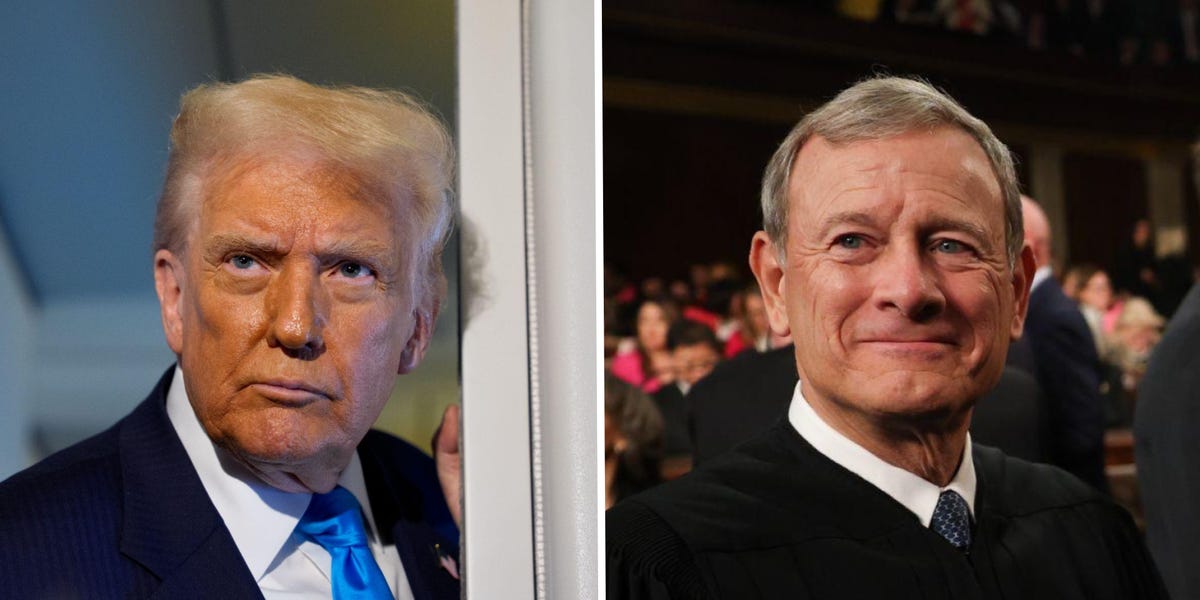
Core Viewpoint - The U.S. Supreme Court has struck down a significant portion of President Donald Trump's tariff agenda, ruling that the law does not authorize the President to impose tariffs [2][4]. Group 1: Tariff Legislation and Court Ruling - The Supreme Court ruled six to three that the law underpinning the tariffs does not grant the President the authority to impose them [2]. - Chief Justice John Roberts delivered the majority opinion, with dissenting opinions from Justices Clarence Thomas, Samuel Alito, and Brett Kavanaugh [2]. - The tariffs were primarily based on a novel interpretation of the International Emergency Economic Powers Act (IEEPA), which does not explicitly mention tariffs [3][4]. Group 2: Economic Impact and Revenue - The majority of U.S. tariff revenue in the previous year was generated from IEEPA duties, which the Trump administration argued were legal [4]. - Trump claimed that the U.S. would receive over $600 billion in tariffs, while other estimates, such as from the Bipartisan Policy Center, suggested a gross tariff revenue of about $289 billion for 2025 [8]. - As of December 10, the administration reported collecting approximately $129 billion from IEEPA-specific tariffs [9]. Group 3: Political Context and Reactions - Trump's tariff plans were initially unveiled during a White House event, which led to market panic and subsequent adjustments to the tariffs [5]. - The administration has faced criticism for the legality of the tariffs, with federal courts previously ruling them illegal before the Supreme Court's involvement [4]. - U.S. officials, including Treasury Secretary Scott Bessent, expressed confidence that the Supreme Court would not overturn the President's economic policies [10].

Trump's Venezuela oil sales deal raises questions about which government U.S. will recognize
CNBC· 2026-02-11 14:26
Core Viewpoint - The Trump administration's decision to manage $500 million of Venezuelan oil revenue in Qatar raises significant questions regarding Venezuela's governance and resource control following the U.S. capture of former President Nicolás Maduro [2] Group 1: U.S. Government Actions - The U.S. does not officially recognize the government led by interim President Delcy Rodriguez, instead recognizing the opposition-led National Assembly elected in 2015 as the legitimate representative of the Venezuelan people [3] - An executive order by President Trump mandates that proceeds from Venezuela's oil sales be held in a U.S. Treasury Department account, but it remains unclear which Venezuelan government this order pertains to [4] - The Trump administration is collaborating with Rodriguez, who has agreed to ship 50 million barrels of crude oil to the U.S., with the administration controlling the sale to maintain leverage over Caracas [6][11] Group 2: Legal and Political Implications - Secretary of State Marco Rubio indicated that the decision to hold the money in Qatar is a temporary measure while the recognition issue is resolved, as Qatar recognizes the Maduro regime [7][8] - The U.S. has established a "respectful and productive" communication line with Rodriguez, viewing cooperation as a pragmatic approach during Venezuela's transition and stabilization phase [11][12] - Democrats in Congress are questioning the legality of the arrangement, particularly regarding the legal authority invoked under the International Emergency Economic Powers Act (IEEPA) for the oil sales program [17][18] Group 3: Future Plans and Oversight - The U.S. plans to review a budget submitted by Caracas and will waive sanctions to disburse oil revenue from a blocked account, with an audit process to ensure appropriate spending [13][14] - Long-term goals include building a normal oil industry in Venezuela, allowing companies to sell crude directly into the global market without intermediaries [16]

Bessent: Unlikely Supreme Court will overrule tariffs, Trump's 'signature economic policy'
CNBC· 2026-01-18 15:22
Core Viewpoint - Treasury Secretary Scott Bessent believes it is "very unlikely" that the Supreme Court will overturn President Trump's use of emergency powers to impose tariffs, with a decision expected soon [1][2]. Group 1: Supreme Court and Tariffs - The Supreme Court is anticipated to rule on Trump's use of the International Emergency Economic Powers Act (IEEPA) to impose tariffs, with a decision potentially coming as early as this week [4]. - Bessent stated that the Supreme Court is unlikely to overrule a president's significant economic policy, referencing their previous decision not to overturn the Affordable Care Act [2]. Group 2: Trump's Tariff Announcement - President Trump announced plans to impose new tariffs on goods from Europe until a deal is reached for the "Complete and Total purchase of Greenland" [3]. - The specific statute Trump is invoking for these tariffs was not detailed, but it appears to align with the duties imposed under the IEEPA [3].