Investment banking

Search documents
Stifel Financial: A Wealth Manager’s Stock for Wealth Investors
Yahoo Finance· 2026-03-19 16:00
Core Insights - Stifel Financial has completed one of its strongest years, achieving record net revenue and subsequently splitting its stock, indicating a positive outlook for the company [1][2] Financial Performance - Net revenue for Stifel rose approximately 11% to a record $5.53 billion, marking the first time it exceeded $5 billion in its 135-year history [2] - The company reported a net income of $646.5 million, with earnings per share (EPS) at $5.87, although EPS showed a decline from 2024 due to a $180 million legal expense related to a FINRA case [2][3] - Operationally, Stifel's earnings per share were reported at $7.92, with a pre-tax margin of 21% [3] Wealth Management and Investment Banking - Stifel's wealth management segment is a stable revenue source, with client assets reaching $552 billion, a 10% increase year-over-year, driven by market gains and new inflows [4] - Fee-based assets within the wealth management unit rose 16% to $224.5 billion, while net revenue for this segment increased by 8% to $3.54 billion [4] - The investment banking unit experienced a significant revenue increase of 26%, reaching $1.2 billion [4] Market Position and Client Growth - Stifel combines steady wealth management with cyclical investment banking, providing a balanced yet market-sensitive investment opportunity [5] - Strong client growth and rising assets indicate ongoing demand for Stifel's advisory and investment services, contributing to solid operating momentum [5]

Potomac Bancshares, Inc. Participates in the Brean Capital CEO Forum
Prnewswire· 2026-02-10 13:48
Core Viewpoint - Potomac Bancshares, Inc. participated in the Brean Capital CEO Forum, engaging with industry professionals and investors to exchange insights and foster dialogue [1]. Company Overview - Potomac Bancshares, Inc. is the bank holding company for Potomac Bank, which was founded in 1871 and renamed on November 3, 2025 [1]. - The bank operates through a network of nine branches and two loan production offices, serving areas in West Virginia, Maryland, and Virginia [1]. - The bank offers a range of financial solutions, including consumer and commercial banking, trust and wealth services, and residential lending [1]. - Potomac Bank is recognized as a Small Business Administration (SBA) Preferred Lender and has received multiple awards, including "Top 200 Community Banks" and "Best Banks to Work For" [1]. Event Participation - The Brean Capital CEO Forum took place on February 4-5, 2026, and included presentations from Potomac Bancshares' President and CEO Alice Frazier and Executive Vice President and CFO Shane Bell [1]. - The forum aimed to create an environment for meaningful exchanges among banking professionals and investors [1].


Are Wall Street Analysts Bullish on Morgan Stanley Stock?
Yahoo Finance· 2026-02-02 14:47
Core Viewpoint - Morgan Stanley has demonstrated strong financial performance and stock growth, significantly outperforming the broader market and sector indices over the past year [2][3][6]. Company Overview - Morgan Stanley, with a market capitalization of $290.5 billion, operates as a global financial holding company, providing a diverse range of services including capital raising, financial advisory, investment products, lending, and wealth management across various regions [1]. Stock Performance - Over the past 52 weeks, Morgan Stanley's stock has increased by 31.1%, compared to a 14.3% return from the S&P 500 Index, and has risen 2.2% year-to-date, while the S&P 500 has gained 1.4% [2]. - The company's shares have also outperformed the State Street Financial Select Sector SPDR ETF, which rose by 4% during the same period [3]. Financial Results - In Q4 2025, Morgan Stanley reported earnings per share (EPS) of $2.68 and net revenues of $17.89 billion, both exceeding forecasts. Investment banking revenue surged by 47% to $2.41 billion, driven by a 93% increase in debt underwriting revenue to $785 million, as global M&A activity reached over $5.1 trillion [6]. - Wealth management revenue rose by 13% to $8.43 billion, contributing to a record total annual revenue of $70.65 billion [6]. Future Projections - Analysts project an 8.4% year-over-year growth in EPS for the fiscal year ending December 2026, reaching $11.07. The company has a strong earnings surprise history, having beaten consensus estimates in the last four quarters [7]. - The consensus rating among 27 analysts is a "Moderate Buy," with 10 "Strong Buy" ratings, three "Moderate Buy" ratings, and 14 "Holds" [7]. Analyst Ratings - The current analyst sentiment is more bullish than three months ago, with eight "Strong Buy" ratings. Wolfe Research analyst Steven Chubak has raised the price target for Morgan Stanley to $211 with an "Outperform" rating [8].

How Will Surging IB Business Support Bank of America's Fee Income?
ZACKS· 2025-12-19 13:41
Core Insights - Investment banking (IB) fees represent 13.5% of Bank of America's (BAC) non-interest income on average, with a year-over-year increase of 9.5% to $5 billion in the first nine months of 2025, and a projected full-year growth of approximately 4% [1][9] - The investment banking environment is improving due to a resilient economy, easing financing costs, and renewed corporate confidence, which is expected to enhance deal-making and capital-raising activities [2][3] - Bank of America is positioned to leverage its market share in the investment banking sector as the contribution of IB fees to its fee income is anticipated to rise further in the coming quarters [4][9] Industry Performance - JPMorgan's IB fees increased by 12.3% year over year to $7.3 billion in the first nine months of 2025, with expectations of low single-digit growth in the fourth quarter [6] - Citigroup's IB fees surged 15% year over year to $2.9 billion during the same period, with projections of mid-20s percentage growth in the fourth quarter [7] - The overall investment banking landscape is benefiting from a more business-friendly policy environment, including faster antitrust reviews and smoother cross-border approvals [2] Market Conditions - The Federal Reserve's third consecutive 25-basis-point rate cut in December has lowered interest rates to a range of 3.50-3.75%, which is expected to accelerate deal execution and revive previously shelved mergers and acquisitions [3] - The improving operating backdrop is likely to enhance the prospects for M&A and underwriting activities going into 2026, positively impacting Bank of America's IB fees [3][9] Valuation and Earnings Estimates - Bank of America shares have appreciated by 19.2% over the past six months, trading at a 12-month trailing price-to-tangible book (P/TB) of 1.98X, which is below the industry average [8][11] - The Zacks Consensus Estimate indicates year-over-year earnings growth of 16.2% for 2025 and 13.9% for 2026, with recent earnings estimates for 2025 rising slightly while those for 2026 have been revised lower [12]

Post Q3, Which Bank Has the Edge: Bank of America or PNC Financial?
ZACKS· 2025-10-29 14:06
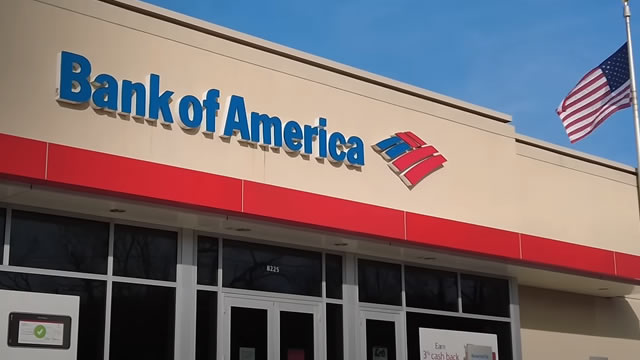
Core Insights - Bank of America (BAC) and PNC Financial Services (PNC) are leading U.S. banks with distinct strengths in a changing interest rate and regulatory environment [1][2] Bank of America - BAC is expected to see solid net interest income (NII) growth of 5-7% in 2025 and 2026, driven by Federal Reserve rate cuts, asset repricing, and technological efficiencies [3][10] - The bank is focusing on organic growth by expanding its physical and digital presence, planning to open over 150 financial centers by 2027 [4] - BAC's investment banking business has rebounded, supported by increased deal-making activities and a strong pipeline for mergers and acquisitions [5] - BAC's stock has gained 20.3% this year, outperforming the S&P 500 Index's 18.3% increase, and is currently trading at a forward P/E of 12.53X [11][14] - The Zacks Consensus Estimate for BAC's revenue growth is projected at 6.8% for 2025 and 6% for 2026, with earnings expected to rise by 14.9% and 14.5% respectively [20] PNC Financial Services - PNC anticipates NII growth of approximately 6.5-7% for 2025, supported by loan growth, asset repricing, and branch expansion [6][10] - The bank has entered an agreement to acquire FirstBank Holding Company to enhance its presence in high-growth markets like Colorado and Arizona [7] - PNC plans to invest $1.5 billion to open over 200 new branches and renovate 1,400 existing locations by 2029 [8] - PNC's stock has decreased by 5.1% this year, trading at a forward P/E of 10.54X, indicating it is cheaper compared to BAC [11][14] - The Zacks Consensus Estimate for PNC's revenue growth is projected at 6.8% for 2025 and 7.6% for 2026, with earnings expected to rise by 13.9% and 11.5% respectively [20] Comparative Analysis - BAC's return on equity (ROE) is 10.76%, while PNC's is higher at 11.47%, indicating PNC's more efficient use of shareholder funds [18] - Both banks have increased their quarterly dividends post-stress test, with BAC raising its dividend by 8% to $0.28 per share and PNC by 6% to $1.70 per share [15] - BAC's dividend yield is 2.12%, lower than PNC's 3.72%, appealing to different investor preferences [15] Investment Outlook - BAC is positioned for long-term capital appreciation due to its scale, digital innovation, and growth trajectory, while PNC appeals to conservative investors with its higher dividend yield and disciplined practices [27][28]


PGJ: 3 Factors To Consider Before Investing
Seeking Alpha· 2025-10-14 17:06
Core Viewpoint - The Chinese economy is facing challenges, but the stock market, particularly the Shanghai Composite Index, is performing well, outpacing the S&P 500 [1]. Group 1: Economic Performance - The Shanghai Composite Index (SHCOMP) has shown a faster rise compared to the S&P 500, indicating a divergence between economic stress and stock market performance [1]. Group 2: Investment Focus - Manika, a macroeconomist with over 20 years of experience, emphasizes the generational opportunities in the green economy through her profile Long Term Tips (LTT) [1]. - The investing group Green Growth Giants, associated with Manika, delves deeper into the opportunities within the green economy segment [1].

Bank earnings preview: What Wall Street is expecting the nation's biggest banks to report
Youtube· 2025-10-11 10:01
Core Viewpoint - The banking sector is expected to report strong earnings driven by a rebound in investment banking, with specific banks like Goldman Sachs and Citigroup showing promising results [19][3]. Group 1: Bank Performance and Expectations - Analysts are optimistic about the upcoming earnings reports from major banks, with expectations for revenue and earnings beats [3][19]. - Goldman Sachs is highlighted as a strong buy due to its leading position in equity underwriting and durable fee income from asset and wealth management [11][10]. - Citigroup is seen as attractive on valuation, with recent restructuring efforts and a focus on corporate treasury services [13][12]. - Bank of America is viewed as a hold due to its lagging performance compared to peers, despite recent stock price increases [15][14]. - Morgan Stanley is expected to perform well, particularly in wealth management, alongside Goldman Sachs [17][16]. - JP Morgan Chase is considered a top contender in the financial sector, with a strong executive team and diverse business operations [18][17]. Group 2: Regulatory and Economic Environment - The regulatory landscape under the current administration is seen as fostering economic growth, allowing banks to increase lending and return capital to shareholders [6][5]. - Credit quality remains stable, with banks maintaining normalized loan loss provisions and reserves [8][7]. Group 3: Market Trends and Challenges - The banking industry is facing competitive pressures, leading to reduced rates to attract lending volumes, which may impact margins [21][24]. - There is a growing concern about concentration risk due to increased loans to non-bank financial companies [26][27]. - The private credit sector is under scrutiny, with potential risks emerging from aggressive lending practices and lack of investor protections [30][31]. Group 4: M&A Activity and Industry Consolidation - The trend of consolidation in the banking sector is expected to continue, with banks seeking growth through acquisitions, although this may lead to challenges related to goodwill and operational efficiency [38][39]. - Recent M&A activity, such as Fifth Third's acquisition of Comica, raises questions about the strategic rationale and potential operational challenges [36][37].



Barclays second-quarter profit beats estimates as investment banking revenues swell
CNBC· 2025-07-29 06:20
Core Insights - Barclays Plc reported a pre-tax profit of £2.5 billion ($3.34 billion) for the second quarter, exceeding the LSEG forecast of £2.23 billion, and announced a £1 billion ($1.33 billion) share buyback due to increased investment banking revenues driven by market volatility [1][2] Group 1: Financial Performance - The bank's group revenues reached £7.2 billion, aligning with analyst expectations [1] - The investment banking unit generated £3.3 billion in income for the three months ending in June, marking a 10% year-on-year increase [2] - Return on Tangible Equity was reported at 13.2% for the first half, down from 14% in the first quarter, while the CET1 capital ratio improved to 14% from 13.9% in March [6] Group 2: Strategic Developments - Barclays is undergoing cost reduction initiatives under CEO C.S. Venkatakrishnan, which include plans to cut over 200 jobs and engage consultancy McKinsey for further cost-saving opportunities [2] - The bank has appointed Alex Ham, a former Deutsche Numis executive, as global chairman, indicating a strategic shift within the investment banking division [2] Group 3: Market Challenges - Upcoming changes in U.S. capital leverage rules may intensify competition in the debt markets, an area where Barclays has historically been strong following its acquisition of Lehman Brothers' investment banking and capital markets businesses [3] - The British banking landscape is evolving, with Santander's acquisition of TSB and potential strategic shifts from NatWest, which recently returned to private ownership [4]