
K-shaped Recovery

Search documents
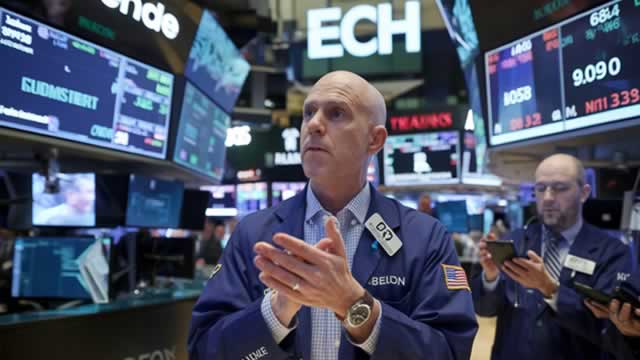
Stocks Fall as Middle East War Widens | Closing Bell
Youtube· 2026-03-03 21:19
Market Overview - The S&P 500 experienced a significant drop of about 2.4%, reaching its lowest level of the year at one point during the trading day [2][5] - The market has been trading within a tight range of approximately 200 points for the past three months, despite underlying sector and factor rotations causing volatility [2][3] Sector Performance - All 11 sectors in the S&P 500 closed in the red, with materials down 2.7%, industrials down 2%, and healthcare down 1% [6][7] - Financials were the relative outperformers, only declining by 0.2% [7] - Retailers such as Target and Best Buy showed better-than-expected performance, with Target's stock closing at its highest level in over a year [8][9] Company Earnings - Ross Stores reported a first-quarter EPS estimate of $1.06 to $1.70, slightly above the consensus estimate of $1.63 [21] - CrowdStrike's revenue increased by 23% year-over-year, aligning with estimates at approximately $1.3 billion [22] - Ross Stores' fourth-quarter comparable sales rose by about 9%, significantly exceeding the estimate of 4.92% [24] Consumer Spending Insights - Despite economic disruptions, consumer spending remains resilient, as indicated by strong performances from retailers [26][28] - The K-shaped recovery is highlighted, with credit card defaults primarily affecting lower-income consumers, while higher-income consumers continue to drive economic activity [27][28] - The success of discount retailers like Ross and Walmart suggests a potential "trade down" trend among consumers, which may not signal overall consumer health [29]

US Consumer Debt Accelerates to $18.2 Trillion in Late 2025, Report Reveals
Crowdfund Insider· 2026-02-26 21:30
Core Insights - US consumer debt reached $18.20 trillion by December 2025, marking a 3.7% increase year-over-year, with the fastest monthly growth compared to the same periods in 2023 and 2024 [1][2] Debt Composition - First-mortgage balances were approximately $12.82 trillion, while home equity lines of credit (HELOCs) increased by 12.6% year-over-year to $421.7 billion [3] - Bankcard balances rose 4.1% to $1.12 trillion, although average utilization slightly decreased to 21.2% due to a 6.5% expansion in credit limits [3] - Private-label retail card balances fell 11.2%, with accounts decreasing by 21.4%, indicating a shift towards more flexible payment options [4] - Auto loans and leases totaled $1.685 trillion, reflecting a modest 1% increase, as consumers opted for longer terms and leasing to manage high vehicle prices [4] - Student loan balances decreased by 1.4% to $1.33 trillion [4] Delinquency Trends - As of December, 5.7% of consumers had at least one account 60 or more days past due, down from a peak of 6.8% in the third quarter [5] - Serious delinquencies for bankcards improved to 3.03% from 3.16% a year prior, although these levels remain above pre-pandemic norms [5] Economic Disparities - A "K-shaped" recovery is evident, where higher-income consumers benefit from asset gains and easier credit access, while subprime borrowers face pressure from rising costs and high borrowing rates [6] - Renewed enforcement of student loans may disrupt traditional payment priorities, affecting housing and auto obligations [6] Financial Wellbeing - The data indicates a widening gap in financial health, with some experiencing prosperity while others face mounting pressure [8] - Record debt levels support consumer spending but also limit household flexibility, particularly for lower- and middle-income families [7] - Economic headwinds, such as tariffs and moderating employment, may impact the sustainability of the current borrowing boom [9]

中国消费脉搏 2025 年第三季度_体验式消费引领,高端需求反弹,消费市场格局分化-China Consumer Pulse 3Q25_ Experiential spending leads and Premium demand rebounds, amid mixed consumer landscape
2025-11-03 02:36
Summary of China Consumer Pulse Q3 2025 Industry Overview - **Industry**: Chinese Consumer Market - **Key Sectors Analyzed**: Alcohol, Apparel, Beauty, Travel, Luxury Goods, Autos Core Insights 1. **Mixed Consumer Sentiment**: Chinese consumer sentiment remains mixed, with a notable divergence in spending patterns across sectors [2][29][30] 2. **Experiential Spending Resilience**: Experiential categories such as restaurants (+24% YoY) and travel (+16% YoY) show resilience, indicating a shift towards experiences over goods [2][35] 3. **Premium Demand Recovery**: Onshore luxury spending has improved, with premium auto sales stabilizing and showing positive year-over-year growth in September, ending a 19-month decline [2][30] 4. **Digital Channels Outperform**: Digital retail channels continue to outperform traditional retail, although there are signs of weakness in specific segments like beauty e-commerce, which saw a -3% decline [2][29][30] 5. **GDP and Retail Growth Slowdown**: China's Q3 GDP growth slowed to 4.8% YoY, with retail growth easing to 2.1%, attributed to fading consumer incentives and macroeconomic uncertainties [3][29] 6. **Deflationary Trends**: Deflationary pressures persist across travel and hotel pricing, with moderate price declines observed [12][29] Sector-Specific Insights Premium Beverages - **Weak Demand**: Ultra-premium Baijiu prices continued to slide in Q3 due to weak demand, particularly around the Mid-Autumn Festival [4][30] Apparel and Sportswear - **Mixed Performance**: The apparel market is growing online but remains negative offline, with brands like Adidas showing over 20% growth while Nike faces challenges [5][22] Home Appliances - **Sector Contraction**: The home appliance sector contracted by 7% in Q3, with significant declines in both domestic and overseas exports [7][31] Luxury Goods - **Signs of Improvement**: Early signs of recovery in the luxury market, with brands like Hermès and Louis Vuitton performing well, while Kering struggles [8][9][30] Automotive - **Sales Growth Slowdown**: Auto sales growth slowed to +2.5% YoY in Q3, with EV sales decelerating to +12.5% YoY. However, EV penetration reached 55.1% [10][16][17] Hotels - **RevPAR Declines**: Domestic hotel RevPAR continues to decline, with luxury hotels being the only segment not experiencing persistent declines [10][23] Travel - **Resilient Growth**: The travel industry showed stable positive growth of 16% during the National Day Golden Week, reflecting ongoing domestic travel trends [11][12] Cosmetics - **Moderate Growth**: The cosmetics sector saw a +6.5% YoY increase in gross merchandise value, marking an improvement from previous quarters [13][29] Additional Considerations - **Cautious Consumer Behavior**: The macroeconomic environment is expected to lead to cautious, value-driven consumer behavior, highlighting the uneven recovery across sectors [3][32] - **Investment Implications**: The outlook for various sectors remains cautious, with potential growth in EVs and premium segments, while traditional sectors face challenges [16][17][22][23]





