
Market Supply and Price Stability

Search documents
青海元旦期间消费市场货足价稳
Xin Lang Cai Jing· 2026-01-02 19:32
Core Viewpoint - The article highlights the preparation and measures taken by local authorities and businesses in Xining to ensure sufficient supply and stable prices of essential consumer goods during the upcoming New Year and Spring Festival peak consumption periods [2] Group 1: Supply Measures - Local authorities have arranged for storage enterprises to release 800 tons of provincial reserve meat at prices not exceeding the market average to ensure supply during the festive season [2] - Businesses are encouraged to reasonably increase their commercial inventory of meat and vegetables in response to market demand [2] Group 2: Market Conditions - Various consumer goods, including rice, flour, oil, cooked food, fruits, vegetables, and beverages, are well-stocked in major supermarkets and shopping areas in Xining [2] - The overall market supply of meat and vegetables is expected to be sufficient, contributing to price stability during the festive period [2]

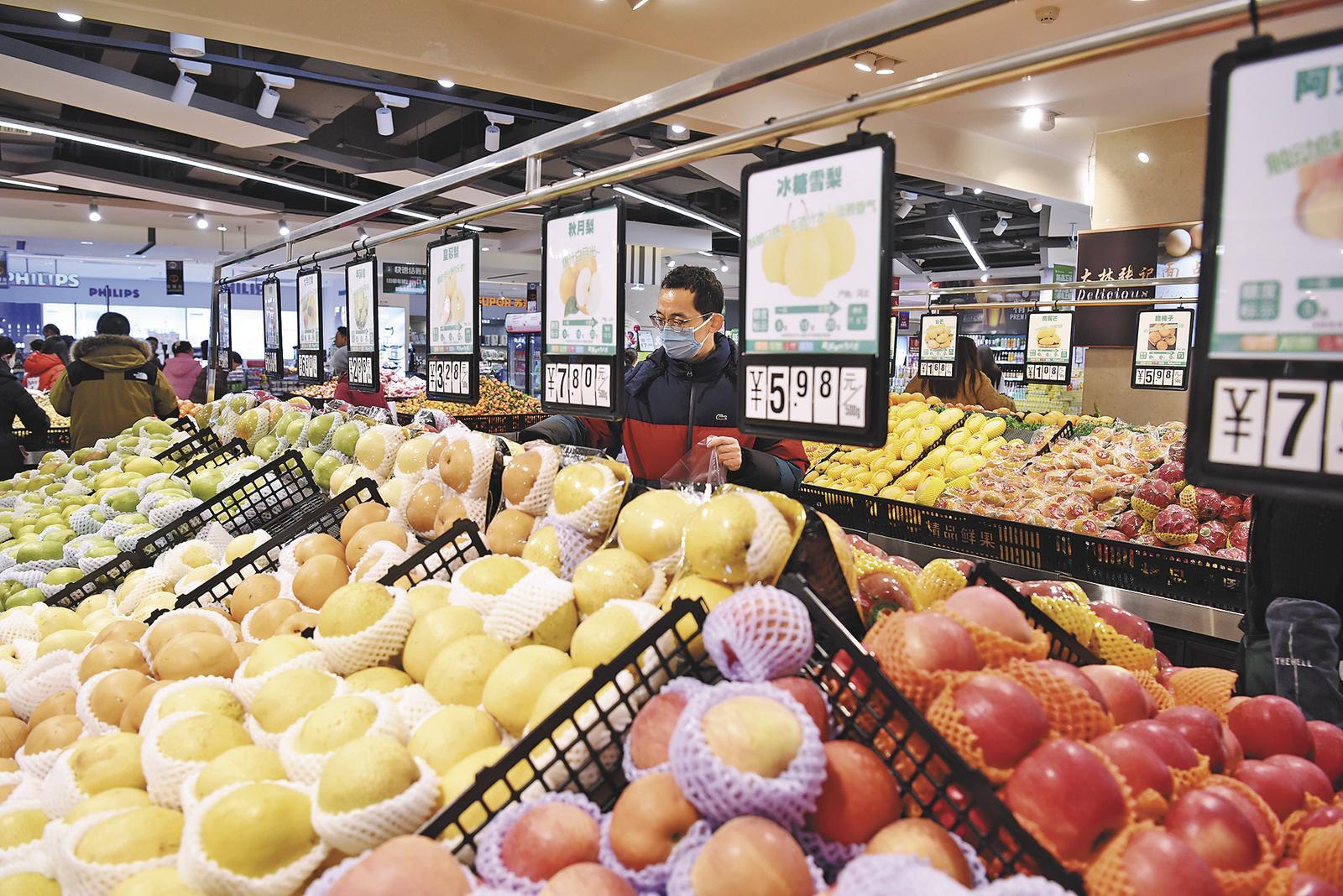
内蒙古民生商品市场供应货足价稳
Xin Lang Cai Jing· 2025-12-31 19:00
Group 1 - The holiday market in Inner Mongolia is experiencing increased activity as supermarkets and wholesale markets prepare for the New Year, ensuring sufficient supply of essential goods [1] - As of December 26, the retail prices of 11 categories of essential goods showed a mixed trend, with 4 categories increasing, 6 decreasing, and 1 remaining stable; meat and dairy products rose by 0.1%, while vegetables and eggs saw declines of 0.5% and 0.7% respectively [1] Group 2 - The arrival of sea-freighted cherries has led to a peak in sales, with prices significantly lower than previous years; cherries are selling for 22 yuan per pound in Hohhot [2] - The Inner Mongolia Commerce Department is enhancing the supply chain for essential goods, with 43 national-level and over 100 regional supply enterprises ensuring comprehensive coverage across the region [2] - Local supply accounts for approximately 70% of pork, 90% of beef and lamb, and about 30% of winter vegetables, with the remainder sourced from other provinces [2]