Miniaturization

Search documents
X @The Economist
The Economist· 2026-01-29 16:25
On screen and in real life, they are getting smaller anyway https://t.co/fpYLgI8B5l ...
3 Stocks to Buy From a Prospering Electronics Components Industry
ZACKS· 2025-11-10 18:33
Core Insights - The Zacks Electronics - Miscellaneous Components industry is experiencing growth due to automation and increased spending in sectors like semiconductors, automobiles, and healthcare, with companies like TE Connectivity, nVent Electric, and Fabrinet positioned to benefit from AI and IoT advancements [1][3][4] - However, the industry faces challenges from global macroeconomic conditions, end-market volatility, higher tariffs, and geopolitical tensions, particularly between the U.S. and China [1][5] Industry Overview - The industry includes companies that provide various electronic components and accessories, serving markets such as telecommunications, automotive electronics, medical devices, and consumer electronics [2] - Key customers are original equipment manufacturers, independent distributors, and electronic manufacturing service providers [2] Trends Impacting the Industry - Automation is a significant driver, with demand for faster and more efficient electronics leading to increased use of control systems and collaborative robots [3] - Miniaturization in semiconductor manufacturing is creating strong demand for advanced packaging and new manufacturing materials [4] - Geopolitical tensions, particularly the U.S.-China trade restrictions, are negatively impacting the industry, especially regarding semiconductor supply [5] Industry Performance - The Zacks Electronics - Miscellaneous Components industry ranks 62, placing it in the top 25% of over 250 Zacks industries, indicating bullish near-term prospects [6][7] - The industry's earnings estimates have increased by 9.4% since June 30, 2025, reflecting positive sentiment among analysts [8] Stock Market Performance - The industry has outperformed the S&P 500 and the broader Zacks Computer and Technology sector, appreciating 35.3% over the past year compared to the S&P 500's 14.2% and the sector's 24.9% [10] Current Valuation - The industry is currently trading at a forward P/E ratio of 23.45, slightly above the S&P 500's 23.30 but below the sector's 28.61 [13] Notable Companies - **TE Connectivity**: Expected to benefit from strong demand in AI and energy applications, with a projected 11% organic sales growth to $4.5 billion in Q1 fiscal 2026 [17][18] - **nVent Electric**: Anticipates 31-33% sales growth in Q4 2025, driven by acquisitions and strong data center orders [22][23] - **Fabrinet**: Forecasts 29% year-over-year revenue growth in Q2 fiscal 2026, with strong performance in non-optical communications [26][27]





Benchmark Electronics (BHE) Conference Transcript
2025-06-12 21:00
Summary of Benchmark Electronics Conference Call Company Overview - **Company**: Benchmark Electronics - **Industry**: Electronics and Precision Technologies Manufacturing - **Market Capitalization**: $2.7 billion [3] Key Financial Highlights - **Free Cash Flow**: $140 million over the last twelve months, with a gross margin greater than 10% for six consecutive quarters [4][11] - **Net Cash**: $79 million at the end of Q1 [4][19] - **Revenue**: $632 million in Q1, in line with guidance [13] - **Gross Margin**: 10.1% in Q1, slightly up from 10.0% year-over-year [14] Operational Insights - **Global Manufacturing Footprint**: 21 locations, with 55% in the Americas and 36% in the U.S. [6] - **Employee Count**: 12,500 associates, including 420 engineers [4] - **Focus on Inventory Management**: Reduced inventory days from 94 to 89, aiming for 5-5.5 turns [20] Sector Performance - **Medical Sector**: 12% decline quarter-over-quarter due to demand softness, expected recovery in the latter half of the year [16][24] - **Aerospace and Defense**: 4% growth quarter-over-quarter, driven by strong defense demand [15][22] - **Industrial Sector**: Slight decline of 2% quarter-over-quarter, but positive outlook for growth [15][22] - **Semi Cap Sector**: Revenue decreased by 2%, but year-over-year growth of 18% indicates market share gains [14] Strategic Focus - **Outsourcing Trend**: Continued growth expected in outsourcing, particularly in industrial and medical sectors [8][30] - **Tariff Management**: Minimal impact from tariffs as they are considered a pass-through, with 36% U.S. footprint providing stability [12][13] - **Future Growth Areas**: Anticipated growth in semi cap and industrial sectors, with ongoing investments in technology and capacity [21][22] Capital Allocation and Shareholder Returns - **Dividends**: Commitment to maintaining dividends, with a focus on returning capital to shareholders [18][47] - **Share Buybacks**: $8 million in shares repurchased in Q1, aimed at offsetting dilution [19][47] - **M&A Strategy**: No recent acquisitions, focusing on organic growth and existing customer base [48][49] Conclusion - **Outlook**: Optimistic about future growth, particularly in semi cap and industrial sectors, while maintaining operational efficiency and margin stability [28][30]

3 Electronics Components Stocks to Buy From a Prospering Industry
ZACKS· 2025-05-29 17:30
Industry Overview - The Zacks Electronics - Miscellaneous Components industry is benefiting from increased automation and spending by manufacturers in sectors such as semiconductors, automobiles, machinery, and mobile phones [1] - Key players like TTM Technologies, American Superconductor, and Allient are positioned to gain from the adoption of AI and IoT, impacting various sectors including robotics, industrial automation, and healthcare [1][2] Trends Shaping the Industry - The automation boom is driving demand for faster, more powerful, and energy-efficient electronics, with collaborative robots enhancing production efficiency [3] - Miniaturization in semiconductor manufacturing is a significant trend, with strong demand for advanced packaging and new manufacturing materials [4] - Geopolitical tensions, particularly the Russia-Ukraine war and U.S.-China relations, pose challenges for the industry, especially regarding semiconductor trade restrictions [5] Industry Performance and Valuation - The Zacks Electronics - Miscellaneous Components industry ranks 80, placing it in the top 33% of over 250 Zacks industries, indicating bullish near-term prospects [6][7] - Despite this ranking, the industry has underperformed the S&P 500 and broader technology sector, decreasing by 8.9% over the past year compared to the S&P 500's 12.4% increase [10] - The industry currently trades at a forward P/E ratio of 18.16X, lower than the S&P 500's 21.66X and the sector's 25.6X [13] Company Highlights - Allient, with a Zacks Rank 1, is focusing on operational efficiency and has seen its shares appreciate by 29% year-to-date, with a positive earnings estimate revision for 2025 [17][18] - TTM Technologies, also a Zacks Rank 1, is experiencing strong demand in aerospace, defense, and data center sectors, although its shares have dropped by 6.6% year-to-date [20][21] - American Superconductor, ranked 2, is benefiting from strong demand for its D-VAR systems and has seen a 13.2% return year-to-date, with a slight upward revision in earnings estimates for fiscal 2026 [24][25]




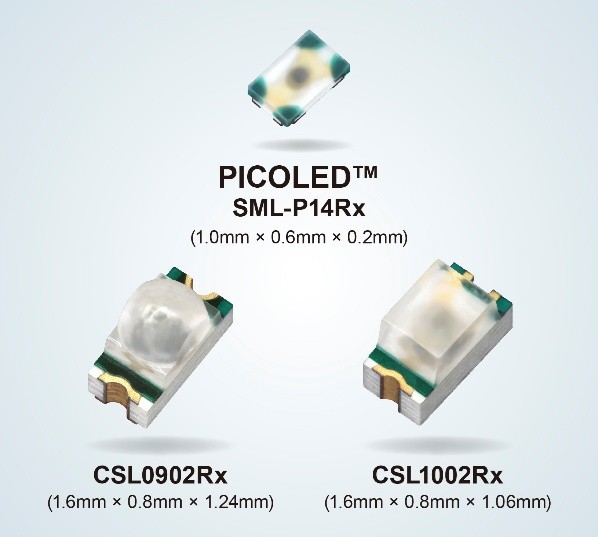
ROHM Develops Compact Surface-Mount Near-Infrared LEDs Featuring Industry-Leading Radiant Intensity
Globenewswire· 2025-05-22 21:15
Core Viewpoint - ROHM Semiconductor is expanding its portfolio of surface-mount near-infrared (NIR) LEDs to meet the growing demand for advanced sensing technologies in applications such as VR/AR devices, industrial optical sensors, and human detection sensors [1][2]. Group 1: Product Development - The new lineup includes six models in three package configurations, featuring ultra-compact and ultra-thin products as part of the PICOLED series, as well as industry-standard sizes [3][4]. - The products are available in two wavelengths, 850nm and 940nm, catering to various application needs, with the 850nm wavelength being ideal for high-sensitivity applications like eye tracking and the 940nm wavelength being suitable for motion sensors and biosensing applications [3][4][6]. Group 2: Technological Advancements - The NIR elements incorporate an optimized emission layer structure, achieving industry-leading radiant intensity in a compact package, with the SML-P14RW delivering approximately 1.4 times the radiant intensity at the same current compared to standard products [4][6]. - This technology allows for the same radiation intensity with 30% less power consumption, enhancing sensing accuracy and overall system power savings [6]. Group 3: Market Applications - The NIR LEDs are optimized for various applications, including VR/AR licenses for eye tracking and gesture recognition, pulse oximeters for blood flow and oxygen saturation measurement, and industrial optical sensors for object detection [10][11]. - ROHM aims to support next-generation sensing technologies and contribute to sustainable development in the VR/AR and industrial equipment markets [7].