Multimodal Fusion Technology

Search documents
Science Robotics |中国团队新突破:眼科自主手术机器人,注射成功率100%!
机器人大讲堂· 2026-01-21 00:00
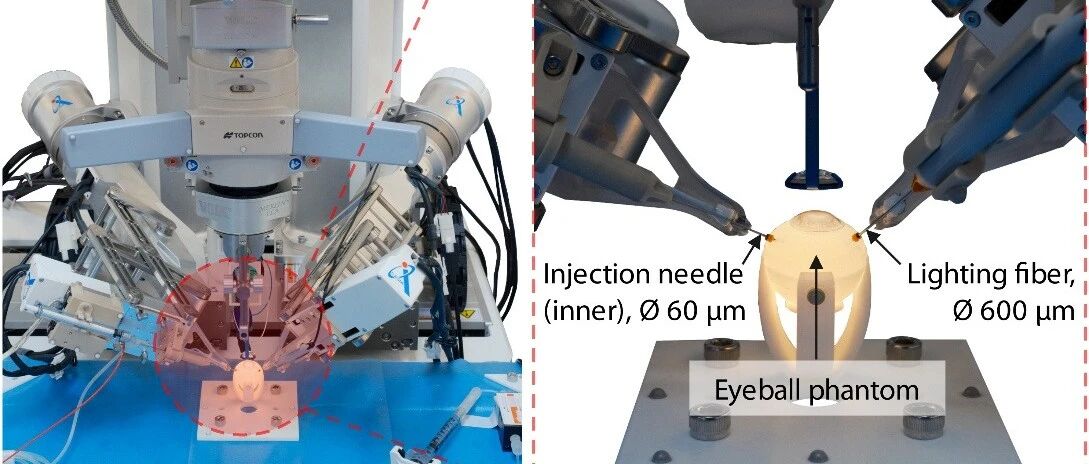
Core Viewpoint - The article discusses the development of an autonomous robotic system for intraocular surgery, which significantly enhances precision and safety in retinal injections, addressing a critical challenge in ophthalmic surgery [2][3][10]. Group 1: Technological Breakthroughs - The research team from the Chinese Academy of Sciences has developed the ARISE system, achieving a 100% success rate in injections across various experimental models, with an average positioning error reduced by 79.87% compared to manual surgery [2][10]. - The system utilizes a comprehensive navigation module that integrates multiple imaging modalities, creating a dynamic 3D map with a lateral resolution of 4.7 micrometers and a depth resolution of 6 micrometers, achieving a 99.08% accuracy in reproducing the actual retinal depth [5][10]. - A multi-constraint objective optimization method was developed to plan the robot's trajectory, ensuring safety through a hybrid control system that combines force, position, and imaging [6][10]. Group 2: Clinical Implications - The ARISE system demonstrates a significant performance advantage, with an average positioning error of 11.71 micrometers, compared to 25.80 micrometers for remote-controlled robots and 58.17 micrometers for human surgeons [10]. - The system maintains a 100% success rate in challenging procedures, such as branch retinal vein injections, where human success rates decline due to the smaller vessel diameter [10]. - The autonomous robot completes the injection process in an average of 79.16 seconds, providing consistent performance without fatigue or stress affecting its operation [10]. Group 3: Future Prospects - The research indicates a new technological pathway for the autonomy of intraocular surgeries, potentially advancing ophthalmic treatments, especially in remote medical settings and extreme environments [10]. - The ARISE system represents a significant step towards the intelligent and precise evolution of ophthalmic surgery, reducing reliance on scarce medical resources and shortening the learning curve for surgeons [10].