Net interest margins

Search documents
SBI shares surge 6.7% on strong Q3 results, should you buy?
BusinessLine· 2026-02-09 06:25
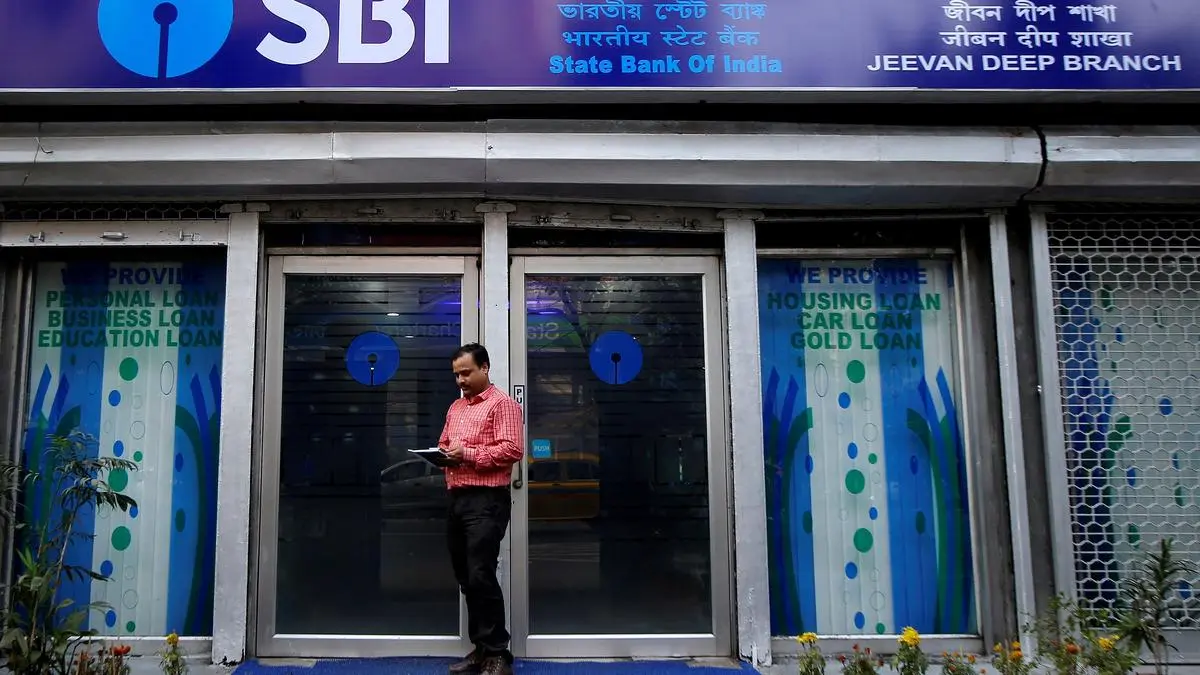
Core Viewpoint - State Bank of India (SBI) reported strong third-quarter results, leading to a significant increase in its stock price, reflecting positive market sentiment and robust financial performance [1][2]. Financial Performance - SBI posted a net profit of ₹210.3 billion for Q3 FY26, representing a year-on-year growth of 24.5%, surpassing analyst expectations by 8-25% [2]. - The bank achieved a healthy loan growth of 15.6% year-on-year and maintained stable net interest margins at 2.99% [2]. - The gross non-performing assets (NPA) improved, declining to 1.57%, indicating enhanced asset quality [2]. Market Reaction - Following the earnings report, several brokerages raised their target prices for SBI, with HDFC Securities setting a new target of ₹1,200, Motilal Oswal increasing it to ₹1,300, and Emkay Global adjusting it to ₹1,225 [2]. - The stock opened at ₹1,120 and reached an intraday high of ₹1,139.70, marking a 52-week high, with trading volumes of 228 lakh shares [1]. Additional Income and Guidance - SBI received a one-time dividend income of ₹22 billion from SBI Mutual Fund and treasury gains of ₹32.8 billion during the quarter [3]. - Management aims to maintain domestic net interest margins above 3% and expects a cost-to-income ratio around 50% [3]. Investor Sentiment - The stock has gained 54% over the past year, with strong buying interest reflected in the trading data, showing 49.7% buy orders against 50.3% sell orders [4]. - Analysts consider SBI a top pick among public sector banks, anticipating a sustained return on assets at 1.1% through operational leverage and stable asset quality [4].

What The Fed's Next Rate Cut Window Means For Bank Stocks And Homebuilders - Bank of America (NYSE:BAC), D.R. Horton (NYSE:DHI)
Benzinga· 2026-01-27 21:20
Core Viewpoint - Market focus is shifting towards the timing and implications of potential Federal Reserve interest rate cuts, particularly for equity sectors like banks and homebuilders, as easing may occur if inflation pressures continue to decrease [1][2]. Group 1: Impact on Banks - Banks are highly sensitive to interest rate changes, with their income largely derived from the spread between deposit rates and loan rates. Higher funding costs and cautious borrowing have limited profit growth for major US banks like JPMorgan Chase & Co. and Bank of America Corp. [5][6]. - A shift towards lower rates could stabilize net interest margins, as competition for deposits may ease, allowing banks to retain customers without further rate increases [7]. - Lower borrowing costs could enhance demand for loans, including mortgages and business loans, potentially improving bank revenues after a period of stagnation [8]. - However, if rate cuts are driven by economic stress, there could be an increase in loan defaults, making credit risk a critical variable for banks [9]. - Many bank stocks are trading below historical price-to-book averages, and if earnings expectations stabilize, there could be a re-rating of financials as confidence in balance sheet strength improves [11]. Group 2: Impact on Homebuilders - The housing sector is particularly sensitive to interest rates, with mortgage rates closely following long-term Treasury yields. Changes in rates can significantly affect buyer behavior [12]. - A rate cut cycle could improve mortgage affordability, unlocking demand from buyers who previously delayed purchases due to high monthly payments [14]. - Limited housing supply relative to historical norms could magnify price effects if demand recovers faster than supply, allowing builders to regain pricing power [15]. - Despite lower rates, construction costs remain high, and labor shortages could impact profit growth. Builders with national scale and efficient supply chains may be better positioned to protect margins [16]. - Homebuilder stocks often serve as forward indicators for broader consumer health, with strength in this sector potentially reinforcing optimism about discretionary spending [17]. Group 3: Yield Curve and Economic Indicators - The shape of the yield curve is crucial for both banks and homebuilders. A steeper curve benefits banks by widening the gap between lending rates and deposit costs, while lower long-term yields lead to cheaper mortgage rates for homebuyers [18]. - If the Fed cuts short-term rates while long-term yields remain stable, both sectors could benefit. However, if long-term yields fall sharply due to anticipated economic slowdowns, housing affordability may improve, but banks could face weaker loan demand and rising credit risk [19]. - Key indicators to watch include inflation data, labor market conditions, mortgage rate trends, and bank earnings guidance, as these will help determine whether rate cuts support or undermine the banking and housing industries [20][21][22][25]. Group 4: Investment Positioning - Bank stocks and homebuilders are often viewed as early cycle trades, typically outperforming when monetary policy shifts from restrictive to neutral and growth remains intact. Timing is critical, as entering too early may expose investors to downside risks, while waiting too long could result in missing initial phases of multiple expansions [26]. - Diversified banks with strong capital levels and stable deposit bases are better positioned than those with heavy exposure to riskier credit segments. Similarly, builders with national footprints and flexible pricing strategies may be more capable of converting improving demand into earnings growth [27]. - The Fed's next rate cut window is not just a macro headline but a potential catalyst for leadership changes across the equity market, with the performance of banks and homebuilders depending on the economic backdrop accompanying the cuts [28].



Indian banks seen churning stronger Q3 profits after a weak first half. Brokers pick 10 stocks to buy
The Economic Times· 2026-01-07 05:17
Core Insights - The banking sector is experiencing robust loan growth, with RBI data indicating a nearly 12% year-on-year increase and a 4.5% quarter-on-quarter rise in banking system advances as of mid-December 2025 [1][21] - Key segments driving this growth include micro and small enterprises, services, and retail loans, with industrial credit also picking up significantly [2][21] - Despite steady loan growth, deposit growth is lagging, with system-level deposits increasing by 9.7% year-on-year, resulting in a credit-deposit ratio exceeding 81% [6][21] Loan Growth - Loan growth is expected to be around 11.6% year-on-year for the coverage universe in Q3, with banks like HDFC Bank, Axis Bank, and ICICI Bank anticipated to outperform the sector average [21] - Retail, MSME, and services loans are expected to lead the credit growth momentum, particularly among mid-sized and small finance banks [5][21] Deposit Trends - Deposit growth remains a pressure point for the sector, with banks increasingly relying on certificates of deposit and selective rate hikes to mobilize deposits [6][7] - Elara Capital notes that slower growth in low-cost deposits and higher credit-deposit ratios may limit the benefits of liability repricing in FY27 [7][21] Margin Stability - Net interest margins (NIMs) are projected to remain stable in Q3, aided by CRR cuts and deposit repricing, with most banks expected to see only marginal movements [9][10] - YES Securities anticipates a mild sequential decline in NIMs, clustering around a 5-basis-point drop, although loan spreads have improved due to sharper cuts in deposit rates [11][21] Fee Income and Operating Expenses - Fee income is expected to improve sequentially in Q3, driven by higher loan disbursements and stable business momentum, which should help offset weaker treasury income [12][21] - Operating expenses are likely to remain flat sequentially, as previous wage revisions and seasonal cost increases have been absorbed [12][21] Asset Quality - Asset quality is stabilizing, with a reduction in stress in unsecured lending, particularly in microfinance, and slippages expected to remain stable [13][21] - Provisions are expected to decline for several banks, reflecting better collections and lower incremental stress [14][21] Profitability Outlook - Q3 is anticipated to mark a turning point for earnings, with year-on-year profitability expected to improve for most banks, reversing the contraction seen in Q2 [15][21] - JM Financial estimates a net interest income growth of about 4.7% year-on-year, with large banks like HDFC Bank and ICICI Bank expected to deliver strong return ratios [16][21] Key Trends - Three clear themes for Q3 include sustained growth led by retail and MSME loans, stabilizing margins with repricing benefits, and improving asset quality reducing downside risks to earnings [18][21] - Investor focus is likely to remain on banks with strong balance sheets and diversified loan books as Q3 results are released [19][21]

Regional Banks Stocks Q3 Recap: Benchmarking First Financial Bancorp (NASDAQ:FFBC)
Yahoo Finance· 2025-11-07 03:32
Core Insights - The Q3 earnings season for regional banks showed satisfactory results, with First Financial Bancorp (NASDAQ:FFBC) reporting a revenue increase of 16.3% year-on-year, exceeding analysts' expectations by 2.5% [3][5]. Industry Overview - Regional banks serve as intermediaries between local depositors and borrowers, benefiting from rising interest rates that enhance net interest margins, digital transformation that reduces operational costs, and local economic growth that drives loan demand [2]. - However, these banks face challenges such as fintech competition, deposit outflows to higher-yielding alternatives, credit deterioration during economic slowdowns, and regulatory compliance costs [2]. - Recent concerns regarding regional bank stability, particularly following high-profile failures and significant exposure to commercial real estate, add to the challenges faced by the sector [2]. Company Performance - First Financial Bancorp reported total revenues of $234 million for Q3, marking a 16.3% increase year-on-year, and adjusted net income of $72.6 million, with adjusted earnings per share of $0.76 [5][6]. - The adjusted return on assets was 1.55%, and the adjusted return on tangible common equity was 19.3% [6]. - Despite the positive revenue performance, the stock price has decreased by 2.6% since the earnings report, currently trading at $23.65 [6].

Regional Banks Stocks Q3 Highlights: Merchants Bancorp (NASDAQ:MBIN)
Yahoo Finance· 2025-11-07 03:31
Core Insights - The Q3 earnings season for regional banks showed satisfactory performance, with revenues collectively missing analysts' consensus estimates by 1.1% [3] - Merchants Bancorp reported a revenue increase of 14.4% year on year, totaling $171.1 million, exceeding analysts' expectations by 3% [6] - Customers Bancorp emerged as a top performer with a revenue increase of 38.5% year on year, reaching $232.1 million, outperforming analysts' expectations by 7% [9] Industry Overview - Regional banks serve as intermediaries between local depositors and borrowers, benefiting from rising interest rates, digital transformation, and local economic growth [2] - Challenges include competition from fintech, deposit outflows, credit deterioration during economic slowdowns, and regulatory compliance costs [2] - Recent concerns regarding regional bank stability due to high-profile failures and significant commercial real estate exposure add to the industry's challenges [2] Company Performance - Merchants Bancorp focuses on low-risk, government-backed lending programs and specializes in multi-family mortgage banking [5] - Despite a strong quarter, Merchants Bancorp's stock is down 2.4% since reporting, currently trading at $31.59 [7] - Customers Bancorp's strategy emphasizes business lending and digital banking, leading to a stock increase of 2.2% since reporting, currently trading at $66.99 [10]


Banks Face Credit Slippage But Not As Bad As Some Fear
Seeking Alpha· 2025-10-30 08:30
Group 1 - The core viewpoint is that US bank earnings are continuing to grow, supported by improving net interest margins, which contribute to strong returns [3] - Despite the positive earnings growth, there are concerns among investors regarding potential declines in credit quality, which may overshadow the benefits of improved margins [2] Group 2 - The expansion of net interest margins is a significant factor in the strong performance of banks, indicating a favorable environment for profitability [2] - Investors are increasingly cautious, reflecting worries about the sustainability of credit quality amidst the backdrop of rising interest rates [2][3]

Banks’ lending margins to bottom out as rate cuts settle in
BusinessLine· 2025-10-17 06:01
Group 1: Banking Sector Insights - Indian banks, including HDFC Bank Ltd and ICICI Bank Ltd, are expected to show that net interest margins have bottomed out following a recent rate-cutting cycle by the Reserve Bank of India and tax breaks aimed at stimulating economic growth [1][2] - The Reserve Bank of India has cut the key rate by a total of 100 basis points this year through June, with expectations that net interest margins will reach their lowest point in the July-September or October-December quarter for most banks, assuming no further rate cuts [2] - Loan growth is a key focus for the markets, particularly in light of recent rate cuts and the government's consumption tax cut, with IndusInd Bank Ltd potentially lagging in loan growth due to its strategy of limiting lending to enhance its risk profile [3] Group 2: Consumer Goods Sector Insights - Hindustan Unilever Ltd, the largest consumer goods maker in India, is anticipated to reflect the impact of the government's GST cut implemented in September, although it expects second-quarter business to remain stable or grow by low-single digits due to supply chain disruptions caused by the tax cut [4]