Homebuilders

Search documents
Smith Douglas: Upgrade To Strong Buy
Seeking Alpha· 2026-03-12 11:21
Core Viewpoint - The article emphasizes the importance of fundamental analysis in identifying potential high-growth investment opportunities, particularly in small- and mid-cap companies within specific sectors such as life sciences, insurance, homebuilding, and consumer-facing businesses [1]. Group 1: Investment Focus - The company focuses on early-commercial-stage life sciences companies, insurers, homebuilders, and select consumer-facing businesses as key areas for investment [1]. - The goal is to identify potential "5–10 baggers," which refers to investments that could increase in value by five to ten times [1]. Group 2: Analytical Approach - The company aims to conduct careful fundamental analysis of businesses, financials, and valuations to uncover investment opportunities [1]. - The emphasis is placed on making complex investment theses understandable to a broader audience, ensuring clarity in communication [1].


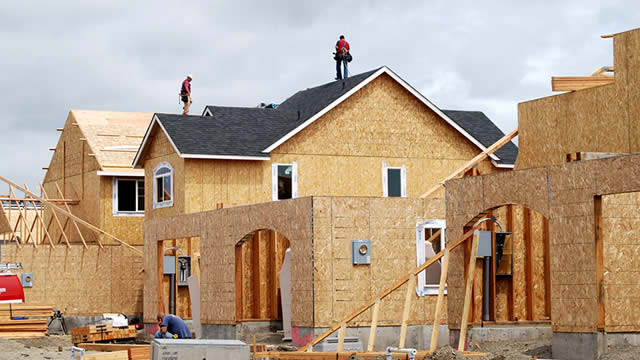
2 Homebuilders Navigating a Challenging Industry Backdrop
ZACKS· 2026-03-10 18:51
Industry Overview - The U.S. homebuilding industry faces a complex mix of challenges, including affordability issues, cautious buyer psychology, and elevated incentives impacting margins, while land costs and material inflation are expected to tighten cost structures further [1] - Demand is highly sensitive to interest rates, and although mortgage rates have started to ease, this has not yet led to consistent buyer conversion due to economic uncertainty and job stability concerns [1][5] - Rising construction costs, labor shortages, and limited lot availability are additional pressures that restrict pricing flexibility and profitability for the Zacks Building Products - Home Builders industry [1] Long-Term Support Factors - Despite current challenges, tight housing supply and steady demand for homeownership are expected to provide long-term support to the industry [2] - Builders are adapting by utilizing mortgage buydown programs and balancing speculative and build-to-order activities to cater to different buyer segments [2] - Leading companies like Toll Brothers Inc. and Green Brick Partners, Inc. benefit from disciplined cost controls, operating leverage, diversified models, and selective acquisitions, positioning them for long-term growth [2] Trends Impacting the Industry - Housing affordability remains a significant constraint, with high mortgage rates and home prices reducing the pool of qualified buyers, particularly first-time purchasers [4] - Consumer confidence has weakened due to macroeconomic uncertainties, leading to delayed purchasing decisions even among financially capable buyers [5][6] - Builders are increasingly relying on sales incentives to stimulate demand, which pressures margins and complicates operational strategies [8] Structural Housing Shortage - The U.S. faces a persistent undersupply of homes, creating a long-term foundation for demand despite short-term affordability pressures [10] - Demographic trends, including millennials entering prime homebuying years and population growth, support long-term housing demand [11] Cost Control and Technology Adoption - Companies are focusing on cost control and efficiency improvements to navigate rising raw material prices, leading to higher operating leverage [12] - The adoption of technology, including generative AI and robotics, presents opportunities for builders to enhance efficiency and reduce labor costs [13] Industry Performance and Valuation - The Zacks Building Products - Home Builders industry currently ranks 240, placing it in the bottom 1% of over 240 Zacks industries, indicating dim near-term prospects [14][15] - The industry has underperformed the S&P 500 Index and the broader Zacks Construction sector over the past year, with a decline of 1.6% compared to the sector's growth of 18.7% [18] - The industry is trading at a forward P/E ratio of 12.5, significantly lower than the S&P 500's 22.01 and the sector's 20.23 [21] Company-Specific Insights - **Toll Brothers**: Focuses on luxury homes and plans to increase community count by 8-10% in fiscal 2026, supported by a solid land position of about 75,000 lots [26] - Toll Brothers has gained 37.7% in the past year, with an upward earnings estimate revision for fiscal 2026 to $12.71 per share [27] - **Green Brick Partners**: Operates in high-growth markets and benefits from a disciplined land acquisition strategy, with plans to expand its community count [30] - Green Brick Partners has gained 10.8% in the past year, with a trailing 12-month ROE of 17.9% [31]


Miami’s Tech Boom Is Minting Winners, and These 5 Stocks Are Cashing In
Yahoo Finance· 2026-03-10 11:35
Group 1: Lennar - Lennar reported Q4 fiscal 2025 revenue of $9.37 billion, a decrease of 6.0% year over year, with EPS of $1.93, missing the consensus estimate of $2.25 [1] - Gross margin on home sales decreased to 17.0% from 22.1% a year earlier, as the company offered approximately 14% in incentives and price adjustments to maintain sales volume [1] - New orders increased by 18% to 20,018 homes, and active communities grew to 1,708 from 1,447 [1] - The stock is trading slightly above its 52-week low of $96.40, with a trailing P/E of 12x, reflecting market headwinds [1] Group 2: Amerant Bancorp - Amerant Bancorp's Q4 2025 EPS was $0.07, significantly below the $0.36 estimate, impacted by $29.20 million in non-core charges [2] - Non-performing assets rose to $186.91 million, or 1.91% of total assets, while core EPS was $0.53 per diluted share [2] - Management announced a $40 million share repurchase program and projected a net interest margin of 3.65% to 3.70% for 2026 [2] Group 3: Miami's Tech Hub Transformation - Miami has transformed into a significant tech hub, attracting venture capital firms, hedge funds, and tech startups due to its favorable tax and regulatory environment [3] - The city's tech ecosystem includes sectors such as fintech, AI, defense tech, and crypto, impacting regional banks, homebuilders, and data infrastructure companies [3] Group 4: Coinbase - Coinbase reported full-year 2025 revenue of $7.2 billion, with total trading volume of $5.2 trillion, a 156% increase year over year [4] - Q4 revenue was $1.80 billion, slightly below estimates, with a GAAP net loss of $667 million due to unrealized crypto markdowns [4] - The company has 12 products generating over $100 million in annualized revenue and authorized a $2 billion share repurchase program [4] Group 5: Mastercard - Mastercard's Q4 2025 revenue was $8.806 billion, a 17.59% year-over-year increase, beating estimates by 0.95% [5] - Adjusted EPS was $4.76, exceeding the $4.24 estimate by 12.26%, with cross-border volume growing 14% in local currency [5] - The company repurchased 6.4 million shares for $3.6 billion in Q4 and has $16.7 billion remaining under its buyback authorization [5] Group 6: Palantir - Palantir's Q4 2025 revenue grew 70% year over year to $1.41 billion, beating estimates by 5.74% [6] - Adjusted EPS was $0.25, surpassing the $0.18 estimate by 38.89%, with U.S. commercial revenue increasing by 137% [7] - The company's FY2026 guidance projects revenue between $7.182 billion and $7.198 billion [7] Group 7: Economic Impact of Miami's Growth - The five companies discussed represent different aspects of the economic shift towards Miami, capturing various slices of the structural changes in capital and talent concentration [8] - The ongoing migration to Miami is expected to continue influencing financial results across these companies, indicating that the economic impact is just beginning to manifest in earnings [8]




Century Communities Inc (CCS): Strong Financials, Dividend Growth, and Strategic Expansion in 2026
Yahoo Finance· 2026-03-08 15:51
Group 1: Company Overview - Century Communities Inc (NYSE:CCS) is one of America's largest homebuilders, operating in 16 states and involved in all aspects of homebuilding, including land acquisition and development [5] - The company also provides mortgage and insurance brokerage services [5] Group 2: Recent Developments - On February 25, Century Communities announced the launch of new townhomes at Ellison Townhomes in Spartanburg, SC, featuring the Avalon floor plan designed for quality and affordability [1] - The company plans to pay a quarterly cash dividend of $0.32 per share on March 11, marking a 10% increase from the previous quarter's dividend of $0.29 [2] Group 3: Financial Performance - For Q4 2025, Century Communities reported an adjusted net income of $47.1 million, or $1.59 per share, with total revenue of $1.2 billion [3] - The company delivered 3,435 residential homes in Q4 2025, including 3,030 new homes, and achieved a total of 10,792 residential deliveries for the full year [3] Group 4: Future Outlook - Century Communities expects new home deliveries in 2026 to range between 10,000 and 11,000 homes [4] - The company anticipates home sales revenue of $3.6 billion to $4.1 billion in 2026 [4]

“Is Dream Finders Homes Inc (DFH) One of the Best Homebuilder Stocks to Buy According to Hedge Funds?
Yahoo Finance· 2026-03-08 15:51
Core Insights - Dream Finders Homes Inc (NYSE:DFH) is recognized as one of the top homebuilder stocks to consider by hedge funds [1][7] - The company reported a Q4 2025 EPS of $0.58, down from $1.29 in Q4 2024, and missed the consensus estimate of $0.64 [1] - Revenue for Q4 2025 was $1.21 billion, a decline from $1.56 billion a year ago, but exceeded the consensus projection of $1.1 billion [1] Financial Performance - In Q4 2025, Dream Finders Homes experienced a decrease in home closings and gross margin, indicating a challenging operational environment [2] - Despite the quarterly challenges, the company achieved a record annual closing of 8,608 homes for the full year [2] - The company anticipates approximately 9,250 home closings in 2026, reflecting its commitment to affordable housing [2] Management Commentary - CEO Patrick Zalupski highlighted the ongoing difficulties in the housing sector but emphasized the strength and resilience of the business and team [3] Liquidity and Share Repurchase - At the end of 2025, Dream Finders Homes had total liquidity of $899 million, which included $234.8 million in cash and cash equivalents [4] - The company repurchased $41.8 million worth of its own shares during 2025, with an existing share repurchase plan authorized for $100 million until June 2027 [4] Company Overview - Dream Finders Homes is headquartered in Jacksonville, Florida, focusing on building single-family homes primarily in the Southeast US, including the Washington, D.C. metropolitan area [5]

Taylor Morrison(TMHC) - 2025 Q4 - Earnings Call Transcript
2026-02-11 14:32
Financial Data and Key Metrics Changes - In Q4 2025, reported net income was $174 million or $1.76 per diluted share, while adjusted net income was $188 million or $1.91 per diluted share, reflecting a solid performance despite market challenges [25][26] - For the full year 2025, reported net income was $783 million or $7.77 per diluted share, with adjusted net income at $830 million or $8.24 per diluted share [25][26] - The company achieved a 13% return on equity and a 14% growth in book value per share [5] Business Line Data and Key Metrics Changes - The company delivered nearly 13,000 homes in 2025 with an adjusted home closings gross margin of 23% [5] - In Q4, net orders totaled 2,499 homes, down 5% YoY, driven by a moderation in monthly absorption pace [25][26] - The average price of homes delivered in Q4 was $596,000, generating approximately $2 billion in home closings revenue [26] Market Data and Key Metrics Changes - Sales were strongest in the east and west regions, particularly in Florida, California, and Phoenix, while the central region, especially Texas, showed slower performance [11] - The company experienced a 7% YoY net order growth in its Esplanade resort lifestyle communities, while move-up sales saw a low single-digit decline [10] Company Strategy and Development Direction - The company plans to accelerate new community openings in 2026, with over 100 new outlets expected, including more than 20 new Esplanade outlets [12][13] - A focus on the move-up and resort lifestyle segments is emphasized, with a strategic shift away from non-core submarkets that cater to price-sensitive buyers [15][16] - The company aims to maintain a controlled ratio of at least 65% for home-building lots to optimize capital efficiency [19] Management's Comments on Operating Environment and Future Outlook - Management expressed cautious optimism about sales success in Q4 2025 and early momentum in 2026, despite ongoing affordability constraints and elevated inventory levels [9][11] - The company anticipates that consumer confidence in the economic and political outlook will be critical for demand recovery [9] - Management highlighted the importance of understanding consumer needs and preferences, which has contributed to the company's reputation as a trusted builder [8] Other Important Information - The company repurchased 1.2 million shares for $71 million in Q4 2025, totaling 6.5 million shares for approximately $381 million for the full year [33] - The company ended Q4 with strong liquidity of approximately $1.8 billion, including $850 million in unrestricted cash [32] Q&A Session Summary Question: Long-term view on business mix and geographies - Management expects a slight decrease in the entry-level mix, focusing on core markets and avoiding fringe locations that attract different buyers [40][41] Question: Spec versus to-be-built mix - Management aims for a more balanced mix, potentially reaching a 50/50 split between spec and to-be-built homes over time, though achieving this in 2026 may be challenging [44][46] Question: Absorption rates in new communities - New communities are performing well, with strong interest and sales, indicating positive absorption trends compared to legacy communities [63] Question: Construction cost outlook - Management anticipates stable construction costs but is monitoring potential increases in lumber prices and other cost factors [54][56] Question: Incentives and gross margin guidance - Incentives were relatively flat from Q4 to Q1, with expectations for gross margins to improve gradually as the mix shifts towards to-be-built homes [60][62]

Dip Buying Lifts Stocks, Dow Hits 50K | Bloomberg Businessweek Daily 2/6/2026
Bloomberg Television· 2026-02-06 21:14
ANNOUNCER: THIS IS "BALANCE OF POWER" REPORTING FROM THE MAGAZINE THAT HELPS GLOBAL LEADERS STAY AHEAD. PLUS, GLOBAL BUSINESS, FINANCE, AND TECH NEWS AS IT HAPPENS. " BLOOMBERG BUSINESSWEEK DAILY" WITH CAROL MASSAR AND TIM STENOVEC LIVE ON BLOOMBERG RADIO, TELEVISION, YOUTUBE, AND BLOOMBERG ORIGINALS.CAROL: WE ARE UP ON THIS FRIDAY. IT IS FRIDAY, FEBRUARY 6, 2026. THE S&P HEADING TOWARDS HIS BIRTHDAY SINCE NOVEMBER.SMALL CAPS ON FIRE. AN BITCOIN WITH A BOUNCEBACK. TAYLOR: I GUESS TIM: I GUESS EVERYTHING IS ...

Trump Could Open Antitrust Investigation of Homebuilders
Bloomberg Television· 2026-02-06 19:42
Quickly want to delve into what's happening here in the markets with Nora. Melinda This downturn that we're seeing in homebuilders is pretty severe and it's coming straight from the White House as potential antitrust action is invoked by the administration. Norah, this is not playing well with most of the homebuilders today.What are you seeing in New York. Yeah, Joe, not really playing well with the homebuilders. I'm looking at an index as one five home that tracks a lot of the biggest U.S. publicly traded ...

Midterm Stock Trading Themes Emerge, Led by Fintech, Builders
Yahoo Finance· 2026-02-03 10:30
Group 1 - Wall Street is preparing for trading scenarios ahead of the US midterm elections, focusing on the American consumer's sentiment and spending behavior [1][2] - Investors are looking at financial firms and homebuilders that may benefit from the Trump administration's efforts to lower living costs, including potential tax changes and lower mortgage rates [2][6] - Citi Research has launched a "tactical" trade basket targeting fintech companies that cater to lower-income consumers, anticipating increased demand for credit access due to affordability policies [3][6] Group 2 - Consumer confidence has dropped to its lowest level since 2014, raising concerns about potential declines in consumer spending, despite high expenditure levels [7] - The impact of Trump's tariffs is keeping some prices elevated, affecting margins for import-sensitive consumer stocks, which may influence investment strategies [8]

Meritage Homes reports fourth quarter 2025 results
Globenewswire· 2026-01-28 21:30
Core Insights - Meritage Homes Corporation reported a challenging financial performance for the fourth quarter and full year 2025, with significant declines in home closing revenue and net earnings compared to the previous year [1][4][5]. Financial Performance - For Q4 2025, homes closed decreased by 7% to 3,755 units, while home closing revenue fell by 12% to $1.4 billion [3][9]. - The average sales price for homes closed was $375,000, down 5% from the previous year [3][9]. - The company reported a home closing gross margin of 16.5%, a decrease of 670 basis points from 23.2% in Q4 2024 [3][9]. - Net earnings for Q4 2025 were $84 million ($1.20 per diluted share), a 51% decrease from $172.6 million ($2.36 per diluted share) in Q4 2024 [3][9]. Full Year Results - For the full year 2025, total home closing revenue decreased by 9% to $5.8 billion, driven by a 4% decline in average sales price to $384,000 and a 4% decrease in home closing volume to 15,026 units [3][9]. - Net earnings for the full year were $453 million ($6.35 per diluted share), down 42% from $786 million ($10.72 per diluted share) in 2024 [3][9]. Operational Highlights - The company maintained full year sales orders at 14,650 homes, consistent with the prior year, despite a challenging market environment [4][5]. - The ending backlog decreased by 24% to 1,168 units, with a backlog value down 30% to $440.6 million [3][9]. - Meritage Homes achieved a backlog conversion rate of 221%, with 63% of Q4 deliveries coming from intra-quarter sales [4][5]. Management Strategy - The company plans to accelerate share repurchases, anticipating $400 million in buybacks during 2026, assuming stable market conditions [5][6]. - Meritage Homes is focusing on cost-cutting measures and technological efficiencies in response to broader macroeconomic challenges [5][6]. Balance Sheet and Liquidity - As of December 31, 2025, the company had a cash balance of $775 million and a net debt-to-capital ratio of 16.9% [6][10]. - Total capital returned to shareholders in 2025 exceeded $416 million, representing 92% of the year's total earnings [6][10].