Network Throughput

Search documents
X @BNB Chain
BNB Chain· 2025-11-08 04:00
Network Upgrade - BNB Chain's Fermi Hardfork release is now available for the BSC network [1] - The upgrade reduces the block interval from 750ms to 450ms, a 40% reduction [1] - This improvement significantly enhances transaction efficiency, network throughput, and overall performance [1] - Shorter block time enables faster processing [1]
X @BNB Chain
BNB Chain· 2025-11-04 14:28
Network Upgrade - Fermi Hardfork is now available for the BSC network, aiming to enhance network performance [1] - Block interval reduced by 40% from 750ms to 450ms, significantly improving transaction efficiency and network throughput [1] - Shorter block time facilitates faster processing and a smoother user experience [1] Testing and Deployment - Stress test on Testnet will be conducted, inviting community participation to validate BSC's enhanced performance [1] - Testnet activation scheduled for November 10, 2025, at 02:25 AM (UTC) [3] - Mainnet activation date to be determined following the stress test [3] Technical Details - Relevant release notes available in bsc-node v1.6.2 [2]
南大通用GBase 8s SSC集群网络交互信息概述和吞吐量计算(一)
Sou Hu Cai Jing· 2025-05-20 21:40
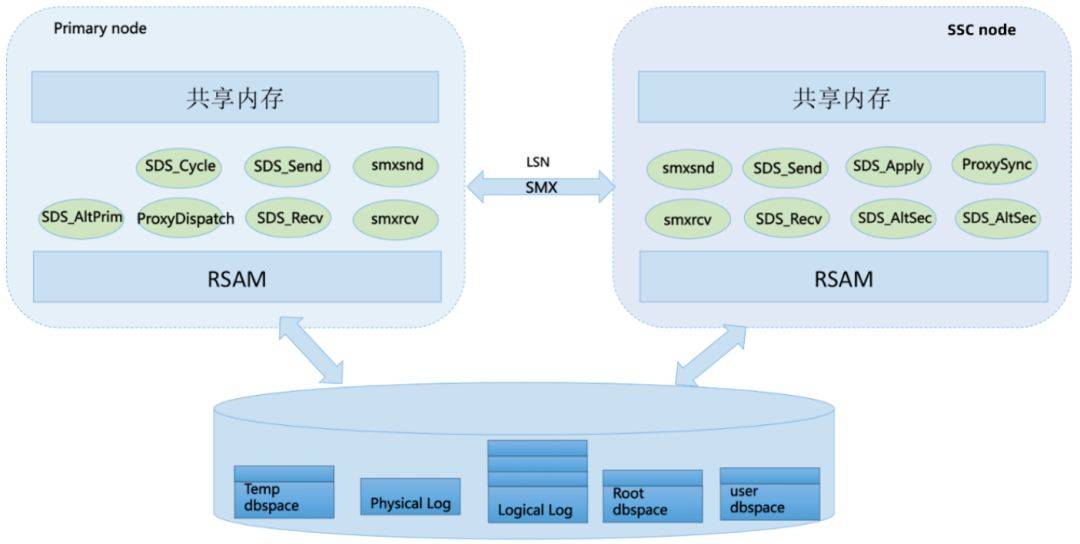
Group 1 - The core viewpoint of the articles emphasizes the importance of database performance and reliability in today's data-driven business environment, highlighting GBase 8s as a mature and stable domestic database system with an optimized SSC cluster architecture that significantly enhances performance and availability [1][3]. - GBase 8s SSC cluster operates by minimizing network data transmission between the main and slave nodes, only sending network heartbeat and current logical log position information, which reduces network latency and enhances synchronization performance [1][8]. - In a scenario with a single slave node, the theoretical maximum network throughput between the main and slave nodes is approximately 3.5 MB/s, with a performance of 1 million tpmc at 400 concurrent users [1][2]. Group 2 - The SSC cluster architecture allows multiple database instances to access and operate on the same database simultaneously, featuring high availability, high performance, and load balancing, along with automatic failover and rejoining capabilities [3][4]. - In scenarios where the SSC slave node supports updates, the network throughput can reach 248.9 MB/s with a performance of 1 million tpmc for the new order business in TPCC [2]. - The SSC cluster's operational principle involves the main node sending the current Log Sequence Number (LSN) to the slave node, which then retrieves the updated logical logs from shared storage, thus avoiding the need to transfer logical log files between nodes [8][9].