Non-farm Payrolls

Search documents
Payrolls rose by 64,000 in November after falling by 105,000 in October, delayed job numbers show
CNBC Television· 2025-12-16 14:45
Employment Data - Non-farm payrolls increased by 64,000 [1] - Average hourly earnings rose by 01% month-over-month and 35% year-over-year [1] Unemployment Rate - The unemployment rate increased to 46%, the highest since July 2021 [2] - The underemployment rate (U6) also reached 87%, a level last seen in July 2021 [2][3] - The average work week expanded to 343% [2] - Labor force participation expanded [3]

BLS Scraps October Jobs Report on Lack of Household Data
Bloomberg Television· 2025-11-19 18:06
How much of a surprise is this. We knew that there was going to be parts of the report that were missing. But to just wholesale cancel the October jobs report, it is a little bit of a surprise, especially because businesses are able to keep their records, how many folks were on their payrolls.And so when you ask businesses how many people were on your payrolls for the week that included the 12th of the month, they should have paystubs, they should have our records. It should be relatively easy to retrieve t ...
Slok: It may take another month before we see the real state of the economy
CNBC Television· 2025-11-13 12:32
Labor Market Analysis - The government shutdown in October has created uncertainty regarding the availability and quality of key economic data, specifically inflation and employment figures [1][2] - November employment data collection is delayed and may be of questionable quality due to the Thanksgiving holiday, impacting market understanding of the economy's health [3][4] - Alternative indicators suggest the labor market is holding up, with Brailio Labs showing an increase in total non-farm payrolls and jobless claims remaining low [5][6] - The economy is likely still performing adequately, but a clearer picture may take another month to emerge due to data collection disruptions [6] - Economists are widening their data sources due to the unavailability of regular data from the BLS, CPI, and non-farm payrolls [9] Economic Risks and Federal Reserve Implications - The consensus among economists leans towards labor weakness as a greater risk than higher inflation in the coming months [9] - Job growth slowdown in the past 6 months may be attributed to slowing immigration, impacting labor supply rather than labor demand [10][11] - The Federal Reserve published a paper expecting job growth over the next 12 months to be 30,000, a significant decline due to slowing immigration [12] - The Federal Reserve's ability to address the situation is limited if the issue is labor supply, as opposed to labor demand [13]
Don’t Refinance Your Mortgage on This Day of the Week — Timing Is Everything
Yahoo Finance· 2025-11-07 13:57
Core Insights - The timing of mortgage refinancing can significantly impact costs, particularly the day of the week chosen for closing [1][2] Group 1: Risks of Closing on Fridays - Closing on Fridays may lead to double-charging, as the old lender may not receive payoff funds until the following week, resulting in interest payments on both loans over the weekend [3][4] - Fridays are often volatile due to the release of the Bureau of Labor Statistics' Non-farm payrolls report, which can influence mortgage-backed securities and subsequently affect interest rates [5][6] Group 2: Considerations for Refinancing - While Friday poses specific risks, it is essential to consider broader factors such as monthly mortgage rate trends and the closing costs associated with securing a lower interest rate [7] - Engaging with both old and new lenders can help navigate potential pitfalls and ensure a smoother refinancing process [8]
US Labor Market Registers Three Months of Contraction | Presented by CME Group
Bloomberg Television· 2025-08-04 14:54
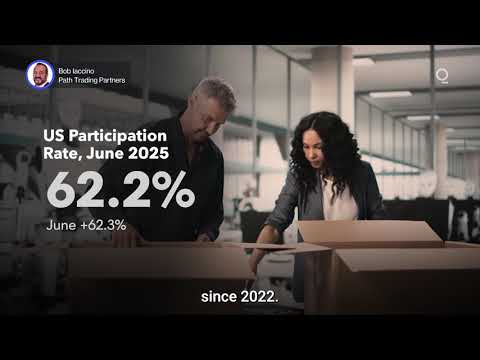
Labor Market Weakening - Non-farm payrolls increased by only 73,000, significantly below the expected 115,000 [1] - Prior months' job growth was revised down by 258,000 [1] - The unemployment rate rose to 42%, a 2% increase [2] - Labor force participation rate declined to 622%, the lowest since 2022 [2] - Long-term employment increased by 179,000, totaling 18% million [2] - The number of new entrants unable to find work increased by 275,000 [2] - U6 unemployment rate increased to 79% [2] Sector Performance - Healthcare added 55,000 jobs [3] - Federal government shed 12,000 jobs [3] Economic Outlook - Hiring confidence has decreased amid policy uncertainty [3] - The labor market's resilience may be weakening [3]