Oil Supply Disruption

Search documents
投资者-中国经济:地缘政治紧张局势及其影响-Investor Presentation-China Economics Geopolitical Tensions and Implications
2026-03-19 02:36
Summary of Key Points from the Conference Call Industry Overview - The conference call primarily discusses the oil and gas industry, focusing on the geopolitical tensions affecting oil supply, particularly through the Strait of Hormuz, and the implications for global markets and economies [1][2][5][6]. Core Insights and Arguments - **Oil Supply Dynamics**: A limited number of oil tankers have moved out of the Gulf since March, indicating a tightening supply situation. Major economies have implemented mitigating measures [2][5]. - **IEA Oil Release**: The International Energy Agency (IEA) members have agreed to release 400 million barrels of reserve oil, the largest amount ever, with contributions from the US (~170 million barrels), Japan (80 million barrels), and Korea (22.5 million barrels) [5]. - **US Sanctions Waiver**: The US has issued a 30-day sanctions waiver for purchases of Russian oil at sea, which is set to expire on April 11 [5]. - **Refined Oil Exports**: Many oil-importing countries, including China, have tightened their refined oil exports, further complicating the supply situation [5]. Price Projections and Economic Impact - **Brent Oil Price Scenarios**: - In a rapid containment scenario, Brent prices are projected to stabilize between $60–65 per barrel. - In a managed escalation scenario, prices could rise to $75–80 per barrel due to shipping frictions and higher insurance costs. - In a severe disruption scenario, prices could spike to $120–130 per barrel, leading to significant demand destruction [6]. - **LNG Pricing**: Projected prices for liquefied natural gas (LNG) vary significantly based on the scenario, ranging from ~$8–10/MMBtu in a rapid containment scenario to ~$25–35/MMBtu in a severe disruption scenario [6]. Economic Sensitivity to Oil Price Shocks - **Impact on Growth and Inflation**: - A sustained $10 per barrel increase in oil prices could reduce GDP growth in the US by ~15 basis points and push headline CPI by ~35 basis points. - In the Euro Area, a similar increase could push inflation significantly above the ECB target, leading to delayed monetary policy adjustments [16]. - **China's Position**: China is better positioned to handle oil shocks due to its less oil and gas-intensive energy consumption structure, although it remains vulnerable due to its reliance on Middle Eastern imports [17][19]. Additional Considerations - **Secondary Impacts**: The potential for a global demand slowdown and downstream profit margin squeeze could exacerbate the economic effects of rising oil prices [20]. - **Market Volatility**: Risk assets are expected to continue outperforming, but volatility may remain elevated as markets react to geopolitical flare-ups and supply chain disruptions [6][20]. Conclusion - The conference call highlights the intricate relationship between geopolitical tensions, oil supply dynamics, and economic impacts across various regions. The insights provided indicate a cautious outlook for the oil market, with significant implications for global economic stability and inflation trends [1][2][5][6][16].

11 Investment Must Reads for This Week (March 17, 2026)
Yahoo Finance· 2026-03-17 16:14
Group 1: Oil and Energy Sector - Surging Oil ETFs are benefiting from backwardation, with gains ahead of approximately 66% and 64% increases in front-month WTI and Brent crude oil futures respectively, indicating potential for continued outperformance if supply remains tight [1] Group 2: Private Equity and Credit Markets - The $1.8 trillion private credit market is experiencing increased liquidity pressure as withdrawal requests rise, leading Cliffwater LLC to cap redemptions for its flagship private credit fund after facing significant withdrawal attempts [6] - Ares management has addressed concerns over defaults in the private credit market, suggesting that the narrative of outflows is overstated, as aggregated data does not reflect significant outflows [7] - Blue Owl Capital Corporation II's board has rejected an unsolicited tender offer, deeming it inadequate and arguing it would deprive investors of future returns [8] Group 3: Investment Strategies - Wells Fargo has revamped its SMA manager list, adding approximately 93 new third-party strategies and removing 20, with about 69 of the new strategies landing on its recommended product list for advisors [2] - Target-date collective investment trusts have surpassed mutual funds as the dominant vehicle in 2024, holding 54% of total target-date assets by year-end, up from 52% the previous year, driven by lower costs and greater flexibility [9] - Franklin Templeton is expanding its target-date franchise by integrating private market investments into workplace retirement plans with its new Retirement Advantage Plus lineup [10] Group 4: Geopolitical Events Impact - Analysis of geopolitical events shows that equities tend to sell off in emerging and developed markets outside the U.S. during crises, while the U.S. market remains stable, with most damage dissipating within a month [3] Group 5: Municipal Bonds - Advisors are increasingly focusing on municipal bonds and high-quality bonds, as a steepening yield curve allows for locking in yields and benefiting from roll-down strategies [4] Group 6: Technology and Infrastructure - Data centers are becoming critical targets in wartime, with their destruction posing significant risks to both economic and military capabilities [11]
Middle East Conflict Escalates: US Strikes Iran’s Kharg Island as Regional Hubs Face Drone Barrage
Stock Market News· 2026-03-14 03:38
Group 1: Military Actions and Impacts - The U.S. conducted a significant bombing raid on Iran's Kharg Island, targeting military assets while sparing oil infrastructure, which is crucial as it handles 90% of Iran's oil exports [2][11] - Coordinated drone and missile attacks were reported in Doha, Dubai, and Riyadh, leading to evacuations in major financial districts and causing damage in Dubai [11] - Regional air defenses were heavily engaged, with Saudi Arabia and Qatar successfully intercepting multiple threats, including ballistic missiles and drones aimed at economic interests [4][11] Group 2: Economic and Market Reactions - The oil markets are experiencing what the International Energy Agency (IEA) describes as the "biggest oil supply disruption in history," with crude prices fluctuating significantly due to ongoing diplomatic developments [7][11] - Major financial institutions, including Citi, Deloitte, and PwC, have begun evacuating staff or transitioning to remote work in response to rising threats to economic interests in the region [5][11] - The White House is preparing to deploy U.S. Navy escorts for oil tankers in the Strait of Hormuz to ensure the uninterrupted flow of energy [8][11]



Factbox-Biggest global oil supply disruptions in history
Yahoo Finance· 2026-03-13 15:24
Core Insights - The closure of the Strait of Hormuz has caused the largest disruption to global oil markets in history, with a projected supply drop of approximately 8 million barrels per day in March, equating to around 8% of global supply [1] Group 1: Current Disruption - The International Energy Agency (IEA) reports that member countries will release a record 400 million barrels from strategic stockpiles to stabilize oil prices and offset the loss of Middle Eastern output [1] Group 2: Historical Context - The 1973–1974 Arab oil embargo led to a 5% production cut by Arab producers, escalating to additional monthly reductions, aimed at pressuring Western nations regarding Israel [2] - U.S. National Security Council documents indicated that the embargo would result in a shortfall of 2–3 million barrels per day for the U.S., with a total shortage of around 4.5 million barrels per day across embargoed nations [3] - Crude oil prices surged from about $2.90 per barrel before the embargo to $11.65 by January 1974, prompting the U.S. government to implement fuel rationing and push for alternative energy sources [4] Group 3: Impact of Historical Events - The Iranian Revolution in 1978-1979 caused a sharp decline in Iranian oil production by 4.8 million barrels per day, representing about 7% of global supply, leading to a rapid increase in oil prices [5] - The oil crisis contributed to rising inflation in the U.S., resulting in aggressive monetary tightening by the Federal Reserve, which ultimately led to a severe recession [6]
‘Show guts’: Trump whines over shipping companies fears to travel through Strait of Hormuz
MSNBC· 2026-03-11 21:48
It's day 12 of the war with Iran. Here's where things stand. Quote, the president is scared.That is how one Democrat, former Congressman Max Rose, describes Donald Trump right now, as he tries to spin a spiraling war that has led to the deaths of eight U .S. service members and more than 1 ,200 people across the Middle East, including more than 100 children. Gas prices are right now $3 .58 a gallon, that's according to AAA.And today, a leading lobbying group for American farmers is warning of a shortfall in ...

S&P Global's Dan Yergin: Iran war's impact on oil will come down to length of conflict
Youtube· 2026-03-02 14:26
Group 1 - The price of crude oil is increasing significantly due to fears of supply disruptions in Iran, with tanker traffic nearly halted in the Strait of Hormuz, which is crucial for global oil and LNG transportation [1][2] - Approximately 20% of the world's oil and LNG passes through the Strait of Hormuz, highlighting its importance in the global energy market [2] - The long-term effects of the situation depend on the duration of the disruptions; if short-lived, markets may adjust, but prolonged issues could lead to severe consequences [3][4] Group 2 - Infrastructure concerns are rising, as Saudi Arabia has shut down its largest refinery and Qatar has halted LNG production due to fears of drone attacks [5] - The geopolitical landscape is shifting, with regional countries like the UAE and Saudi Arabia preparing to confront Iran, which could escalate tensions further [8] - Iran's economy is heavily reliant on oil exports, primarily to China, and disruptions in oil flow could lead to significant financial strain on the country [9][10]
Oil Prices Jump 2% Following Drone Strike at Major Black Sea Terminal
Yahoo Finance· 2026-01-13 13:00
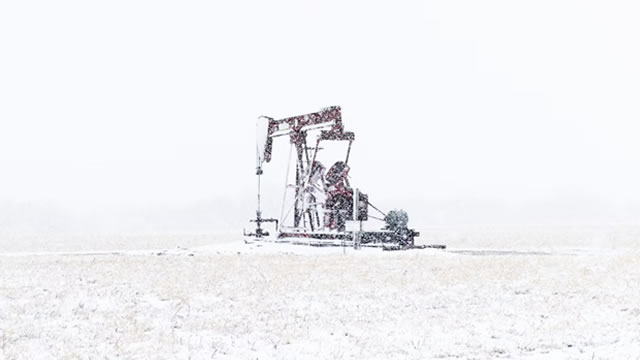
Group 1: Market Reaction - Global oil prices surged due to escalating drone strikes at the Novorossiysk terminal, which handles approximately 2% of the world's daily oil supply [1] - WTI prices increased by 2.1% to $60.75, while Brent prices rose by 1.9% to $65.13 [2] Group 2: Infrastructure and Export Impact - The Caspian Pipeline Consortium (CPC) infrastructure, crucial for Kazakh exports and managed by companies like Chevron and Shell, faced disruptions due to drone attacks [1][5] - The CPC terminal is a major oil export facility that processes most of Kazakhstan's crude oil exports and some Russian crude supply [3] Group 3: Production and Export Challenges - Kazakhstan's oil output sharply declined at the end of November and early December due to damage at the CPC terminal, which disrupted flows [6] - The country relies on the CPC for about 80% of its crude exports, and the recent disruptions have prompted producers to reduce throughput as storage capacity was reached [6][7] - Kazakhstan is attempting to stabilize production and has sought to reroute some exports away from the Black Sea to maintain supply levels [7]
Oil News: Iran Supply Disruption Could Trigger Critical 52-Week MA Breakout
FX Empire· 2026-01-12 03:53
Core Viewpoint - The content emphasizes the importance of conducting personal due diligence and consulting with competent advisors before making any financial decisions, particularly in the context of investments in complex instruments like cryptocurrencies and CFDs [1]. Group 1 - The website provides general news, personal analysis, and third-party materials intended for educational and research purposes [1]. - It explicitly states that the information should not be interpreted as a recommendation or advice for investment actions [1]. - The accuracy and reliability of the information are not guaranteed, and users are cautioned against relying solely on the content provided [1]. Group 2 - The website includes information about cryptocurrencies, CFDs, and other financial instruments, highlighting their complexity and associated high risks [1]. - Users are encouraged to conduct their own research and fully understand the workings and risks of any financial instruments before investing [1].

What if Iran Tries to Close the Strait of Hormuz?
Bloomberg Television· 2025-06-20 13:23
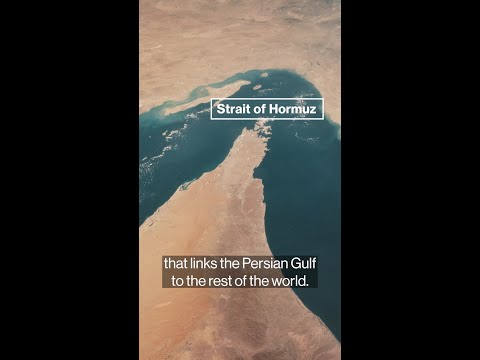
Geopolitical Risk & Oil Supply - The Strait of Hormuz is a critical chokepoint for global oil supply, with approximately 20% of the world's oil flowing through it [1] - A material disruption in the Strait of Hormuz would significantly impact global oil supply [1] - Iran has the potential to disrupt or restrict oil supply through the Strait of Hormuz, even without a full closure [2][3] Potential Impact on Oil & Fuel Prices - Any restriction or anxiety regarding oil supply through the Strait of Hormuz could significantly affect oil prices [3] - Increased oil prices would likely translate to higher fuel prices for consumers [3] Iran's Options for Disruption - Iran could harass shipping or direct ships into its territorial waters as a means of disruption [2] - A complete closure of the Strait of Hormuz by Iran would be difficult to sustain for a long period, potentially upsetting allies like China [2]
What if #Iran closes the Strait of #Hormuz?
Bloomberg Television· 2025-06-20 09:19
The straight of Hormuz is a narrow stretch of water that links the Persian Gulf to the rest of the world. About a fifth of the world's oil flows through it. That's the world's produced oil, the world's consumed oil.It has to go through that waterway. It's largely unavoidable. And so any kind of material disruption would be a big issue.Iran has always said that it could close the straits if threatened, if the situation demanded it. It would be very difficult for Iran to do that and certainly very difficult f ...