Oil price rally

Search documents
Services firms feel the squeeze as oil rally from Iran war fails to spur drilling
Reuters· 2026-03-27 17:35
Core Viewpoint - Global oilfield services companies are facing a decline in earnings due to the ongoing Iran war, which disrupts energy infrastructure and leads to reduced drilling activity despite rising oil prices [1][6]. Group 1: Impact of the Iran War on Oilfield Services - The Brent benchmark oil price has surged by 53% since February 27, but the Iran war has caused security risks and infrastructure damage, leading to a significant drop in demand for oilfield services [2][4]. - The offshore rig count in the Gulf has decreased by approximately 39%, falling to 72 rigs as of March 27, down from 118 rigs before February 28 [4]. - The Strait of Hormuz, a critical route for global oil supply, has become more difficult to navigate, complicating offshore drilling and equipment movement [5]. Group 2: Earnings and Revenue Projections - Oilfield services firms are expected to see a revenue decline of 10% to 20% in the first quarter due to decreased activity in the Middle East [10]. - Major companies like SLB, Halliburton, and Baker Hughes, which have high exposure to the Middle East, are already experiencing earnings hits, with SLB forecasting a 6-9 cent-per-share impact [8][10]. - Repair work in the region is anticipated to create future demand for oilfield services, as energy infrastructure repair costs are estimated to reach at least $25 billion [11][12]. Group 3: Future Demand and Market Conditions - The ongoing conflict is expected to generate meaningful demand for oilfield services related to the repair and maintenance of existing fields, although the extent of this demand will depend on broader market conditions [12][14]. - QatarEnergy reported that Iranian attacks have disrupted a sixth of its LNG export capacity, valued at about $20 billion annually, with repairs projected to take three to five years [13].



Middle East Chaos Hands Canada a $65 Billion Gift
Yahoo Finance· 2026-03-23 23:00
Core Insights - Alberta's government has released a draft budget forecasting a deficit due to low oil prices, which is expected to extend over the next three years, but the recent oil price rally from the Middle East supply crunch positions Canada, particularly Alberta, as a potential beneficiary [1] Group 1: Revenue Impact - Canadian oil producers are projected to gain an additional revenue of approximately C$90 billion ($65.6 billion) from the recent oil price rally, with a model indicating that for every $10 increase in oil prices, producers could see an additional revenue of C$25 billion to C$30 billion [2] - A former adviser to the Canadian Prime Minister noted that an oil price of $90 per barrel could eliminate a projected $10 billion deficit and potentially create a surplus [3] Group 2: Current Oil Prices and Opportunities - Although Canadian crude has not yet reached $90 per barrel, it has increased from around $54 per barrel at the end of February to over $86 per barrel, presenting a unique opportunity for Canadian oil producers due to untapped reserves of heavy crude [4] - The CEO of TC Energy emphasized that producers have the capability to ramp up production, but the challenge lies in the lack of sufficient transport infrastructure to deliver the oil to customers [5] Group 3: Regulatory Environment and Market Expansion - There is a call for the federal government to simplify and streamline the regulatory environment to facilitate capital flow into Canada, particularly regarding oil pipelines [6] - Canada primarily exports oil to the United States, but recent efforts have been made to diversify markets, with the Trans Mountain pipeline expansion doubling its capacity and making China the second-largest client for Canadian oil, alongside new buyers from South Korea, India, and Singapore [7]
Oil Extends Rally as Hormuz Stays Closed
Yahoo Finance· 2026-03-20 15:27
Core Viewpoint - Oil markets are experiencing a bullish trend, with Brent crude nearing $109 per barrel, primarily due to the prolonged closure of the Strait of Hormuz, which has lasted for three weeks, tightening supply despite various policy measures aimed at easing market conditions [1][4]. Price Movements - Brent crude is priced at $109.93, reflecting an increase of $1.28 or 1.18% [2] - WTI is at $96.82, up by $1.27 or 1.33% [2] - Murban crude has seen a significant rise to $139.26, increasing by $15.19 or 12.24% [2] - Natural gas prices have decreased to $3.10, down by $0.066 or 2.08% [2] U.S. Oil Production - U.S. oil production has shown a slight decline, with a decrease of 0.010 million barrels per day from the previous week, now at 13.668 million barrels per day [3]. Geopolitical Developments - The Trump administration is actively trying to alleviate market concerns by waiving the Jones Act and easing sanctions on Russian and Iranian oil, although the closure of the Strait of Hormuz remains a significant factor in the market's bullishness [4]. - Iran has retaliated against Israel's attacks on its gas facilities by targeting key energy infrastructure in Gulf countries, including Qatar and Saudi Arabia, which has raised regional tensions [6][7]. Policy Responses - The White House has denied plans to impose an export ban on oil and gas, although a potential export tax is still under consideration to address rising gasoline prices, currently at $3.91 per gallon [5]. - A 60-day waiver of the Jones Act has been announced, allowing foreign-flagged tankers to transport refined products and fertilizers between U.S. ports, aimed at reducing shipping costs amid rising oil prices [8]. Infrastructure Impact - Damage from Iran's drone attack on Qatar's Ras Laffan liquefaction plant is expected to take 3 to 5 years to repair, affecting 17% of Qatar's liquefaction capacity [9]. EU Energy Policy - The European Union's ban on Russian LNG has entered its first phase, prohibiting European buyers from engaging in spot deals, with further restrictions planned for the future [10].
Could oil really hit $200 a barrel?
Youtube· 2026-03-16 16:20
Core Viewpoint - The Iranian regime is warning that oil prices could reach $200 per barrel due to disruptions in global oil supply, with current prices already surpassing $150 per barrel in the Dubai benchmark, indicating a potential rise in Brent prices as well [1]. Group 1 - The current price of oil has exceeded $150 per barrel in the Dubai benchmark, which is a key indicator for Middle Eastern crude [1]. - There is growing confidence in the market, suggesting that a rally towards $200 per barrel is likely [2]. - The momentum in the oil market is strong, supporting the expectation that prices could reach $200 per barrel [2].

US stocks crash at open: Dow slips 500 points, S&P down 1%
Invezz· 2026-03-12 13:52
Core Viewpoint - US stocks experienced a decline due to rising oil prices and concerns over global energy supply disruptions amid escalating conflict involving Iran [1] Group 1: Market Impact - The Dow Jones Industrial Average fell by 547 points, representing a 1.2% decrease [1]

Geopolitical Tensions Are Pushing Oil Stocks Higher, But Can the Rally Last?
The Motley Fool· 2026-03-07 10:30
Oil Price Surge and Its Impact on Oil Stocks - The war with Iran has led to a significant increase in oil prices, with Brent crude rising approximately 40% this year from $60 to around $85 per barrel, resulting in a more than 25% increase in average oil company stock prices [1][3]. - The conflict threatens global oil supplies, as Iran has retaliated by attacking oil infrastructure and attempting to impede oil exports from the Persian Gulf, where about 20% of global oil supplies flow through the Strait of Hormuz [3][4]. Company Performance and Strategies - Occidental Petroleum's stock has surged over 30%, while ExxonMobil's shares have increased around 25%, benefiting from higher oil prices that enhance profitability [6]. - Occidental Petroleum has focused on efficiency and debt reduction, expecting to generate an additional $1.2 billion in free cash flow this year, which will increase further with rising oil prices [8]. - ExxonMobil is executing a multi-year strategy aimed at growing its advantaged resources and achieving double-digit annual earnings and cash flow growth at an average oil price of around $65 per barrel, which will be further enhanced if prices remain high [9]. Future Outlook - The continuation of the conflict with Iran could lead to further increases in crude oil prices, potentially exceeding $100 per barrel if Iran continues to disrupt oil flow [5][10]. - Conversely, a rapid de-escalation of the conflict could result in a decline in oil prices and a subsequent decrease in the rally of oil stocks [5][10].


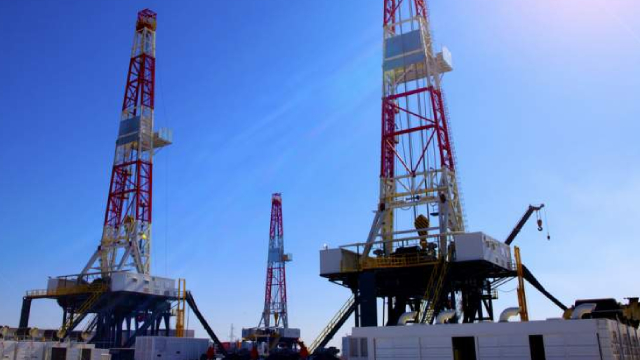
The Sky Is The Limit For The Current Oil Price Rally
Yahoo Finance· 2026-03-06 16:00
Oil Market Overview - Brent crude oil prices have surged above $90 per barrel for the first time since April 2024, driven by the closure of the Strait of Hormuz and production cuts from Iraq and Kuwait [4] - The U.S. oil production has shown a slight decrease, with a production level of 13.696 million barrels per day as of the last report [3] Production Cuts and Supply Chain Impact - Iraq has halted production at its West Qurna-2 and Rumaila fields, while Kuwait's state oil firm KPC has also begun to cut output due to rapidly filling storage tanks [9] - The closure of the Strait of Hormuz has resulted in zero crude oil movement out of the Persian Gulf, significantly impacting global oil supply [4][6] Freight and Shipping Dynamics - Freight rates for Very Large Crude Carriers (VLCC) from the Middle East to northeast Asia have increased, now costing the equivalent of $16 per barrel, which is about 20% of any grade's free-on-board value [7] - The U.S. Navy has offered to escort commercial oil tankers through the Strait of Hormuz, but no crude transits have occurred since March 1 [6] Strategic Responses from Other Countries - Japanese refiners are lobbying their government to release crude from strategic petroleum reserves due to concerns over potential shortages, as Japan relies on the Middle East for 95% of its crude oil imports [8] - The U.S. has authorized Indian refiners to temporarily increase purchases of Russian oil, which may influence the pricing of Russian grades [5] LNG Supply Concerns - QatarEnergy plans to keep its Ras Laffan gas liquefaction plant offline for at least two weeks, which will affect 20% of global LNG supply for the next month [10]
Oil rally resumes after brief dip in prices as Brent tops $87 a barrel
CNBC· 2026-03-06 10:13
Core Viewpoint - Oil prices have surged to their highest levels in months due to escalating attacks between Iran and Israel, which have disrupted shipments from the Middle East [1] Group 1: Oil Price Movements - On Monday, oil prices reached significant highs, with Brent crude futures increasing by 2.3% to $87.34 per barrel [1] - West Texas Intermediate crude futures rose by 4.5%, trading at $84.64 per barrel [1] - The increase in oil prices occurred after a previous dip that had positively influenced international equity markets [1]
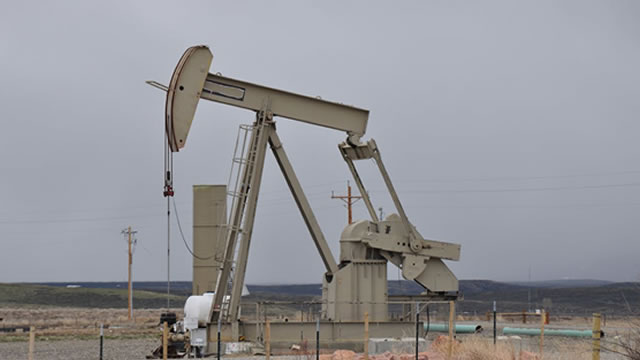
Why ConocoPhillips Rallied Double-Digits in January
The Motley Fool· 2026-02-10 08:15
Group 1: Core Insights - ConocoPhillips shares increased by 11.3% in January, driven by rising oil prices due to geopolitical events in Venezuela and Iran [1] - Oil prices rose from approximately $57 to $65 in January, influenced by the U.S. ousting of Venezuelan President Nicolás Maduro [2][6] - The potential regime change in Venezuela raises the possibility of unlocking unexploited oil reserves, despite current low production levels [3][4] Group 2: Company Performance - ConocoPhillips reported adjusted earnings per share of $1.02, which missed analyst estimates by $0.08, but the stock price remained stable due to higher current oil prices [8] - The company is owed $10 billion by Venezuela, a significant amount representing 7.4% of its current market cap, which could be recovered if the political situation improves [5][9] - CEO Ryan Lance indicated that the company would prioritize recovering the owed amount before considering reentering the Venezuelan market [9] Group 3: Market Context - Political instability in Venezuela and Iran has contributed to an upward trend in oil prices, with Iran being the ninth-largest oil producer, accounting for about 4% of global supply [6][10] - The geopolitical turmoil has created a mixed signal for oil prices, as disruptions could affect supply while potential regime changes may lead to increased production [3][4]

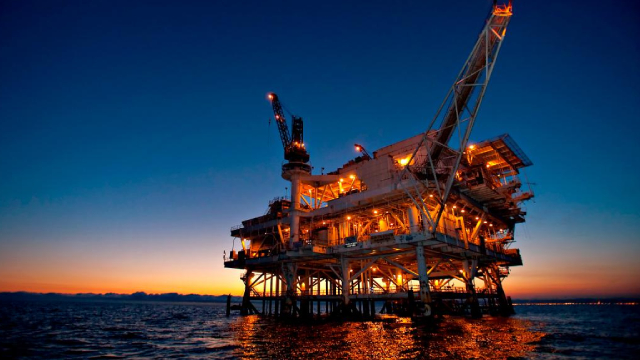
Oil Is Surging Over $60 – Grab These Large Cap High-Yield Dividend Energy Giants Now
247Wallst· 2026-01-13 15:44
Core Viewpoint - Oil prices recently fell below $60 per barrel due to oversupply and weak demand, but have since rallied back above that key level [1] Group 1: Price Movement - Oil prices initially dropped due to oversupply and weak demand [1] - Prices have rebounded back above the $60 per barrel mark this week [1]