Omnichannel Retailing

Search documents
Lands’ End(LE) - 2026 FY - Earnings Call Transcript
2026-01-12 14:32
Financial Data and Key Metrics Changes - The company has successfully expanded gross margins despite tariff headwinds, achieving margin rate growth over the past year [40][41] - The balance sheet has improved significantly, with reduced debt and more efficient inventory management, allowing for better capital allocation decisions [51][52] Business Line Data and Key Metrics Changes - The commercial uniforms business, including school uniforms and corporate uniforms, has shown strong growth, particularly with Delta Air Lines as a key customer [28][31] - The licensing business is being developed to create asset-light, high-return opportunities, leveraging partnerships to expand brand presence without heavy capital investment [19][22] Market Data and Key Metrics Changes - The TikTok Shop has emerged as a high-growth sales channel, significantly contributing to customer acquisition and brand visibility [12][14] - The company has seen success on Amazon, with a focus on entry-level price points to capture a larger market share [35][36] Company Strategy and Development Direction - The company aims to balance attracting new customers while retaining existing ones, focusing on iconic products and collaborations to enhance brand relevance [10][11] - There is a strong emphasis on omnichannel and multichannel retailing to increase brand visibility and customer engagement [22] Management's Comments on Operating Environment and Future Outlook - Management expressed optimism about the future, highlighting the potential for growth in international markets and the overall brand strategy [61][63] - The company is positioned to adapt to changing market conditions and consumer preferences, with a focus on quality and sustainability [32][49] Other Important Information - The company is committed to maintaining high product quality standards, using OEKO-TEX certified materials for school uniforms to ensure safety and durability [32] - The management team believes there are significant opportunities for multi-brand growth and expansion beyond the current offerings [53][55] Q&A Session Summary Question: What is the outlook for the balance sheet? - The company has reduced debt and improved inventory efficiency, allowing for more flexible capital allocation decisions moving forward [51][52] Question: How is the company addressing margin pressures? - The company is focused on driving margins through supply chain improvements, product quality, and strategic pricing [40][49] Question: What are the growth prospects for international markets? - Management noted improving trends in international business and looks forward to discussing these in more detail in upcoming earnings results [61]

Lands’ End(LE) - 2026 FY - Earnings Call Transcript
2026-01-12 14:30
Financial Data and Key Metrics Changes - The company has successfully expanded gross margins despite tariff headwinds, achieving margin growth for three consecutive years [39][40][41] - The balance sheet has improved significantly, with reduced debt and more efficient inventory management, positioning the company as an investment-grade entity [48][49][50] Business Line Data and Key Metrics Changes - The commercial uniforms business, including school uniforms, has shown double-digit growth, with significant contracts secured for longer terms [27][30] - The licensing business is being developed as an asset-light model, allowing for greater flexibility and reach without heavy capital investment [18][21] Market Data and Key Metrics Changes - The TikTok Shop has emerged as a high-growth sales channel, significantly contributing to customer acquisition and brand visibility [12][13] - The company has seen strong performance on Amazon, with a focus on entry-level price points to capture a larger market share [33][34] Company Strategy and Development Direction - The company aims to balance attracting new customers while retaining existing ones, focusing on iconic products and collaborations to enhance brand relevance [4][10] - There is a strategic emphasis on omnichannel retailing, leveraging both online and physical presence to maximize brand exposure [21][30] Management's Comments on Operating Environment and Future Outlook - Management expressed optimism about the future, highlighting the potential for growth in various customer segments and geographies [52][54] - The company is committed to maintaining high-quality standards and sustainability in its products, differentiating itself from fast fashion [31][32] Other Important Information - The company is exploring opportunities for multi-brand growth and expansion, leveraging its improved balance sheet for strategic investments [50][52] - The international business is showing improving trends, with expectations for increased revenues and profitability [56][57] Q&A Session Summary Question: What is the outlook for the company's growth and strategy? - Management emphasized the importance of being solutions-oriented and ready for various customer journeys, indicating a focus on expanding product offerings and customer segments [51][60] Question: How is the company managing its supply chain and vendor relationships? - The company is reducing its vendor base to work with fewer, more capable partners, enhancing flexibility and responsiveness to market changes [40][42] Question: What are the expectations for gross margin expansion moving forward? - Management believes there is still significant potential for margin growth through supply chain improvements and product quality enhancements [39][47]
Is Ulta Beauty Stock Outperforming the Dow?
Yahoo Finance· 2025-12-11 11:35
Core Insights - Ulta Beauty, Inc. is a leading specialty beauty retailer with a market cap of $26.7 billion, offering a wide range of beauty products and salon services [1][2] Company Overview - The company has a diverse portfolio of approximately 25,000 products from 600 beauty brands, catering to various consumer preferences [2] - Ulta's partnership and investment in digital innovation have improved customer engagement and set industry standards [2] - The omnichannel retailing strategy and a robust Ulta Beauty Rewards program enhance customer loyalty and provide valuable consumer insights [2] Stock Performance - Ulta's stock has experienced a 1.8% decline from its 52-week high of $611.90, reached on December 5 [3] - Over the past three months, Ulta's stock rose 16.5%, outperforming the Dow Jones Industrials Average's 5.6% gains [3] - In the longer term, Ulta's shares increased by 30% over six months and surged 45.8% over the past 52 weeks, outperforming the Dow's six-month and one-year gains [4] Growth Drivers - The strong performance of Ulta is attributed to enhanced in-store experiences, an expanding loyalty program with 46.3 million members, and exclusive brand launches like Beyoncé's Sacred hair care line [5] - E-commerce growth and digital engagement are significant contributors, with 65% of online transactions occurring via the app [5] - Investments in digital capabilities and new store formats support long-term growth, despite facing near-term margin pressures from higher SG&A costs [5]

Starbucks Just Proved Its Coffee Shop Experience Doesn't Matter
Forbes· 2025-11-09 17:50
Core Insights - Starbucks' coffee delivery business has reached $1.0 billion, growing by 30% in the most recent quarter, indicating a significant shift in consumer behavior towards convenience over the traditional coffee shop experience [2][7][25] - The delivery growth suggests that many customers may not prioritize the in-store experience that Starbucks has historically emphasized, challenging the company's traditional business model [6][10][24] Business Model Evolution - The concept of Starbucks as a "third place" has been central to its brand identity, but changing consumer preferences indicate that this model may no longer be sufficient [4][5][10] - CEO Brian Niccol's strategy to enhance the in-store experience may need to adapt to the growing demand for mobile ordering and delivery services, as evidenced by 30% of transactions occurring through the mobile app [9][10][23] Infrastructure and Strategy - The closure of mobile order and pickup-only stores may not have been a wise decision, as there is a potential need for a "dark cafe" model that focuses on speed and efficiency [11][12] - A bifurcated strategy is suggested, where some locations cater to in-store customers while others focus on fulfillment and delivery [12][16] Omnichannel Retailing - The current retail landscape requires a balance between in-store experiences and digital-first approaches, as customers increasingly seek both options [14][15] - The infrastructure must be redesigned to accommodate both in-store patrons and mobile order fulfillment, indicating a need for separate operational strategies [16] Future Trends - The shift in consumer behavior towards convenience is not limited to Starbucks but is a broader trend affecting various retail sectors, including grocery and apparel [19][20][21] - Retailers that adapt quickly to these changes, focusing on convenience and fulfillment, are likely to thrive in the evolving market [25]


Lojas Renner Announces Third Quarter 2025 Earnings Results
Prnewswire· 2025-11-06 22:19
Core Insights - Lojas Renner S.A. reported its third quarter 2025 results, highlighting a solid performance despite challenges in the retail environment compared to 2024 [1][3] Sales Performance - Retail sales grew by 4.2%, with apparel sales increasing by 4.7%. The combined average growth for Q2 and Q3 reached 11.5%, with apparel at 12.5% [5] - The company experienced a temporary impact of approximately 2 to 3 percentage points on sales due to limited availability of winter items [4] Profitability and Margins - Apparel gross margin improved to 56.2%, a 0.5 percentage point increase, while retail gross margin increased by 0.4 percentage points to 55.1% [6][10] - Net income rose by 9% to R$279 million, with earnings per share increasing by 15.5% to R$0.2803 [10] Operational Efficiency - The company reported a trailing twelve-month ROIC of 14.4%, a 1.7 percentage point improvement, alongside free cash flow generation of R$473 million, the highest in the fashion industry in Brazil [8][10] - A temporary increase in expenses was noted, but the company maintains a structural trajectory of operational leverage initiated in 2024 [7] Digital and Omnichannel Strategy - The digital channel now accounts for 17% of total sales, supported by previous investments that enhance profitability [9] - Integration of online and physical operations has led to an 8 percentage point increase in the share of new inventory within e-commerce sales year-to-date [9] Expansion and Customer Engagement - The company opened 18 stores year-to-date, aiming for 30-37 openings by year-end, and completed 16 store renovations [11] - Realize CFI, a key driver of customer engagement, reported an increase of 37% in results, reflecting a healthy credit portfolio [8] Financial Position - The company ended the third quarter with a net cash position of R$1.3 billion, providing resilience to navigate adverse scenarios [12] - In 2025, R$1.4 billion has been distributed through interest on equity and share buybacks, with approximately 85% of the buyback program executed [12]

Where Will Target Stock Be in 5 Years?
The Motley Fool· 2025-09-19 07:45
Core Viewpoint - Target is facing significant challenges that have led to a decline in investor confidence and stock value, but it has potential for a turnaround due to its extensive store network and strong dividend history [1][2][15]. Group 1: Current Challenges - Target's stock has decreased by about two-thirds since its peak in November 2021, while the S&P 500 has more than doubled in total returns over the same period [1]. - The company is grappling with elevated inventories from past supply chain issues and has faced backlash from its diversity, equity, and inclusion policies [4]. - The appointment of COO Michael Fiddelke as CEO has disappointed investors who preferred an outsider, adding to the challenges of regaining investor confidence [5]. - In the first half of fiscal 2025, Target's net sales were $49 billion, a 2% decline from the previous year, while costs of sales and depreciation increased, leading to an 8% decline in earnings [6]. Group 2: Future Outlook - Target forecasts a low single-digit decline in sales for fiscal 2025, but analysts predict a 2% increase in net sales for fiscal 2026 [7]. - Despite concerns, Target's extensive footprint of nearly 2,000 stores and plans to add about 300 stores provide a competitive advantage for omnichannel retailing [9]. - The company offers a dividend of $4.56 per share, yielding 5.1%, significantly higher than the S&P 500 average of 1.2%, and has a history of 54 years of annual dividend increases, indicating strong financial health [10][11]. - Target's dividend cost over the last 12 months was just over $2 billion, while it generated over $2.9 billion in free cash flow, suggesting it can sustain its dividend payments [12]. - The company's P/E ratio of 10 is below the S&P 500 average of 31, indicating that Target's stock may be undervalued compared to its competitors [13]. Group 3: Long-term Potential - Although immediate growth is uncertain, Target's strong market position and planned store expansions could lead to positive growth over the next five years [15][16]. - The combination of a high, sustainable dividend and a low earnings multiple suggests that any improvement in Target's business could result in a significant increase in stock value [17].

Lowe's: Earnings and Revenue Beat
The Motley Fool· 2025-02-26 15:31
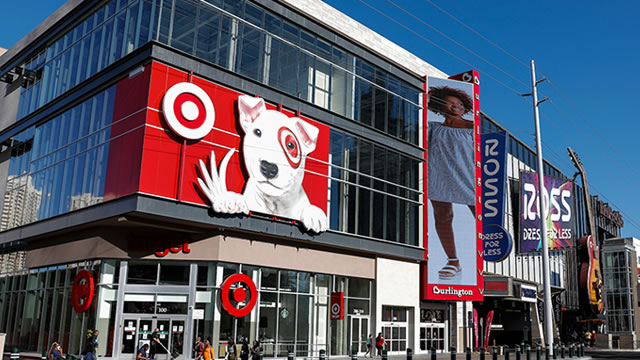
Core Insights - Lowe's Companies reported strong fourth-quarter 2024 earnings, exceeding analysts' expectations with adjusted diluted EPS of $1.93 compared to the forecast of $1.84 [2][4] - Revenue remained flat at $18.6 billion, slightly above the expected $18.3 billion, indicating resilience despite challenging economic conditions [2][4] Financial Performance - Adjusted diluted EPS increased by 9.0% year-over-year from $1.77 in Q4 2023 to $1.93 in Q4 2024 [4] - Revenue was $18.553 billion, a slight decrease of 0.2% from $18.602 billion in Q4 2023 [4] - Net earnings rose to $1.125 billion, reflecting a 10.3% increase from $1.020 billion in the previous year [4][10] Business Overview - Lowe's operates over 1,700 stores in North America, focusing on a wide range of home improvement products [5] - The company's Total Home strategy aims to cater to both DIY enthusiasts and professional contractors, enhancing customer service and product offerings [5][8] Strategic Initiatives - The company has prioritized enhancing its online presence and streamlining supply chain operations to improve customer engagement and experience [6][9] - The omnichannel retail strategy has led to significant growth in online sales, with many customers conducting online research before visiting physical stores [7] Market Segments - The Pro segment has shown substantial growth, driven by targeted investments and services for professional contractors, which is crucial for revenue stability amid economic pressures [8] - Challenges in the DIY segment persist due to high interest rates and reduced housing market activity, yet the company has demonstrated resilience [10] Shareholder Value - Lowe's returned $2.05 billion to shareholders through share repurchases and dividends, highlighting its commitment to delivering shareholder value [11] Future Outlook - For fiscal 2025, Lowe's projects sales between $83.5 billion and $84.5 billion, with comparable sales growth expected to be between 0% and 1% [12] - The company plans to leverage its Pro and online strategies to capture market opportunities amid ongoing economic uncertainties [12][13]