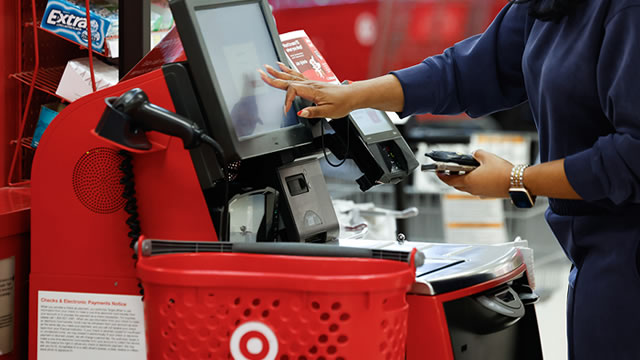
Omnichannel Shopping

Search documents
Macy's(M) - 2026 Q4 - Earnings Call Transcript
2026-03-18 13:02
Financial Data and Key Metrics Changes - In Q4 2025, Macy's, Inc. reported net sales of $7.6 billion, exceeding guidance of $7.35-$7.5 billion, compared to $7.8 billion last year [23] - Comparable sales rose 1.8%, significantly above guidance for a decline of 2.5% to flat [24] - Adjusted diluted EPS was $1.67, exceeding the guidance range of $1.35-$1.55 [27] - For the full year 2025, adjusted diluted EPS was $2.32, well above the guidance of $2-$2.20 [10] Business Line Data and Key Metrics Changes - Macy's nameplate achieved 0.6% go-forward comparable sales growth, a 190 basis points improvement year-over-year [10] - Bloomingdale's saw a remarkable 9.9% growth in comparable sales, marking its best holiday result on record [24] - Bluemercury's comparable sales increased by 1.6%, driven by strong performance in dermatological skincare and fragrances [15] Market Data and Key Metrics Changes - Macy's digital channel represents approximately one-third of annual sales, benefiting from a modernized online presence [11] - The company reported a 17.1% increase in credit card revenue, totaling $205 million, driven by a healthy credit portfolio [25] - Macy's Media Network revenue was $72 million, up 12.5% [25] Company Strategy and Development Direction - The "Bold New Chapter" strategy focuses on sustainable profitable growth, with significant progress made in 2025 [7][8] - The company is expanding its Reimagine program to 200 locations, which is expected to drive further growth [17] - Investments in staffing, localized events, and improved assortments are key components of the strategy [12][13] Management's Comments on Operating Environment and Future Outlook - Management expressed confidence in the company's ability to navigate macroeconomic uncertainties while building on recent momentum [21] - The guidance for 2026 reflects a prudent approach, considering potential macroeconomic and geopolitical factors [36] - The company anticipates net sales of approximately $21.4 billion to $21.65 billion for 2026, with comparable sales expected to range from -0.5% to +0.5% [37] Other Important Information - The company achieved a free cash flow yield of over 15%, with operating cash flow of $1.4 billion for the year [28] - Capital expenditures for 2025 were $740 million, down from $882 million in 2024, reflecting the completion of several long-term projects [30] - The company returned $448 million to shareholders, including $197 million in cash dividends [31] Q&A Session Summary Question: How does Macy's plan to remain resilient amidst consumer volatility? - Management expressed confidence in the growth across all nameplates and the strength of the balance sheet, despite external uncertainties [43][44] Question: What are the expectations for AUR versus units? - Management noted that AUR continues to grow, reflecting improved assortments and a positive consumer response [46] Question: Can you elaborate on Bloomingdale's recent performance? - Management highlighted broad-based growth across various categories and strong vendor support, indicating a positive outlook for Bloomingdale's [51] Question: What actions are being taken to appeal to price-sensitive consumers? - The company maintains a balance of promotional offerings and high-quality brands to cater to different consumer segments [58][60] Question: What are the core operational drivers of gross margin improvement? - Management indicated that improving assortments and enhancing the omni-channel experience are key drivers of gross margin performance [61]

Macy's(M) - 2026 Q4 - Earnings Call Transcript
2026-03-18 13:00
Financial Data and Key Metrics Changes - In Q4 2025, Macy's, Inc. reported net sales of $7.6 billion, exceeding guidance of $7.35-$7.5 billion, but down from $7.8 billion last year [22][23] - Comparable sales rose 1.8%, significantly above guidance of down 2.5% to flat, with go-forward business comparable sales growth of 2% [23] - Adjusted diluted EPS was $1.67, exceeding the guidance range of $1.35-$1.55, impacted by approximately $0.13 from tariffs and $0.04 from lower asset sale gains [26] Business Line Data and Key Metrics Changes - Macy's nameplate achieved 0.6% go-forward comparable sales growth, a 190 basis points improvement year-over-year [9] - Bloomingdale's saw a remarkable 9.9% comparable sales growth, marking its best holiday result on record [23][12] - Bluemercury's comparable sales increased by 1.6%, driven by strong performance in dermatological skincare and fragrances [14] Market Data and Key Metrics Changes - Macy's digital channel accounted for approximately one-third of annual sales, benefiting from a modernized online presence [10] - The company reported a healthy credit portfolio, with credit card revenue up 17.1% year-over-year [24] - The overall market environment remains uncertain, with macroeconomic and geopolitical factors influencing consumer spending [19] Company Strategy and Development Direction - The "Bold New Chapter" strategy focuses on sustainable profitable growth, with significant progress made in 2025 [5][39] - The company plans to expand its Reimagine program to 200 locations, which will account for 60% of the go-forward Macy's store base [16] - Investments in luxury and premium brands are emphasized, with Bloomingdale's strategy centered on being a local leader in its markets [12] Management's Comments on Operating Environment and Future Outlook - Management expressed confidence in the company's ability to build on recent momentum despite external uncertainties [42] - The focus remains on customer engagement and improving Net Promoter Scores, which are at record levels [43] - The company is taking a prudent approach to guidance, reflecting both confidence in its strategy and caution regarding the macro environment [19] Other Important Information - The company returned $448 million to shareholders in 2025, including $197 million in cash dividends and $251 million in share repurchases [29][30] - Capital expenditures for 2025 were $740 million, down from $882 million in 2024, reflecting the completion of several long-term projects [28] - The company expects to close approximately 65 non-go-forward stores by 2028, allowing for optimal timing to maximize asset value [72] Q&A Session Summary Question: How does Macy's plan to remain resilient amidst consumer volatility? - Management feels confident about the growth across all nameplates and the performance of reimagined stores, emphasizing a healthy balance sheet and inventory levels [42][43] Question: Can you elaborate on Bloomingdale's recent performance? - Bloomingdale's has seen broad-based growth across various categories, with strong vendor support and continued investment in its growth potential [51][52] Question: What actions are being taken to appeal to price-sensitive consumers? - The company maintains a balance between promotional offerings and premium brands, ensuring a diverse range of price points to capture different consumer segments [59][60] Question: What are the expectations for gross margin improvement? - Management expects gross margin to improve throughout the year, driven by better assortments and enhanced customer experiences [62][63] Question: What are the plans for the Reimagine program and store closures? - The Reimagine program is expanding, with local leaders empowered to customize strategies, while store closures are being strategically timed to maximize value [70][72]
Is Costco Stock a Buy Now or Still Too Expensive to Touch?
ZACKS· 2026-02-12 16:11
Core Insights - Costco Wholesale Corporation (COST) is trading at a forward 12-month price-to-earnings (P/E) multiple of 46.21, which is higher than the industry average of 32.63 and the S&P 500's 22.97, indicating a premium valuation despite being slightly below its 12-month median P/E of 48.16 [1][8] Valuation Comparison - Costco's premium valuation is evident when compared to peers such as Ross Stores (P/E of 26.97), Dollar General (P/E of 20.72), and Target (P/E of 14.75) [2][8] Business Performance - Investors have shown strong confidence in Costco due to its resilient business model, high membership renewal rates of 92.2% in the U.S. and Canada, and 89.7% globally, along with consistent traffic growth [5][9] - Costco's stock has increased by 13.6% year-to-date, outperforming the industry average rise of 8.7% [5][6] Sales Growth - The company reported a 7.1% year-over-year increase in total comparable sales for January, with regional growth of 5.8% in the U.S., 11.4% in Canada, and 9.5% in other international markets [10] - Digitally enabled comparable sales surged by 34.4% in January, following gains of 18.9% in December and 16.6% in November, indicating strong momentum in the online channel [11] Operational Efficiency - Costco's disciplined focus on cost control, product mix optimization, and the growth of its private-label brand, Kirkland Signature, supports margin expansion [13] - The company plans to open 28 net new warehouses during fiscal 2026, with new locations generating an annualized $192 million in sales per location during their first year [13] Competitive Landscape - Costco's differentiated membership-driven model and private-label strength provide competitive advantages in a challenging retail environment [14] Analyst Estimates - Wall Street analysts have raised their earnings estimates for Costco, with the Zacks Consensus Estimate for the current fiscal year increasing to $20.18 per share, reflecting a year-over-year growth rate of 12.2% [17]


Is Dillard's Digital Growth Enough to Offset Store Traffic Slump?
ZACKS· 2026-01-02 17:35
Core Insights - Dillard's Inc. (DDS) is increasingly relying on its digital platform to navigate uneven in-store traffic, highlighting the importance of online sales in supporting overall performance [1][5] Group 1: Sales Performance - The company reported a 3% year-over-year increase in total retail sales and comparable store sales for the fiscal third quarter, indicating steady demand despite a challenging consumer environment [2][7] - Dillard's does not disclose e-commerce sales separately, but management emphasizes the role of its online platform in extending reach beyond its 272 physical locations [2][7] Group 2: Digital Strategy - The digital platform allows customers to access a wide range of products, supports omnichannel shopping, and helps mitigate traffic volatility at malls and shopping centers [3][5] - Dillard's is focusing on merchandising strength in categories such as ladies' apparel, accessories, and shoes, which have shown solid gains, driving traffic where demand remains strong [4][5] Group 3: Financial Metrics - The retail gross margin improved to 45.3%, indicating effective management despite cost pressures and providing flexibility for investments in stores and digital capabilities [5][7] - Dillard's shares have increased by 32.6% over the past year, slightly underperforming the industry's growth of 33% [6] Group 4: Future Outlook - The Zacks Consensus Estimate for Dillard's fiscal 2025 and 2026 earnings suggests year-over-year declines of 9.4% and 7.5%, respectively, although earnings estimates have been revised upward in the past week [10]


Instacart Partners with MDI to Offer E-Commerce Solutions for Independent Grocers
Prnewswire· 2025-08-28 13:00
Core Insights - Instacart has partnered with Merchants Distributors, LLC (MDI) to provide e-commerce solutions to independent grocers within MDI's network, enabling them to offer same-day delivery and utilize Instacart's Storefront Pro [1][2][3] Company Overview - Instacart is a leading grocery technology company in North America, collaborating with over 1,800 retail banners to facilitate online shopping, delivery, and pickup services from nearly 100,000 stores [5] - Merchants Distributors, LLC, founded in 1931, is a privately-owned wholesale grocery distributor based in Hickory, NC, supplying over 600 retail food stores across multiple states and exporting to over 30 countries [6][7] Partnership Details - The partnership aims to enhance the shopping experience for customers by allowing independent grocers to adopt Instacart's platform, which includes advanced customization capabilities and access to data analytics tools [2][3] - Storefront Pro will provide MDI's independent retail partners with full-stack fulfillment technologies for pickup and delivery, as well as access to Instacart Carrot Ads for monetizing their digital and physical presence [2][3] Market Positioning - With the introduction of Storefront Pro, MDI's independent retailers will join over 600 retail banners already utilizing Instacart's white-label e-commerce solutions, positioning them to improve customer engagement and unlock new growth opportunities [3]


Home Depot Reportedly Banking on AI to Rebuild Sales
PYMNTS.com· 2025-03-06 15:31
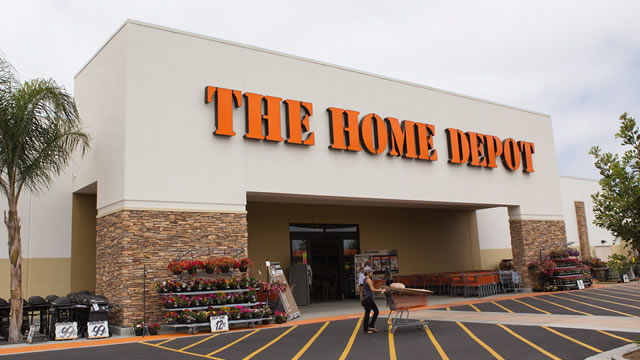
Core Insights - Home Depot is leveraging generative AI to enhance its online shopping experience, aiming to replicate the customer service found in physical stores [1][2] - The AI tool assists customers with product inquiries and will eventually include features like design ideas and product comparisons [2][3] - Home Depot has been utilizing generative AI for about a year and plans to expand its applications, particularly for professional contractors and business account customers [3][4] Company Strategy - The company is focusing on improving the online experience for both general consumers and professional customers, which is crucial as DIY sales have declined [3][4] - Investments in AI and site improvements are driving better conversion rates and increased engagement across channels [4] - Home Depot's strategy aligns with the trend of omnichannel shopping, where nearly 40% of consumers engage with both digital and physical shopping [4][5] Industry Trends - Generative AI is recognized as a significant emerging technology, with over 75% of business leaders identifying it as impactful [6] - Marketing and sales departments in the retail sector are leading the adoption of generative AI, with 57% of these teams pursuing initiatives compared to 31% in other industries [6]

Target Unveils Major Growth Plan With New Products and AI Integration
ZACKS· 2025-03-05 13:50
Core Strategy - Target Corporation aims to generate over $15 billion in revenue growth by fiscal 2030 through investments in product selection, shopping experiences, supply-chain efficiency, and customer rewards programs [1] Product Expansion - Starting in fiscal 2025, Target will refresh key categories such as gaming, sports, and toys, enhancing product selections and in-store experiences [2] - The company plans to launch a new series of Good & Gather Collabs with renowned chefs and introduce over 600 new food and beverage products [3] - Target will expand its beauty category with more than 45 new brands and 2,000 new items, with 90% priced under $20 [4] Omnichannel Shopping Experience - Target is investing in digital and in-store experiences to enhance omnichannel shopping, aiming to increase third-party marketplace sales from $1 billion in fiscal 2024 to over $5 billion by fiscal 2030 [6] - The in-house media division, Roundel, generated over $2 billion in value last year and is set to double in size by fiscal 2030 [7] Store Growth and Supply Chain - Over the next 10 years, Target plans to open more than 300 new locations, focusing on large-format stores and renovating existing locations [8] - The company is modernizing inventory management with AI-driven solutions to optimize stock availability and delivery speed [9] Loyalty Programs and Delivery Services - Target plans to triple its Target Circle 360 membership over the next three years, introducing new benefits including travel-related perks [10] - Same-day delivery through Target Circle 360 is the fastest-growing shopping method, with plans to enhance awareness and accessibility of this service [11] Long-Term Commitment - Target is committed to innovation and customer satisfaction, investing in initiatives that strengthen its competitive edge and drive business growth [12]