Online Scams

Search documents
Always Online, Always in Danger | Prashasth Baliga | TEDxUniversiteitVanAmsterdam
TEDx Talks· 2026-04-09 14:44
First of all, I want you guys to take a moment look around this hall. We all are here present physically. Some part of our mind is absent.Where is it. It's at the moment hooked on to a system which never sleeps, which never locks off. is the same system which is rewiring our minds in the way we think, in the way we feel and in the way we interact.Yes, that's what I'm going to speak about is the world of always being online. We are right now in a hyperconnected digital world which never lets us sleep. We're ...


Connecticut woman empties her 401(k) in romance scam — here are the red flags she missed and how to protect yourself
Yahoo Finance· 2026-03-30 15:45
Core Insights - Romance scams are a significant issue, with Americans reporting losses exceeding $670 million in 2024, according to the FBI's Internet Crime Report [3][11] - The tactics used by scammers include creating appealing personas, building emotional intimacy, isolating targets, and introducing financial emergencies or investment opportunities [2][8] - The emotional impact of romance scams can be devastating, affecting individuals across all age groups, particularly those aged 60 and over who reported losses of more than $389 million [2][19] Summary by Category Financial Impact - In 2024, romance and confidence scams cost Americans over $670 million, with one victim losing nearly $1 million, including her entire 401(k) [3][11] - The FBI reported that online fraud overall resulted in losses of $16 billion in 2024, marking a 33% increase from 2023 [11] Scamming Tactics - Scammers often escalate intimacy quickly, refuse to meet in person, and introduce investment opportunities, such as cryptocurrency, to manipulate victims [6][16] - Initial small financial wins are used to build confidence and lower defenses before larger sums are requested [9][8] Warning Signs - Common red flags include constant communication without video calls, secrecy about the relationship, and pressure to move money quickly [6][22] - The Consumer Financial Protection Bureau notes that scammers may use real photos or fabricated backstories, making it harder to identify deception [16]
Meta Sues Advertisers Over Alleged Celebrity Impersonation Scams
PYMNTS.com· 2026-02-26 20:13
Core Viewpoint - Meta is taking legal action against advertisers who are impersonating celebrities to defraud consumers, emphasizing accountability for those exploiting its platforms [1][2]. Group 1: Legal Actions and Enforcement - Meta has initiated lawsuits against scammers, including healthcare product makers in Brazil and a company involved in investment fraud in China [7]. - The company has implemented "technical enforcement actions" such as suspending payment methods, blocking domain names, and disabling accounts of the accused [2]. Group 2: Nature of the Scams - Scammers misuse images of public figures to create deceptive ads that lead to scam websites, which often solicit personal information or money from victims [3]. - The scheme, termed "celeb bait," undermines trust and violates Meta's advertising policies [3]. Group 3: Legislative Context - Lawmakers are urging online platforms to enhance measures against scams, with a recent U.S. Senate bill proposing that platforms take "reasonable steps" to prevent fraudulent ads [7]. - A report indicated that fraudulent online ads cost Americans billions annually, with Meta projected to earn approximately $16 billion, or 10% of its 2024 revenue, from ads related to scams and prohibited content [8]. Group 4: Impact on Users - Research indicates that 16% of scam victims were targeted via social media, highlighting the significant role of these platforms in facilitating fraud [9].


X @Bloomberg
Bloomberg· 2026-02-12 03:34
Cambodia is drafting a law targeting online scams, seeking to build a bulwark against criminals using the country as a base to siphon billions of dollars from victims globally https://t.co/m2xLOAATmr ...
X @The Wall Street Journal
The Wall Street Journal· 2025-12-23 15:18
Exclusive: Laborers being held against their will in Cambodia to run online scams were forced to keep working even amid Thai military attacks https://t.co/XfoW7Q7tiF ...
Westpac CEO Calls For Meta And Other Social Media Giants To Take Tougher Action In Financial Fraud Prevention - Alphabet (NASDAQ:GOOG), Alphabet (NASDAQ:GOOGL)
Benzinga· 2025-12-11 13:30
Core Points - Westpac Banking Corp's CEO, Anthony Miller, has called for social media companies like Meta to take more responsibility in preventing online scams, highlighting the increasing threat to consumers [1][2] - Miller stated that Westpac has invested over $333 million in scam and fraud prevention over the past five years, but emphasized the need for social media platforms to enhance their protective measures [3] - The issue of online scams is exacerbated by practices such as "muling," where scammers use platforms like Facebook Marketplace to acquire bank accounts, often from individuals misled by romance scams [4][5] Financial Implications - Internal documents revealed that Meta projected approximately $16 billion in revenue from scam advertisements and banned goods in 2024, which would represent nearly 10% of its total revenue [6] - Meta is estimated to display around 15 billion "higher risk" scam ads daily, indicating a significant scale of the problem [6] Regulatory Developments - Australia has enacted a law banning children under 16 from major social media platforms, requiring companies like Meta, TikTok, and YouTube to block underage accounts or face fines up to AUD 49.5 million ($33 million) [7]


Finance professionals urge tech companies to tackle online scams
Yahoo Finance· 2025-12-09 11:35
Core Insights - Fraud accounts for over 40% of all recorded crime in the UK, necessitating a collaborative effort from technology companies to combat online scams [1] - Criminals acquired £629.3 million ($838.5 million) in the first half of 2025, marking a 3% increase from the same period in 2024, indicating an urgent need for enhanced preventive measures [2] - Financial institutions are spending approximately £38 billion annually on compliance, primarily related to anti-money laundering, rather than directly addressing fraud [3] Industry Concerns - The current regulatory framework disproportionately burdens banks, while technology firms face limited regulations despite being the origin of many scams [4] - Proposals discussed include live data-sharing, improved identity verification, and regulatory changes to enhance oversight of digital platforms and financial transactions [4] - The evolving nature of fraud, including the use of AI and automated methods, requires a joint responsibility across sectors to effectively mitigate risks [5] Technology's Role - Technology companies are increasingly recognized as key players in the fight against economic crime, as most fraudulent activities stem from social media and telecommunications [2] - The effectiveness of fraud reduction efforts will depend on the cooperation between technology firms and financial sector participants [5] - The rise of generative AI is accelerating invoice and payment fraud, highlighting the need for a collective approach to tackle these challenges [6]
X @Bloomberg
Bloomberg· 2025-07-09 12:23
South Africa’s financial-markets regulator is ramping up its operations to combat an explosion in online scams https://t.co/BVem4tEtj1 ...
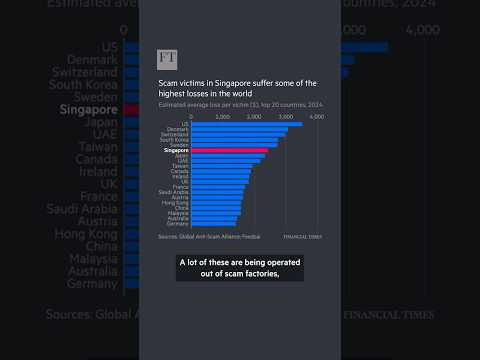
Why Singapore is engulfed in a ‘scamdemic’ | FT #shorts
Financial Times· 2025-06-10 04:04
Singapore is in the midst of a scam demic. The city state of 6 million people saw a 70% rise in the value of money lost to online scams by its citizens up to 1.1% billion Singapore dollars. Now, Singaporeans have been seen as especially vulnerable to certain types of fraud, things like job fraud or uh or romance scams.A lot of these are being operated out of scam factories across Southeast Asia, many of which are populated by people who themselves are victims of human trafficking. Now, a lot of the people i ...