
Open - source Model

Search documents
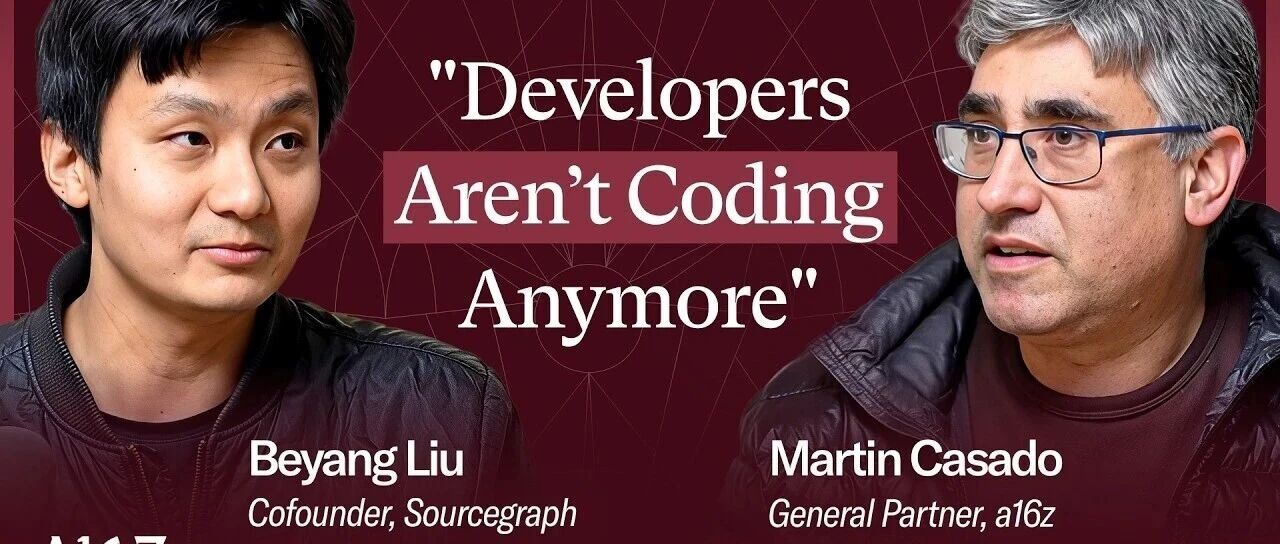
深度|AI编码黑马Sourcegraph华裔联创:我们的理念不是以模型为核心,而是以Agent为核心
Z Potentials· 2025-12-15 02:08
Core Insights - The article discusses the evolution of Sourcegraph from a code search engine to developing an AI coding agent named Amp, emphasizing the importance of understanding code in large codebases [5][6][8] - It highlights the shift towards open-source models and the significance of post-training over pre-training in enhancing model performance for specific tasks [27][30] - The conversation also touches on the regulatory landscape affecting AI development, particularly the reliance on Chinese open-source models and the potential risks for the U.S. AI ecosystem [40][41][49] Group 1: Company Background and Evolution - Sourcegraph was founded to improve coding efficiency in large organizations, focusing on code understanding as a core challenge [6][8] - The company has transitioned to developing Amp, an AI coding agent that combines large language models (LLMs) with existing capabilities to enhance coding tasks [8][11] - Amp is designed to cater to both professional developers and casual users, showcasing its versatility in generating code with minimal input [11][12] Group 2: AI and Coding Agents - The article emphasizes that the true unit of innovation is the agent itself, which interacts with users and executes tasks based on input rather than just the underlying model [17][18] - The development of Amp reflects a broader trend in AI where user interaction and agent capabilities are prioritized over merely improving model complexity [18][19] - The conversation reveals that different user workflows necessitate distinct approaches to agent design, balancing intelligence and latency for optimal performance [14][24] Group 3: Open-Source Models and Training - Open-source models are becoming increasingly important due to their ability to undergo post-training, allowing for tailored optimizations for specific tasks [27][28] - The article mentions several emerging open-source models, including Claude and GPT-5, which are gaining traction in the agentic tool use space [28][29] - The discussion highlights the trend of using smaller, task-specific models to improve efficiency and reduce latency in coding tasks [30][32] Group 4: Regulatory Landscape and Market Dynamics - The article raises concerns about the U.S. reliance on Chinese open-source models, suggesting that this could pose risks to the U.S. AI ecosystem if not addressed [40][41] - It advocates for a unified regulatory framework that encourages competition and innovation in the AI space, avoiding the pitfalls of past monopolistic practices [49][50] - The conversation underscores the need for a balanced approach to regulation that fosters a vibrant AI ecosystem while ensuring safety and ethical considerations [49][50]

谁在赚钱,谁爱花钱,谁是草台班子,2025 年度最全面的 AI 报告
Founder Park· 2025-10-11 11:57
Core Insights - The AI industry is transitioning from hype to real business applications, with significant revenue growth observed among leading AI-first companies, reaching an annualized total revenue of $18.5 billion by August 2025 [3][42]. Group 1: AI Industry Overview - AI is becoming a crucial driver of economic growth, reshaping various sectors including energy markets and capital flows [3]. - The "State of AI Report (2025)" by Nathan Benaich connects numerous developments across research, industry, politics, and security, forming a comprehensive overview of the AI landscape [5]. - The report emphasizes the evolution of AI from a research focus to a transformative production system impacting societal structures and economic foundations [5]. Group 2: AI Model Developments - 2025 is defined as the "Year of Reasoning," highlighting advancements in reasoning models such as OpenAI's o1-preview and DeepSeek's R1-lite-preview [6][8]. - Major companies released reasoning-capable models from September 2024 to August 2025, including o1, Gemini 2.0, and Claude 3.7 [11]. - OpenAI and DeepMind continue to lead in model performance, but the gap is narrowing with competitors like DeepSeek and Gemini [17]. Group 3: Revenue and Growth Metrics - AI-first companies are experiencing rapid revenue growth, with median annual recurring revenue (ARR) for enterprise and consumer AI applications exceeding $2 million and $4 million, respectively [42][48]. - The growth rate of top AI companies from inception to achieving $5 million ARR is 1.5 times faster than traditional SaaS companies, with newer AI firms growing at an astonishing rate of 4.5 times [45]. - The adoption rate of paid AI solutions among U.S. enterprises surged from 5% in early 2023 to 43.8% by September 2025, indicating strong demand [48]. Group 4: Market Trends and Predictions - The report predicts that AI-generated games will become popular on platforms like Twitch, and a Chinese model may surpass several Silicon Valley models in rankings [5][75]. - The rise of open-source models in China is noted, with Alibaba's Qwen model gaining significant traction in the global developer community [24][26]. - AI is shifting from being a tool to a scientific collaborator, actively participating in the generation and validation of new scientific knowledge [34]. Group 5: Challenges and Issues - Traditional benchmark tests for AI models are becoming less reliable due to data contamination and variability, leading to a focus on practical utility as a measure of AI capability [21][22]. - Several major AI companies faced significant operational challenges and public scrutiny over technical failures and ethical concerns [39][40]. - The report highlights the financial pressures on AI coding companies, which face challenges in maintaining profitability despite high valuations [50][51].




